
Blackstone 500MW battery near Ipswich clears final environmental hurdle
The Blackstone battery energy storage system has received final approval to proceed, with a capacity of up to 500 MW and 2,000 MWh. Located on former coal mining land near Ipswich, Queensland, the project targets commissioning in 2029 to support evening energy peaks.
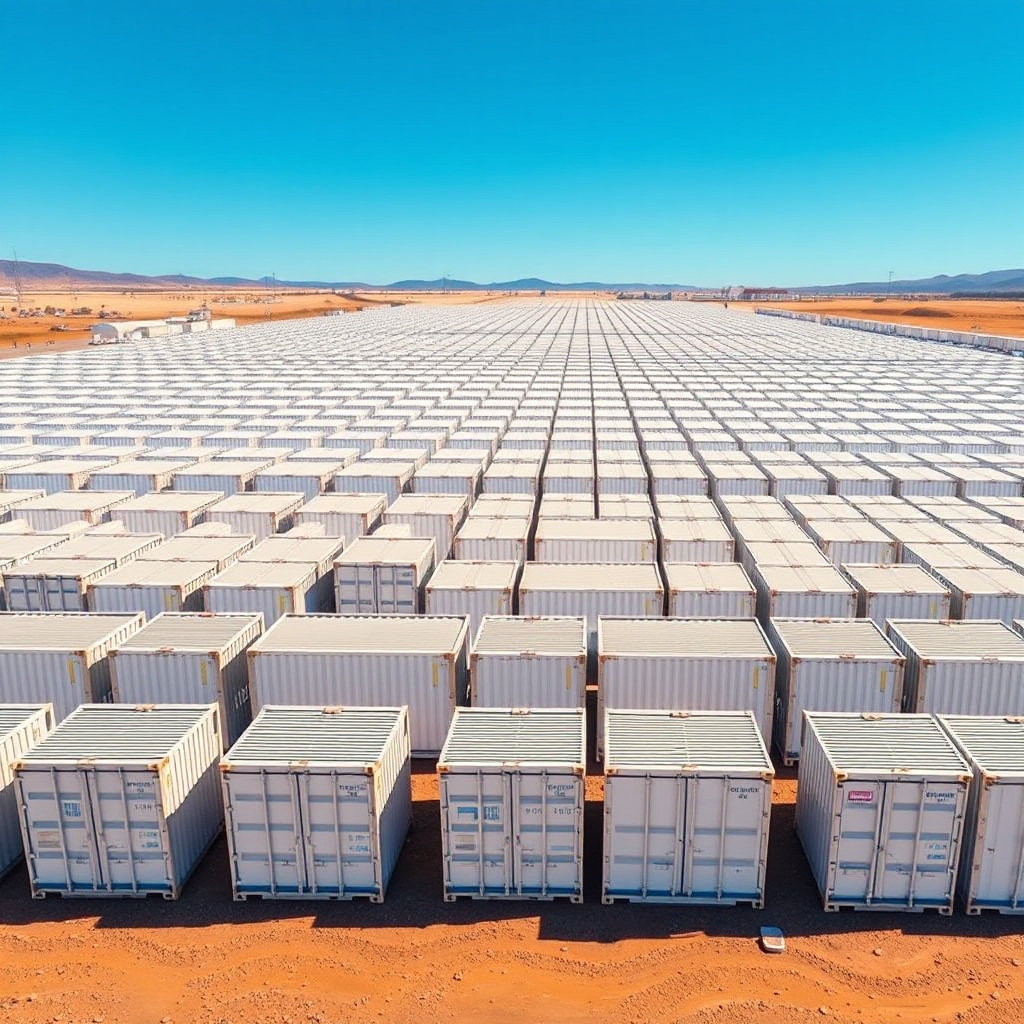
The Blackstone battery energy storage system has been approved for construction, marking a step for large-scale storage in Queensland. The facility is designed with a capacity of up to 500 MW and 2,000 MWh, positioning it as one of the largest in the state. Located 6 km south-east of Ipswich, the project moves forward following recent regulatory clearances.
According to RenewEconomy, the approval allows the developer to proceed with site preparation and infrastructure installation. The scale of the project reflects growing demand for grid-scale storage to balance renewable energy inputs.
This development represents a key milestone in the transition away from fossil fuel generation in the region.
Environmental clearance and site history
The Australian Government’s Department of Climate Change, Energy, the Environment and Water has determined that the project is not a "controlled action" under the Environment Protection and Biodiversity Conservation Act. This regulatory pathway is standard for many large-scale energy projects in Australia. When a proposal is assessed under the EPBC Act, the federal government examines whether the development is likely to have a significant impact on a matter of national environmental significance, such as listed threatened species or World Heritage areas. If the determination finds no such significant impact, the project falls out of federal jurisdiction. Consequently, environmental approval and ongoing compliance monitoring revert entirely to the relevant state or territory authority, in this case, Queensland. For developers, this outcome simplifies the permitting process by removing a parallel federal review track, allowing them to focus their legal and administrative resources on state-level conditions. It also provides greater certainty regarding the timeline, as state approvals are often faster and more predictable than federal assessments, which can involve complex public consultation periods and expert reviews.
The physical location of the facility carries its own historical weight. The battery will be constructed on a site that previously housed a coal power station. Specifically, the project occupies approximately nine hectares of land that was formerly used for coal mining operations. Reusing such brownfield sites is a common strategy in modern energy infrastructure. These locations often already possess the necessary heavy-duty grid connections and transmission lines, which reduces the need for new high-voltage infrastructure. Repurposing industrial land minimizes the environmental footprint associated with clearing virgin vegetation or agricultural land. For the local community, the transition from a coal mining site to a battery storage facility represents a shift in the region’s industrial identity, moving from extraction and combustion to energy management and grid stabilization. This reuse of existing industrial corridors helps integrate new clean energy assets into the existing power network with minimal disruption to surrounding natural habitats or residential areas.
Ecological considerations and habitat
- 3 hectares of the project site are identified as koala habitat.
- The developer, Octopus, characterizes this habitat as being in "in moderate to degraded condition."
While the Federal Government’s determination removed the project from federal jurisdiction, state-level environmental obligations remain fully in force. In Queensland, developers must navigate strict guidelines regarding native flora and fauna, particularly for protected species like the koala. Identifying specific habitat zones during the planning phase is a standard requirement that dictates where construction can occur and what mitigation measures are necessary. By isolating the three hectares of designated habitat, the project team can implement targeted protections, such as fencing off sensitive areas or scheduling work to avoid peak activity times for the animals.
The description of the habitat as "in moderate to degraded condition" provides important context for understanding the ecological baseline. In conservation planning, habitat condition is a critical metric because it influences the species’ reliance on that specific area for survival, feeding, and shelter. Degraded habitats often support lower densities of wildlife or may require additional management to remain viable. For developers, acknowledging the current state of the habitat helps in designing offset strategies or restoration plans that align with state conservation goals. It also signals to regulators and the community that the project is not ignoring local biodiversity but is actively accounting for the existing environmental state of the land. This level of detail ensures that the transition from industrial use to energy storage does not inadvertently harm the remaining ecological functions of the site, balancing infrastructure needs with the preservation of native wildlife corridors.
Grid integration and capacity approvals
With environmental hurdles cleared, the focus shifts to the technical and regulatory mechanics of how this facility will actually interact with the power network. Octopus Investments currently holds state approval for 1,000 MWh of capacity. This figure represents a phased approach to deployment, a common strategy for large-scale storage projects that allows developers to secure initial grid access and funding while finalizing subsequent expansion plans. The distinction between approved capacity and total potential capacity is vital for investors and grid operators, as it dictates immediate revenue obligations and infrastructure commitments.
The facility is planned to connect to the Swanbank substation. Substations are critical nodes in the electrical grid, acting as transition points where high-voltage transmission lines step down to lower voltages for distribution. Connecting to an existing substation like Swanbank leverages established infrastructure, which typically reduces the complexity and cost of building new transmission lines. However, grid connection approvals are not automatic; they require rigorous technical assessments to ensure the substation can handle the additional load and that the battery’s discharge profile will not destabilize local voltage or frequency.
The operational intent is to redistribute renewable energy to evening peaks. This aligns with the broader challenge of managing variable renewable generation. Solar output often peaks during the day when demand is moderate, while consumption spikes in the evening. Batteries bridge this temporal gap by storing excess daytime energy and releasing it when demand is highest. For grid operators, this service helps maintain balance without relying on fossil-fuel peaker plants. For consumers, it supports grid stability and can help manage price volatility during high-demand periods. The specific connection to Swanbank ensures that this arbitrage occurs close to major load centers, minimizing transmission losses and maximizing the efficiency of the stored energy.
What to watch
With the final environmental determination now in place, the immediate focus shifts to physical execution. Construction is expected to begin later this year, marking the transition from regulatory approval to on-site activity. For developers and local stakeholders, this start date serves as the primary near-term milestone, triggering the mobilization of heavy machinery and the initial groundwork required for a facility of this scale. The pace of these early works will determine whether the project can maintain its momentum through the coming months, particularly given the logistical complexities of operating on a former industrial site with existing ecological constraints.
Looking further ahead, the targeted commissioning date of 2029 sets the long-term expectation for when the battery will first discharge energy into the grid. This roughly three-year gap between construction start and full operation is typical for large-scale storage projects, which require extensive testing, grid synchronization, and safety certifications before they can handle live power. Readers should monitor progress toward this 2029 target, as any delays in construction or equipment delivery could push back the timeline for when the facility begins its role in evening peak redistribution. Until then, the project remains in the critical phase of transforming approved plans into physical infrastructure.
Source: RenewEconomy. This article is an original Luminity report based on the linked source.