
Saudi Solar Park Hosts 38 Sand Gazelles in Conservation Pilot
A 250 MW solar facility in Saudi Arabia has introduced 38 Sand gazelles to its grounds, following a successful seven-month proof-of-concept. The project aims to grow the local population to 600 by 2031 while maintaining energy output.
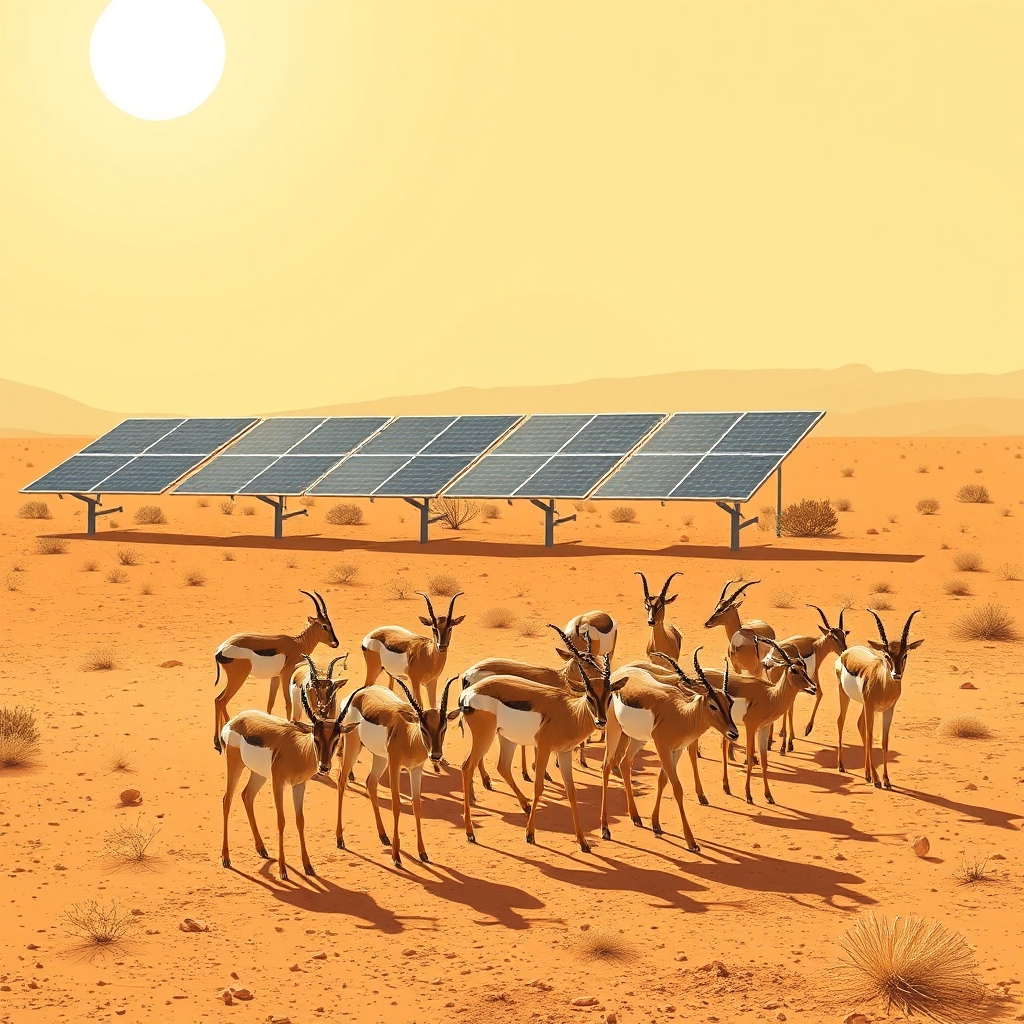
The Prince Mohammed bin Salman Royal Reserve has introduced 38 sand gazelles to a 250 MW solar facility, according to pv magazine. This move marks the start of a conservation pilot within the renewable energy infrastructure. The facility’s capacity stands at 250 MW, providing a specific site for this ecological integration.
Prior to the introduction of the gazelles, a seven-month proof-of-concept exercise was conducted. This preliminary phase aimed to assess the feasibility of coexisting wildlife and solar operations. The results of this initial period laid the groundwork for the current deployment.
The initiative represents a distinct approach to balancing energy production with habitat preservation. By integrating wildlife into the solar park, the project explores potential synergies between clean energy generation and conservation efforts. The 38 gazelles now inhabit the area, serving as the primary subjects of this ongoing observation and management strategy.
Site Layout and Habitat
The physical footprint of this conservation pilot is defined by strict spatial boundaries within a larger protected area. The entire site spans 505 hectares, segmented into three distinct fenced sections to manage access and ecological integrity. Of this total, 370 hectares are designated as suitable for animal husbandry, providing the necessary grazing land and open space for the herd to thrive without interference from high-density infrastructure. This division allows for a clear separation between intensive wildlife management zones and other operational areas of the reserve.
The specific pilot zone occupies a 157-hectare section that houses a 66 MW solar array. This arrangement places the gazelles directly within the operational footprint of the renewable energy facility, rather than in a peripheral buffer. Such co-location is a deliberate design choice, testing how large-scale photovoltaic installations can function as viable habitats rather than barriers to wildlife movement. The fencing serves a dual purpose, securing the perimeter against poaching or unauthorized entry while defining the precise area where human activity and animal presence overlap. By concentrating the pilot in this specific 157-hectare block, managers can isolate variables related to solar panel density, shading patterns, and ground cover changes. This controlled environment facilitates precise monitoring of how the animals adapt to the presence of the 66 MW array, offering tangible data on the compatibility of industrial-scale solar generation with native species survival. The layout ensures that the 38 gazelles remain within a monitored, secure zone while contributing to the broader understanding of habitat integration in arid environments.
Environmental Benefits
The primary ecological advantage of this pilot centers on microclimate modification. Data collected from the site indicates that ground temperatures directly beneath the photovoltaic modules are 5 C to 10 C lower than in the adjacent exposed areas. This thermal differential creates a cooler microenvironment that can be critical for thermoregulation in arid regions, where extreme heat often limits animal activity and survival rates. By providing consistent shade, the solar array alters the local habitat conditions, potentially allowing native species to inhabit zones that would otherwise be too hot for sustained presence.
This temperature reduction directly impacts the physiological well-being of the herd. As stated in the project documentation, “The shade beneath solar panels improves animal welfare and reproductive success.” For wildlife managers, this suggests that the infrastructure itself contributes to healthier populations by reducing heat stress, which is a known factor in lowered fertility and increased mortality among desert-dwelling mammals. The cooler conditions under the panels may also support better ground cover retention, offering more stable foraging opportunities.
In broader sector terms, solar farms often face criticism for displacing local ecosystems, but this pilot demonstrates a potential counter-narrative. When panels are installed with sufficient spacing to allow light and air circulation, they can function as artificial shelters. This approach challenges the conventional view that large-scale energy generation must come at the expense of native biodiversity. Instead, it highlights how thoughtful siting and design can transform industrial footprints into refuges, offering a model for future renewable projects that seek to minimize ecological harm while maximizing energy output.
Operational Results and Outlook
- First births are expected this winter.
- The gazelle population is projected to grow from 109 to 600 by 2031.
- Project partners include the Prince Mohammed bin Salman Royal Reserve and Amaala Sustainable Company for Energy.
- Officials report no damage to infrastructure, operational conflicts, or behavioral issues.
- Partners state their collaboration continues a longstanding global commitment.
The immediate operational feedback from the pilot has been positive, with partners reporting that there was no damage to infrastructure, operational conflicts, or behavioral issues during the initial phase. This stability is significant for energy developers, as it suggests that integrating wildlife into active solar parks does not necessarily compromise grid reliability or require costly maintenance interventions. The absence of operational friction indicates that the spatial layout and animal management protocols are functioning as intended, allowing the facility to generate power without ecological disruption.
Looking ahead, the biological metrics suggest a successful trajectory for the herd. With first births expected this winter, the population is projected to grow from 109 to 600 by 2031. This expansion demonstrates that the pilot zone can support sustainable reproduction, a key indicator of long-term habitat viability. The Prince Mohammed bin Salman Royal Reserve and Amaala Sustainable Company for Energy frame this effort as part of a broader strategy, noting that their collaboration to use solar plants to reintroduce gazelles continues a longstanding global commitment. For the sector, this model offers a tangible example of how renewable infrastructure can align with conservation goals, potentially setting a precedent for future projects in arid regions.
What to watch
The immediate focal point is the winter birthing season. Observers will monitor whether the projected first offspring arrive and survive, a critical biological milestone that validates the pilot’s core hypothesis regarding animal welfare and reproductive success under solar shade. Beyond individual health, the coming months will reveal how the herd’s social dynamics evolve as the population begins its gradual expansion. Managers will track foraging patterns and movement within the designated enclosure to ensure the microclimate benefits translate into long-term behavioral stability.
For energy operators, the next phase involves verifying that the absence of infrastructure damage persists as the herd matures. While initial reports indicate no operational conflicts, sustained performance testing is required to confirm that wildlife integration does not introduce unforeseen maintenance burdens or grid reliability risks. Stakeholders should also watch for broader regulatory or design guidelines emerging from this project. If the collaboration between the reserve partners and energy developers proves scalable, it could influence future siting standards for arid-region solar farms, shifting industry focus from mere land use to active habitat creation. Success here depends on whether the observed thermal benefits and zero-conflict operations hold up over multiple seasonal cycles.
Source: pv magazine. This article is an original Luminity report based on the linked source.