
India faces land acquisition hurdles for solar and wind net-zero targets
India needs vast land areas for renewable energy, but fragmented ownership and legal disputes delay projects. State-specific compensation rules create inconsistency, prompting calls for a national standard.
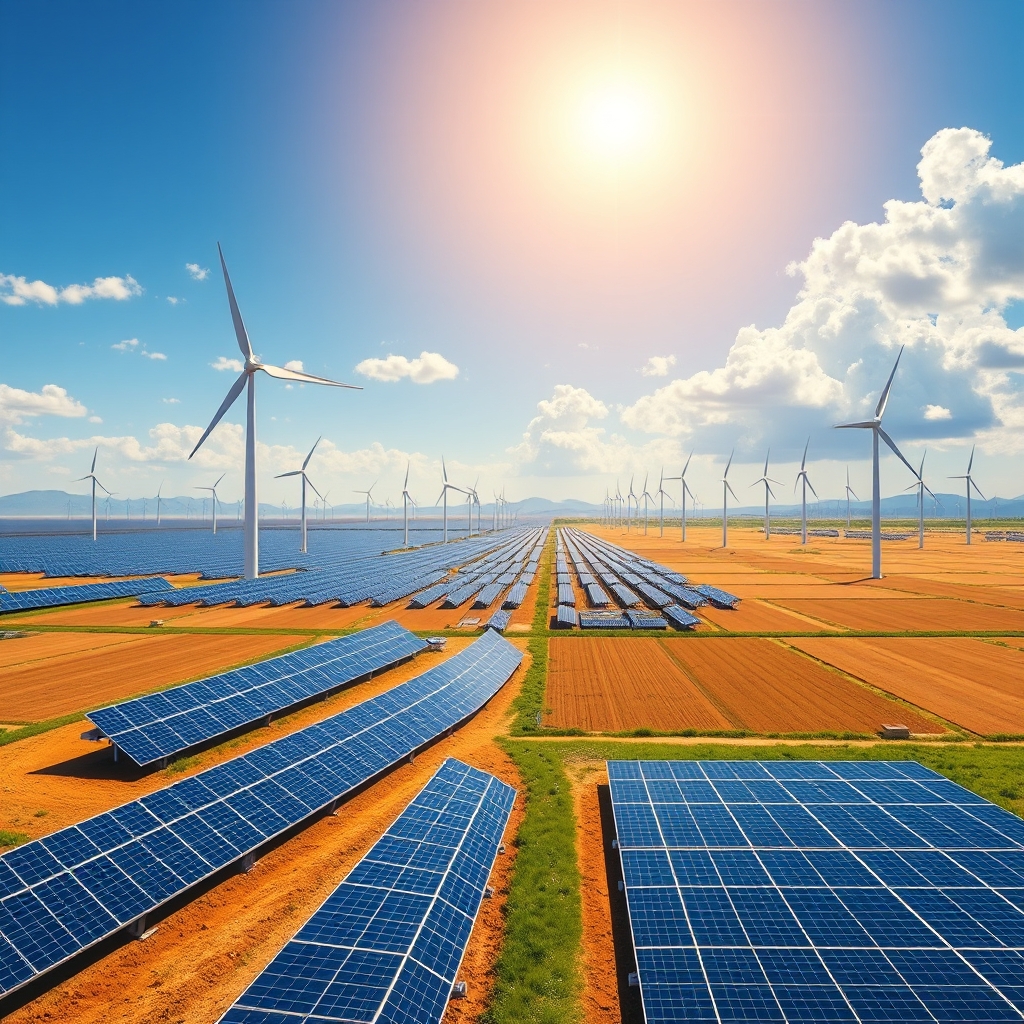
Renewable Watch reports that India faces substantial land acquisition challenges as it pursues its net-zero goals. The country estimates a need for 50,000 to 75,000 square kilometers of land specifically for solar projects. This vast area requirement highlights the logistical and administrative hurdles inherent in scaling up solar capacity across diverse terrains and existing land uses.
In addition to solar, wind energy infrastructure also demands significant space. Estimates suggest India requires between 1,500 and 2000 square kilometers for wind installations to meet its climate targets. These figures underscore the extensive physical footprint required by the renewable energy sector. While the specific land availability and allocation processes remain complex, the scale of these requirements is central to understanding the practical constraints facing India’s energy transition strategy.
Legal Vulnerabilities
- Development and construction phases face the highest risk of litigation, according to Pallavi Bedi.
- Land procurement is complicated by title verification issues, fragmented ownership structures, and competing claims.
- Agricultural land frequently requires formal conversion for non-agricultural project use before construction can proceed.
The path from site identification to grid connection is fraught with legal friction. Bedi points out that the development and construction stages are particularly susceptible to lawsuits, often stalling projects that have already secured initial approvals. These delays are rarely caused by a single issue but stem from a combination of administrative and property law complexities. Developers must navigate a web of ownership records that are often incomplete or contradictory, especially in rural areas where land holdings are small and frequently divided among multiple heirs.
Title verification remains a critical bottleneck. When ownership is fragmented, securing the necessary consent from all stakeholders becomes a protracted legal exercise. Competing claims further complicate this process, as different parties may assert rights over the same plot based on historical usage or outdated documentation. The majority of renewable energy sites in India are located on agricultural land. Converting this land for industrial use requires specific government permissions, a bureaucratic step that adds time and uncertainty to the project timeline. For investors, these legal hurdles represent a significant source of risk, as any defect in the chain of title or failure to complete land conversion can halt construction entirely, leading to costly disputes and delayed returns.
State Compensation Models
India’s federated structure means land and Right of Way (RoW) compensation is not uniform. States retain significant authority over how they value land and compensate landowners for transmission corridors and project sites, leading to a patchwork of regulations that developers must navigate on a state-by-state basis. This variation creates complexity for large-scale renewable projects that often span multiple jurisdictions or rely on specific state policies to secure necessary infrastructure rights.
Gujarat has adopted a market-linked framework for Right of Way compensation. This approach ties payment values to prevailing market rates rather than fixed statutory formulas, aiming to reflect the current economic value of the land. Such mechanisms are designed to reduce disputes by offering landowners a more realistic assessment of their property’s worth, although they can introduce volatility if market conditions fluctuate during the project timeline.
In contrast, Uttar Pradesh is transitioning to a 200 per cent compensation framework. This specific multiplier indicates a policy shift toward higher payouts relative to the land’s assessed value, potentially addressing past grievances regarding inadequate compensation. By increasing the financial incentive for landowners, the state aims to streamline the acquisition process and mitigate the legal friction described in earlier stages of project development.
Meanwhile, Haryana, Rajasthan, and Punjab follow updated Central Electricity Authority Right of Way rules. These states align their local procedures with national standards set by the regulatory body, providing a degree of consistency for developers operating in these regions. Adherence to CEA guidelines often simplifies compliance, as the rules offer clear definitions for conductors, clearances, and compensation criteria, reducing the ambiguity that can otherwise stall transmission line construction.
Standardization Debate
Dr. R.K. Tyagi advocates for a standardized national compensation framework to replace the current patchwork of state-specific regulations. This call addresses the inconsistency in how different regions value land and Right of Way rights. When compensation rules vary from one state to another, developers face unpredictable financial exposures and administrative delays. A unified national standard would streamline these processes, offering a clearer baseline for valuation and dispute resolution. This consistency is vital for projects that cross state borders or require infrastructure upgrades in multiple jurisdictions.
The absence of such uniformity currently affects project costs, timelines, and overall implementation. State-level policy variations introduce complexity that can inflate budgets and extend construction schedules. For investors, these inconsistencies represent a tangible risk, as shifting local rules can alter the economic viability of a project after initial commitments are made. Standardization would mitigate this volatility by establishing predictable legal and financial parameters. It would also reduce the administrative burden on developers who must otherwise tailor their strategies to fit specific state mandates. Ultimately, a cohesive national approach could accelerate the deployment of renewable energy infrastructure by removing jurisdictional barriers that currently slow down grid connections and land acquisition processes.
What to watch
The immediate focal point is whether the Central Electricity Authority will move beyond current guidelines to enforce a unified national compensation framework. Dr. R.K. Tyagi’s advocacy for standardized valuation rules suggests that regulatory bodies may soon address the inconsistencies plaguing state-level models. Investors and developers will likely monitor official gazettes and CEA circulars for any shifts in how land value is calculated or how Right of Way disputes are adjudicated. A move toward uniformity could significantly alter project feasibility assessments, particularly for transmission corridors spanning multiple jurisdictions.
Simultaneously, the legal landscape around agricultural land conversion remains under scrutiny. Courts and administrative tribunals are increasingly involved in resolving title disputes and ownership conflicts, which frequently stall construction phases. Readers should track specific high-profile litigation cases that test the boundaries of existing property laws in rural areas. The outcome of these legal challenges will determine how much discretion local authorities retain over land use permissions. The interaction between state compensation policies and national standards will define the next phase of infrastructure deployment. If states continue to diverge in their valuation methods, developers may face persistent administrative bottlenecks that delay grid connections. The resolution of these jurisdictional conflicts is essential for maintaining the momentum behind India’s renewable energy expansion.
Source: Renewable Watch. This article is an original Luminity report based on the linked source.