
Fingrid mandates grid-forming support for new wind and solar in weak grids
Fingrid has introduced new technical requirements in the VJV2024 grid code, mandating grid-forming control for new large-scale wind and solar plants connected to weak grids. Developers must deploy specific equipment, such as batteries or synchronous machines, sized relative to plant capacity to ensure stability.
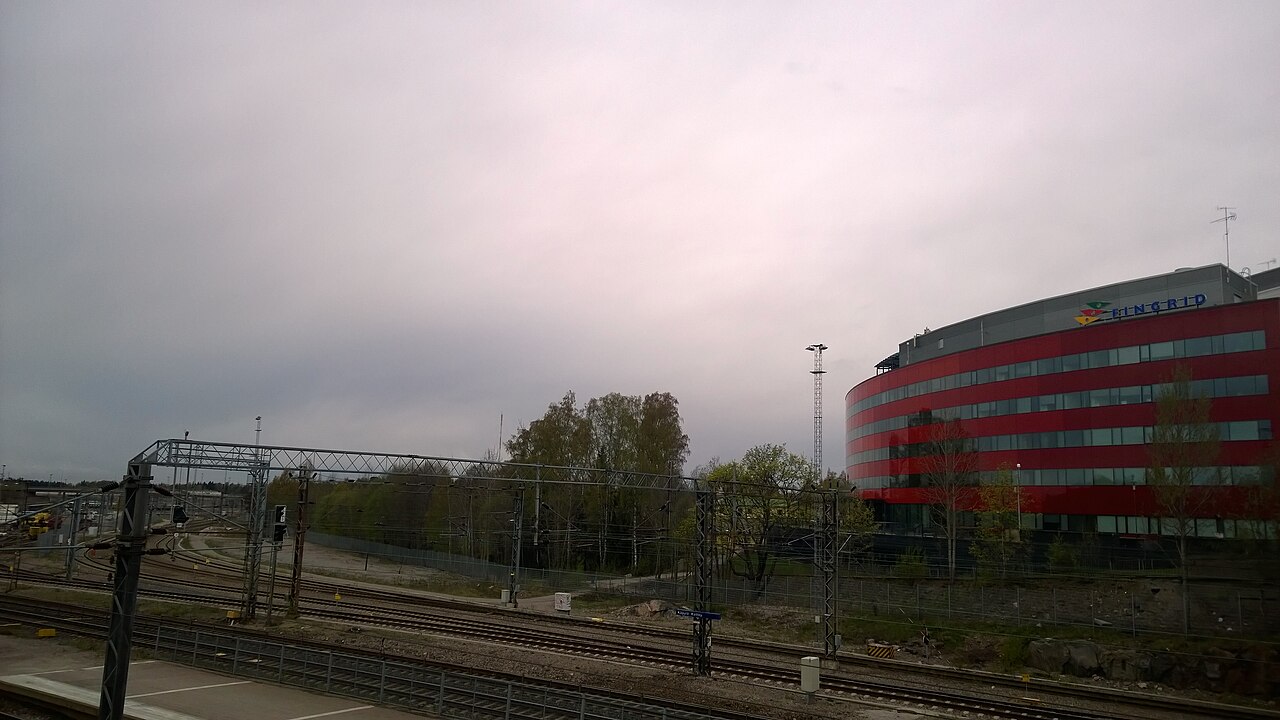
Fingrid, Finland’s transmission system operator, has mandated grid-forming control for new large wind and solar plants. This requirement applies specifically to facilities located in weak grids, defined as those with an equivalent short-circuit ratio (ESCR) below 1.0. The new technical requirements are detailed in the VJV2024 grid code, marking a significant shift in how renewable energy integration is managed in the country.
According to the updated code, these measures are designed to address specific stability challenges associated with high renewable penetration in areas with low grid strength. By targeting only new projects in weak grid zones, Fingrid aims to ensure that future generation assets contribute actively to grid stability rather than relying solely on passive inverter-based control.
The introduction of these rules signals a broader trend in European grid codes, where the focus is moving from simple fault ride-through capabilities to active grid-forming functions. This approach seeks to maintain voltage and frequency stability as the share of inverter-based resources increases in the power system.
Technical Stability Rationale
In electrical engineering, a weak grid is characterized by a low short-circuit ratio, meaning the network lacks the robust inertia and fault-current capacity of traditional synchronous machines. When high shares of inverter-based resources connect to such zones, the system becomes susceptible to voltage oscillations and struggles to maintain stability during faults. These dynamics can trigger protection trips or degrade power quality, creating a feedback loop where instability forces curtailment of renewable output. Grid-forming control addresses this by allowing inverters to actively synthesize grid characteristics, providing the necessary stiffness to dampen oscillations and support voltage during disturbances. This technical shift moves beyond passive current-source behavior, enabling new assets to anchor the local network rather than merely reacting to it.
The scope of these new mandates is strictly limited to future connections. Existing plants and projects that already hold connection agreements are exempt from the updated grid-forming requirements. This grandfathering clause distinguishes between legacy infrastructure, which was designed under previous code assumptions, and new entrants that must meet contemporary stability standards. For the grid operator, this approach isolates the stability burden on new installations, ensuring that incremental growth in weak zones does not exacerbate existing vulnerabilities. By requiring only new projects to provide active support, the regulatory framework balances the need for enhanced system resilience with the practical constraints of retrofitting established assets, which often lack the hardware or control logic to implement such functions without significant capital expenditure.
Equipment Sizing and Placement
The VJV2024 code offers developers flexibility in how they source the required grid-forming support, allowing the choice between battery energy storage systems, enhanced static synchronous compensators (ES-STATCOMs), or synchronous machines. Each technology tier demands specific capacity levels relative to the connected renewable plant, creating distinct cost and engineering trade-offs. The following table outlines the permissible sizing options for each equipment type:
| Equipment Type | Sizing Options (as % of plant capacity) |
|---|---|
| Batteries | 10%, 20%, or 30% |
| ES-STATCOMs | 7%, 13%, or 20% |
| Synchronous Machines | 33%, 66%, or 100% |
These figures dictate the scale of auxiliary hardware needed to meet stability mandates. For instance, choosing an ES-STATCOM requires a smaller capacity footprint compared to batteries, while synchronous machines demand the largest share of plant capacity for equivalent support roles. Beyond sizing, physical proximity is a strict constraint. All selected equipment must be located within 60 km of electrical distance from the renewable plant. This limitation ensures that the grid-forming support responds quickly enough to local disturbances, preventing latency issues that could undermine the stability benefits of the investment. Developers must therefore integrate these distance and capacity metrics into early-stage project planning to avoid costly redesigns later in the permitting process.
Operational Conditions and Market Access
- Grid-forming equipment must be online whenever the connected renewable plant generates at 50% or higher of its capacity.
- The support system must be fully in service prior to the plant’s first power export.
- Battery energy storage systems that satisfy the technical mandates are permitted to participate in electricity and reserve markets.
These operational thresholds ensure that active grid support is available precisely when inverter-based generation dominates the local network, preventing stability issues during high-output periods. By requiring the equipment to be operational before the first export, Fingrid eliminates the risk of a stability gap during commissioning, ensuring the grid can handle the new load from day one. This pre-export condition shifts the compliance burden to the construction phase, forcing developers to integrate testing and synchronization schedules tightly with grid connection milestones.
The market access provision adds a distinct financial dimension to the technical requirement. While the primary purpose of the batteries is to maintain grid stability, the ability to trade in energy and reserve markets allows operators to generate revenue from the same hardware. This dual-use potential improves the project’s economics, helping to offset the capital costs of installing storage solely for compliance. For investors, this flexibility transforms a mandatory expense into a potential asset, provided the control logic can switch between grid-forming duties and market dispatch without compromising safety.
What to watch
Developers and investors should prepare for the upcoming webinar scheduled for October 16, which will provide critical details on the implementation of the measures Fingrid announced in late September. This session is the immediate next milestone for stakeholders needing to navigate the new grid-forming requirements under the VJV2024 code.
Attention should focus on how the regulatory body clarifies the practical application of the 60 km electrical distance constraint and the specific sizing tiers for batteries, ES-STATCOMs, and synchronous machines. Understanding the precise technical standards for these equipment types is essential for early-stage project planning, as non-compliance can lead to costly redesigns during the permitting phase.
Stakeholders should also monitor guidance on the operational interplay between grid-forming duties and market participation. While batteries meeting technical mandates can trade in electricity and reserve markets, the control logic required to switch between stability support and commercial dispatch remains a key engineering challenge. Clear protocols on this dual-use capability will determine how effectively project economics can offset the capital costs of mandatory storage installations.
Source: pv magazine. This article is an original Luminity report based on the linked source.