
REI 2026: 54,000 visitors, 1,000 exhibitors, and 2027 market shakeout
The Renewable Energy India Expo 2026 in Greater Noida drew over 54,000 visitors and 1,000 exhibitors, highlighting India's expanding solar manufacturing base. Industry experts predict a market shakeout beginning in 2027 as domestic content policies extend to wafers and cell production scales up.
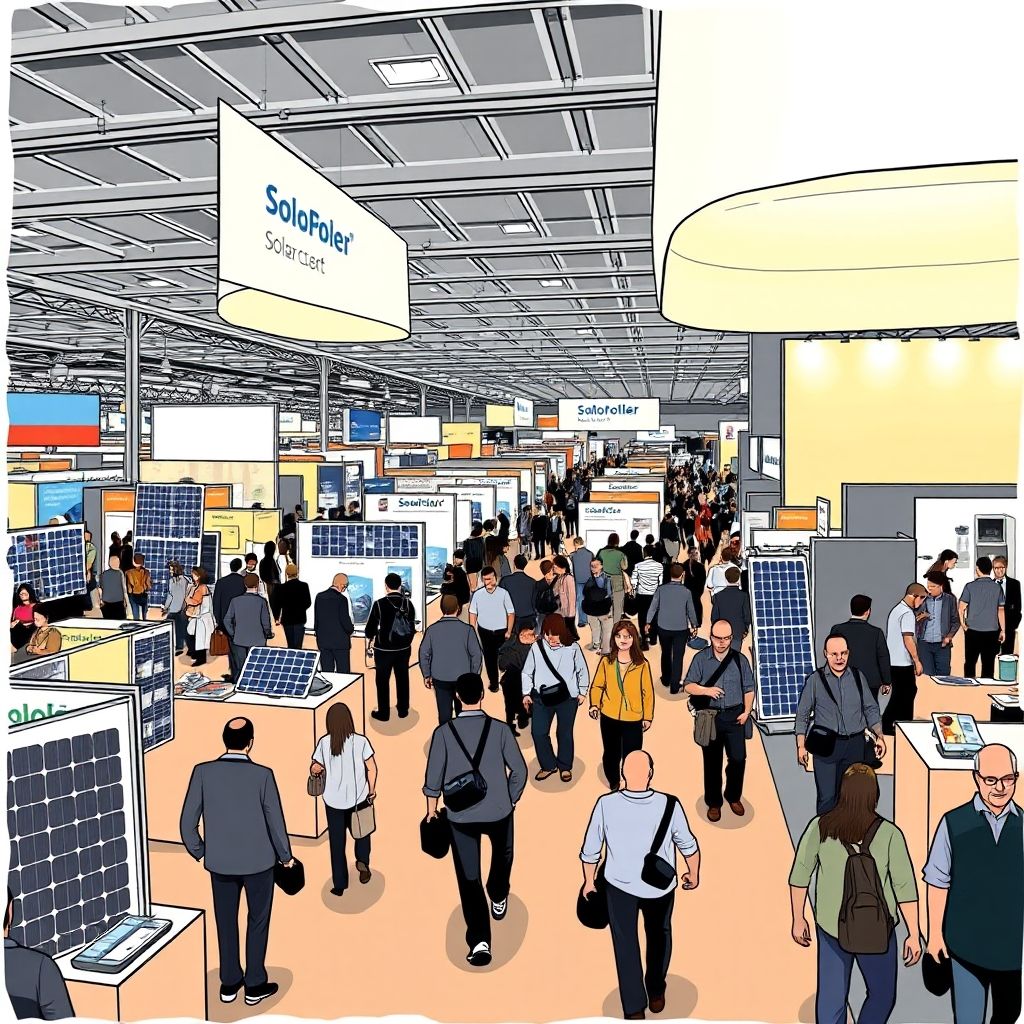
The Renewable Energy India Expo (REI) and the Battery Show India 2026 concluded at the India Expo Center in Greater Noida. According to the event organizers, the two-day exhibition attracted more than 54,000 visitors. The gathering brought together industry stakeholders to showcase the latest developments in renewable energy technologies and battery storage solutions.
While specific exhibitor counts were not detailed in the initial attendance figures, the scale of participation underscores the sector’s continued momentum in India. The event served as a platform for manufacturers, developers, and policymakers to engage in discussions about infrastructure expansion and technological integration.
Market Scale and Demand
Analysts estimate India’s annual solar module manufacturing capacity exceeds 200 GW. This production scale significantly outpaces current consumption, as the country expects annual photovoltaic demand of 50 to 60 GW through 2030. The substantial gap between installed manufacturing capability and projected market absorption highlights a structural imbalance within the domestic supply chain.
The REI 2026 exhibition featured more than 1,000 exhibitors, reflecting the breadth of players operating within this oversaturated manufacturing environment. These participants ranged from component suppliers to system integrators, all navigating a market where domestic output capacity is four times higher than the upper bound of anticipated annual demand. This disparity suggests that manufacturers are competing for a fixed volume of installations rather than expanding into a rapidly growing local market, a dynamic that shapes pricing and export strategies for the sector.
Policy and Manufacturing Shifts
- A market shakeout is predicted to begin in 2027.
- India’s local cell manufacturing capacity is expected to reach 80 GW by the end of 2027.
- The domestic content requirement policy was extended to the cell sector earlier in 2026.
- Solar wafers are set to be included in the domestic content policy by 2028.
The extension of domestic content rules to the cell sector earlier in 2026 marks a significant tightening of supply chain mandates. This regulatory shift forces manufacturers to source more components locally, directly impacting the competitive landscape for cell producers. As the policy framework expands, the upcoming inclusion of solar wafers by 2028 will further deepen the localization requirements for upstream materials.
These policy adjustments coincide with a projected expansion of local cell manufacturing capacity to 80 GW by late 2027. The timing of this capacity growth aligns with the predicted onset of a market shakeout in 2027. With regulatory barriers raising the cost of entry and compliance, manufacturers must navigate a period where increased production capacity meets stricter sourcing rules. This convergence of policy and capacity expansion sets the stage for intensified competition among domestic producers.
Technology Roadmaps
Major Indian manufacturers are expanding their technological focus beyond standard production lines. Saatvik, Grew, Solex, Zetsol, Navitas, Reliance, and Adani have outlined plans for wafer production, signaling a move to control earlier stages of the supply chain. Within the cell sector, the industry’s primary technological focus remains on TOPCon, which currently dominates development roadmaps for domestic producers seeking efficiency gains.
Reliance Industries stands out with a distinct strategic direction, building a 20 GW supply chain dedicated to heterojunction technology. This approach differentiates the company’s output from the broader market’s reliance on TOPCon, aiming to capture specific segments that value different performance characteristics. While heterojunction offers technical advantages, its adoption requires significant capital investment in specialized equipment, marking a departure from the more standardized TOPCon pathways chosen by many peers.
Looking further ahead, perovskite technology remains in the experimental phase for most participants. Commercial availability for this material class is estimated to be at least five years away. However, hybrid perovskite-silicon modules represent a nearer-term milestone. Grew Solar, Navitas Solar, Rayzon Solar, and INA Solar, through a partnership with Caelux, have planned the availability of these hybrid modules for 2028. This timeline suggests that while pure perovskite cells face longer regulatory and durability hurdles, hybrid configurations may enter the market sooner, potentially altering module efficiency benchmarks before the broader perovskite sector matures.
What to watch
Developers are currently focused on the operational consequences of newly implemented domestic content rules. In a pv magazine Insight session, Atanu Samanta from Kosol Energie, Pirmin Preis of ISC Konstanz, Sai Charan Kuppli at Premier Energies, and Mahesh Murthy of Waaree Energies explored these trends. Their insights indicate that applying these mandates to the cell sector has led to short-term price hikes and stalled projects. For project owners, this results in immediate hurdles, as rising compliance expenses and supply chain realignments postpone execution.
Beyond these immediate procurement issues, focus will shift to how manufacturers handle the anticipated 2027 market restructuring. As local cell capacity grows to 80 GW and sourcing regulations tighten, the sector faces a significant consolidation test. It is crucial to observe if existing production levels can maintain margins under these stricter regulatory environments.
Source: pv magazine. This article is an original Luminity report based on the linked source.