
Gritt Robotics targets 6 million panel installs to address solar labor gap
Gritt Robotics is retrofitting commercial construction equipment with AI to address a reported 53,000 worker shortfall in the solar industry. The company aims to install 2.8 GW of capacity within two years while expanding its automation platform to other infrastructure sectors.
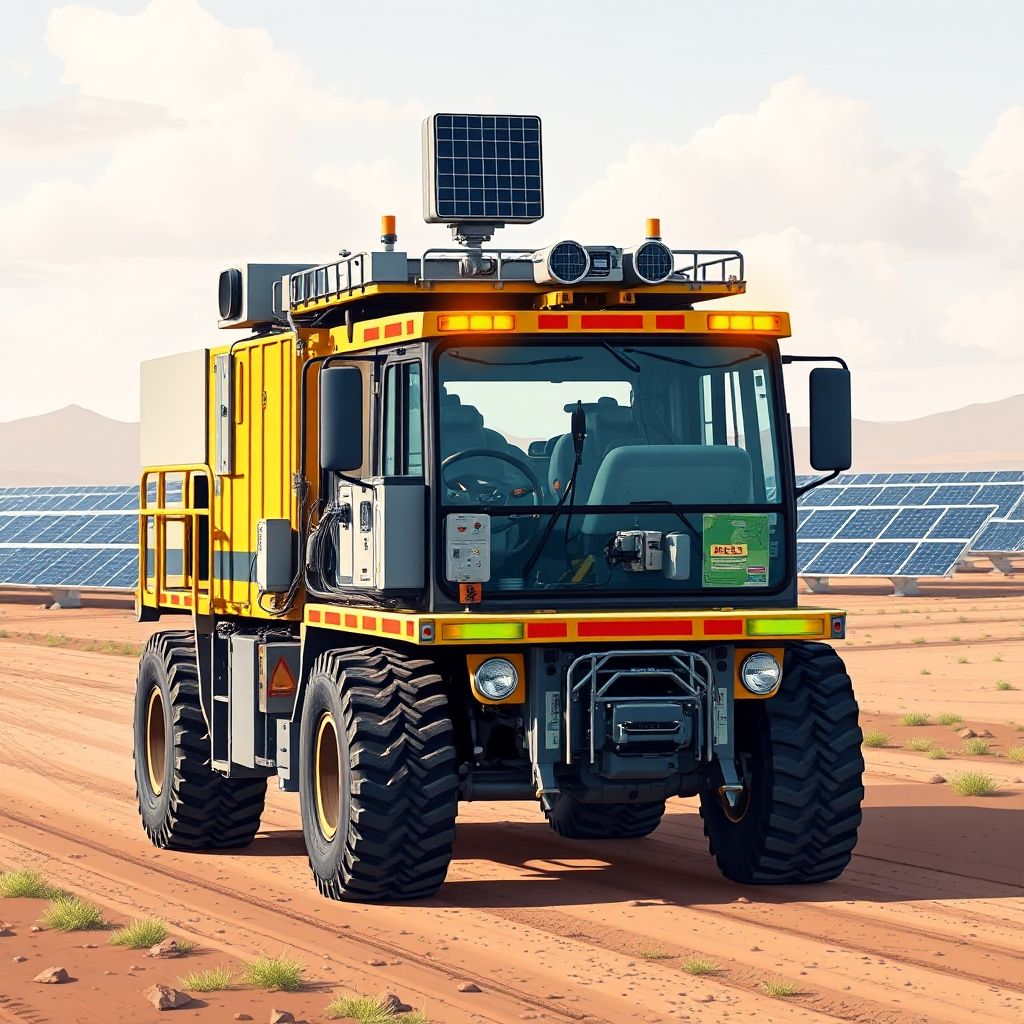
Gritt Robotics is deploying AI-controlled systems on commercial construction equipment at solar sites managed by Burns & McDonnell. The company’s approach involves retrofitting existing machinery rather than building new platforms, according to the firm.
Automation Strategy
Gritt Robotics CEO Puneet Puri describes the outdoor environment as difficult, noting that solar sites present construction challenges involving physically demanding, repetitive steps and materials transport. Rather than developing new hardware from scratch, Gritt focuses on retrofitting existing commercial construction equipment. Puri argues that reinventing base platforms is unnecessary because many of these machines already operate reliably in harsh environments. Instead, the firm prioritizes creating an intelligence layer to control them safely and repetitively.
According to Puri, the system must understand dynamic variables such as open trenches, moving personnel, and materials affected by snow, rain, or dust. It also accounts for changing light levels.
Workforce Impact
- Gritt Robotics CTO Vishal Dugar notes that human skills remain constant once a worker learns a tool on one job.
- Dugar explains that the AI system learns by identifying similar patterns, which it reuses to accelerate the learning curve for subsequent jobs.
- Industry estimates indicate that 41% of construction workers nationwide are projected to retire by 2031.
- Gritt Robotics CEO Puneet Puri states that a major part of the company’s vision is to help create the workforce of tomorrow.
This capability allows the machinery to handle new projects with reduced setup time, effectively transferring efficiency gains from one installation to the next.
This technological approach responds to a structural demographic shift in the construction sector. With nearly half of the current workforce expected to exit the industry within the next six years, maintaining project timelines becomes challenging without new labor influxes. By automating repetitive tasks, the system addresses both the immediate physical demands of the work and the long-term scarcity of skilled labor. Puri frames this not just as a productivity tool, but as a foundational element for sustaining the sector’s capacity to deliver projects as the current generation of workers departs.
Company Scope
Gritt Robotics is currently collaborating with three of the top ten solar engineering, procurement, and construction firms in the United States. These partnerships form the operational base for the company’s near-term expansion plans, which target the installation of 6 million solar panels within a two-year timeframe. This volume translates to an approximate capacity of 2.8 gigawatts of new solar generation.
CEO Puneet Puri frames this scale as central to the firm’s broader objective. "The mission of the company is to help civilization build infrastructure rapidly," Puri said. The specific engineering challenge involves deploying the AI-controlled retrofit systems across these large-scale commercial projects. By integrating with major EPCs, Gritt applies its automation layer to the extensive material transport and repetitive physical tasks inherent in high-volume installations. The two-year timeline and gigawatt-level capacity targets reflect the immediate demand for labor-saving technology in the sector, where the physical scope of construction currently outpaces available workforce capacity. These figures illustrate the magnitude of the infrastructure buildout that Gritt’s automation strategy is designed to support over the next 24 months.
What to watch
The immediate focus remains on executing the 6 million panel installation target across the three top-tier EPC partnerships over the next two years. Success here will determine whether the retrofit approach can scale reliably in real-world construction environments. Beyond solar, Gritz Robotics plans to expand its automation systems into data center and infrastructure construction. This diversification suggests the company views its core technology as applicable to a broader range of heavy construction tasks, not just renewable energy projects.
The team behind these plans brings significant technical pedigree, with founders and leadership drawn from Carnegie Mellon University, MIT, or specialized automation research centers. This academic background likely informs the company’s approach to solving complex outdoor robotics challenges. As Gritz moves from solar sites to other infrastructure sectors, the ability to adapt its AI control layer to new types of equipment and site conditions will be a key indicator of its long-term viability.
Source: pv magazine. This article is an original Luminity report based on the linked source.