
PVcase launches cloud-based software for early-stage solar feasibility
PVcase has released PVcase Concept, a cloud-based tool designed to streamline early-stage solar site feasibility and design. The software aims to reduce project attrition by providing rapid go-or-no-go decisions before significant engineering costs are incurred.
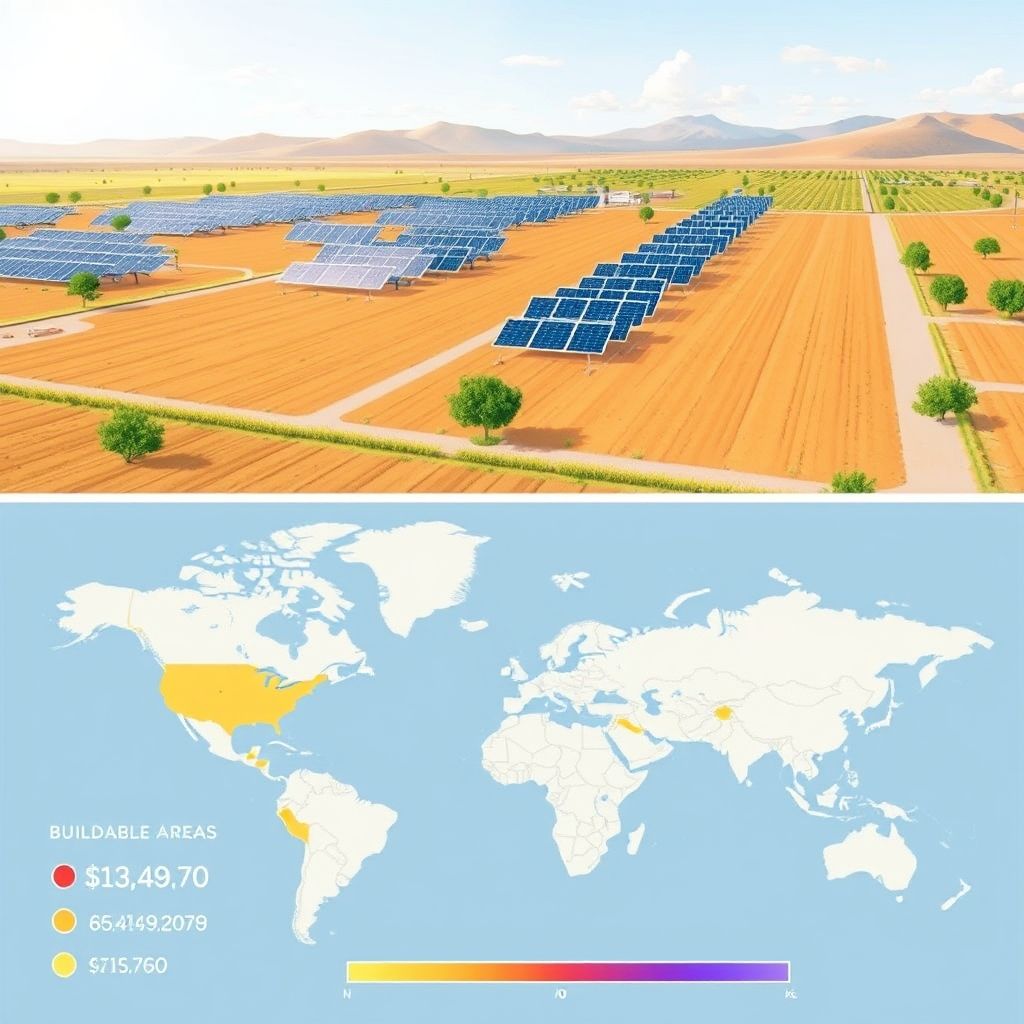
PVcase has launched PVcase Concept, a cloud-based software tool designed for early-stage solar site feasibility and design. According to the company, the platform addresses "the missing middle" between initial site selection and finalized project engineering.
"Every site in a pipeline starts as a ‘maybe,’ and too many stay that way too long," said PVcase CEO David Trainavicius.
The Problem of Project Attrition
Solar developers continue to grapple with pipeline attrition, as a substantial number of proposed locations fail to progress to the construction phase. According to a PVcase survey, 46% of participants indicated that at least half of their projects do not reach this milestone.
The fundamental challenge lies not in a scarcity of data, but in the failure to manage it effectively. Karen Djoury, senior VP of engineering at PVcase, observed, "It’s not that there’s a lack of data but it’s a lack of control of data."
To mitigate this, the new tool features capabilities intended to highlight pertinent information earlier in the workflow. This includes AI-generated analysis of local community sentiment, sourced from news reports and meeting minutes. JP Baertson, product manager at PVcase, highlighted the value of resolving these variables early, remarking, "Let’s figure that out now before we’ve paid our consultant..."
David Trainavicius, CEO of PVcase, characterized the tool’s function in this regard: "PVcase Concept closes the gap between finding a site and engineering it..."
Core Functionality and Data Inputs
- Data inputs include PVcase Prospect software, KML, KMZ, or shapefiles.
- The software conducts buildable area analysis using GIS data and local regulation setbacks.
- Users can manually override buildable areas for factors like tree removal or grading.
- The tool acts as a filter for utility-scale teams to reach "go or no-go" decisions.
Analytical Outputs and Integration
PVcase Concept consolidates multiple data streams into a single dashboard, tracking policy rules, geography, equipment specifications, costs, and production estimates. Rather than operating in silos, the system generates site layouts based on the Ground Coverage Ratio (GCR) and entries from a component database. This automated layout process allows the software to calculate key performance metrics, including system size, annual energy yield, capital expenditure (CapEx), and levelized cost of energy (LCOE).
The platform also facilitates handoff to later development stages. Scenarios can be exported as DXF files, a standard format for computer-aided design, for use in PVcase Ground Mount. In a recent demonstration, the software applied to a project in western Michigan identified specific buildable areas and transmission interconnection points.
Regulatory and Financial Specifics
PVcase product manager JP Baertson noted that policy considerations have become increasingly critical, citing a customer whose utility-scale pipeline tripled in recent years alongside a tripling of attrition rates, with go/no-go decisions frequently tripping up at the policy level rather than design or material costs. The software highlights government regulations such as Clean Water Act restrictions applicable to specific sites. During the western Michigan demonstration, the tool identified local transmission lines and points of interconnection while adding setbacks based on site features and local regulations. The component database contains thousands of entries, allowing developers to specify equipment and adjust the Ground Coverage Ratio on the fly to observe impacts on outcomes. All financial metrics, including capital and operating expenses, are subject to manual adjustment for specific developer costs and what-if analysis. Each mix of preliminary design and estimated financial performance can be saved as a scenario, enabling teams to compare multiple iterations for financial calls across landowners. Baertson emphasized the goal of bringing reality to projects sooner, avoiding the expense of consulting fees and engineering hours before discovering fatal flaws.
What to watch
PVcase has not disclosed a timeline for specific software updates or future feature releases.
Source: pv magazine USA. This article is an original Luminity report based on the linked source.