
Cummins electrolysers face stop-use order, recall status unclear
Cummins Hydrogenics recommended customers halt operations on its HyLYZER electrolysers, a move disclosed in the company's November financial report. While the firm assesses modifications for return to service, the issue has contributed to significant financial charges and a strategic exit from new commercial electrolyser activity.
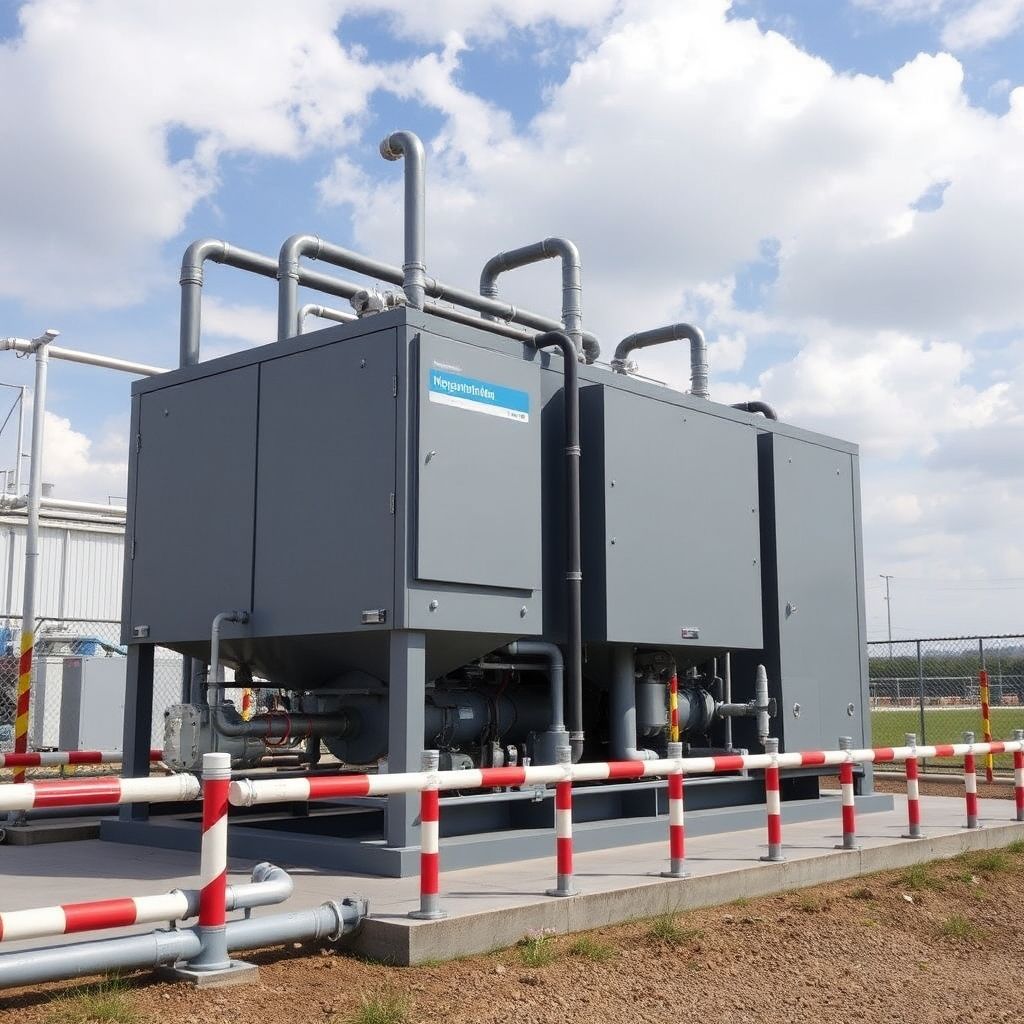
Cummins Hydrogenics subsidiaries advised customers to halt operations on their HyLYZER electrolysers in September, a move that was only fully detailed in the company’s November quarterly report.
As of the latest filings, Cummins has not initiated a recall for these units.
Financial and Strategic Impact
Cummins is currently assessing the specific equipment modifications required to return the HyLYZER units to service, but the company has not yet established the cost of resolving the issue. In its financial disclosures, Cummins warned that the financial effect of this matter could be material.
The financial strain is evident in Cummins’ 2025 Accelera restructuring, which resulted in impairment charges reaching $458 million. Further compounding the financial impact, Cummins made a $175 million net payment in March 2026 to facilitate its exit from the fuel-cell business.
Strategically, the company announced in February its intention to cease new commercial electrolyser activity.
Global Deployment Scale
Accelera, a Cummins Hydrogenics subsidiary, reports deploying more than 45 HyLYZER 500 systems and more than 20 HyLYZER 1000 systems. Each HyLYZER 1000 unit is rated at 5 MW. While Cummins has not published the exact number of plants covered by the September stop-use recommendation, these historical deployments represent a total capacity of 145–213 MW.
| System Type | Quantity | Unit Rating |
|---|---|---|
| HyLYZER 500 | >45 | Not specified |
| HyLYZER 1000 | >20 | 5 MW |
This installed base constitutes 11–16% of the 1.3 GW global PEM electrolyser base projected by the IEA for the end of 2026.
Industry Context and Alternatives
- Estonia’s Stargate Hydrogen has taken over stewardship of the former Cummins HySTAT alkaline electrolyser system. It provides service and replacement stacks for more than 400 units.
- Air Liquide runs a 20 MW facility in Bécancour.
- Linde is advancing a 35 MW initiative at Niagara Falls.
- Florida Power & Light maintains a 25 MW HyLYZER unit at the Cavendish site. With electricity priced at $50/MWh, the cost of recovered electricity stands at approximately $138/MWh.
- In its 2025 assessment, KWR H-Flex noted increased expenses, project delays, and sluggish demand expansion at Hysolar’s Nieuwegein location.
- The IEA’s Global Hydrogen Review 2026 reports that worldwide hydrogen consumption is still predominantly driven by refining and conventional industrial uses.
- Just one-fifth of the low-emissions hydrogen offtake agreements finalized in 2025 included binding contractual obligations.
Cavendish Conversion Efficiency and Fuel-Cell Exit Accounting
Using an illustrative 55 kWh/kg of electrolyser electricity and a 60% combined-cycle generation efficiency, roughly 36% of the initial electricity is recovered after conversion to hydrogen and combustion, prior to compression and storage. If input power is priced at $50/MWh, the cost of the recovered electricity stands at approximately $138/MWh, excluding equipment and operating expenses.
This deal resulted in a $199 million accounting charge. These numbers pertain exclusively to the fuel-cell transaction and do not represent estimated HyLYZER repair costs, which have yet to be quantified.
The IEA’s Global Hydrogen Review 2026 highlights that global demand remains concentrated in conventional industry and refining. In 2025, only about one-fifth of newly signed low-emissions hydrogen offtake volumes included firm contractual commitments.
KWR H-Flex’s 2025 evaluation of Hysolar’s Nieuwegein installation, which includes an electrolyser, dedicated pipeline, refuelling station, and vehicle customers tied to a shared demand forecast, recorded project delays, increased costs, and hydrogen demand growing more slowly than anticipated.
Air Liquide’s 20 MW Bécancour facility and Linde’s 35 MW Niagara Falls project serve firms with industrial hydrogen clients and alternative supply networks. Disruptions at these locations can lead to lost sales, the need for replacement purchases, and expenses associated with upholding customer commitments. Owners with contracted industrial demand have a commercial incentive to resume production, assuming the equipment meets necessary safety standards and replacement supply costs are justified.
Source: CleanTechnica. This article is an original Luminity report based on the linked source.