
Lacour seeks approval for 736 MW West Arthur wind and battery project
Lacour Energy has applied for approval to build a major wind and battery hybrid in Western Australia, with wind capacity ranging from 552 to 736 MW. The project includes a 500 MW battery system with up to eight hours of storage, aiming to support the state's transition away from coal.
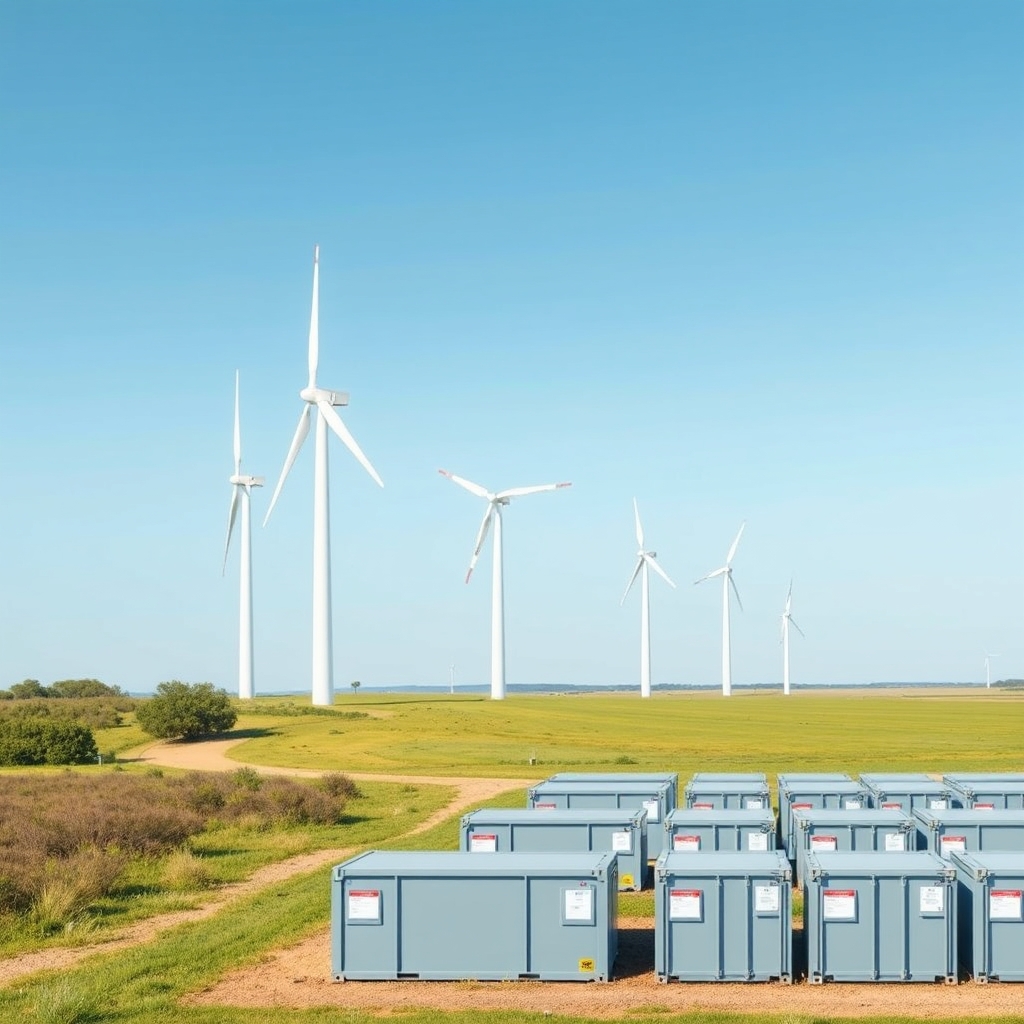
Lacour Energy has formally sought approval for the West Arthur wind farm, a significant renewable energy development located in the Shire of West Arthur, Western Australia. The project represents a substantial step in the region's energy landscape, designed to integrate large-scale wind generation with advanced storage capabilities.
According to the application, the wind component of the project is estimated to have a total capacity ranging from 552 MW to 736 MW. This wide range reflects the potential variation in turbine specifications and final site optimization during the detailed design phase. The project is positioned to contribute significantly to the state's grid as it prepares to move beyond coal-dependent generation.
Technical Specifications
The wind array will comprise up to 92 turbines, each rated between 6 MW and 8 MW. These machines stand tall, featuring a hub height of 164 metres and a tip height reaching 253 metres into the sky. Such vertical dimensions are standard for modern utility-scale wind resources, as higher elevations access stronger and more consistent wind speeds, which directly boosts annual energy yield. The substantial rotor sweep also allows the project to capture maximum kinetic energy from the prevailing winds in the Shire of West Arthur.
Complementing the generation assets is a massive battery storage system rated at 500 MW with a capacity of 2,000 megawatt-hours. This configuration provides up to eight hours of discharge duration. For grid operators, this multi-hour storage capability is distinct from short-duration backup systems, enabling the plant to shift energy from peak generation periods to times of high demand or low wind resources. Such long-duration storage helps smooth out the intermittent nature of wind power, ensuring a more stable and reliable supply to the Western Australian grid.
Land Use and Infrastructure
The West Arthur project spans a vast tract of Western Australian bushland, requiring careful spatial planning to balance generation capacity with environmental and agricultural considerations. The following table outlines the physical footprint of the development as detailed in the application.
| Component | Area |
|---|---|
| Total Land Area | Almost 11,000 hectares |
| Development Footprint | 566 hectares |
| Battery Site Area | Up to 26 hectares |
The disparity between the total land area and the actual development footprint is a defining characteristic of modern wind farms. While the turbines occupy only a few hectares, the total project area often includes buffer zones, access roads, and land set aside to mitigate visual and ecological impacts. This extensive land use allows for greater turbine spacing, which reduces wake effects and noise for nearby residents. The battery facility, occupying up to 26 hectares, represents a significant infrastructure commitment. Unlike smaller storage units, multi-hour battery systems require substantial space for containerized modules, cooling infrastructure, and safety perimeters. The project will connect to the grid via a 330 kilovolt line, a voltage level standard for long-distance transmission in Australia. This high-voltage connection minimizes energy losses over distance, ensuring efficient delivery of power to the broader state network. For developers, securing such a large land area early in the process is critical for managing community expectations and regulatory approvals.
Timeline and Transmission
Lacour Energy proposes to break ground on the West Arthur project in 2027, with first power targeted for 2030. This three-year construction window is consistent with the current lead times for utility-scale wind developments, which involve extensive civil works, turbine manufacturing cycles, and grid connection testing. The schedule aligns closely with the completion of the Clean Energy Link, a major inter-state transmission corridor slated for operational status in 2029. By timing the wind farm’s energization to coincide with the link’s readiness, the project can immediately access the expanded transmission capacity required to move large volumes of renewable energy from regional sites into the state’s main grid.
The timing is strategic for developers navigating the transition away from coal-fired generation. Connecting a plant with a total wind capacity ranging from 552 MW to 736 MW directly to a newly commissioned high-capacity line reduces the risk of curtailment, a scenario where generated power is wasted because the grid cannot absorb it. The Clean Energy Link serves as critical infrastructure, allowing energy produced in the Shire of West Arthur to flow efficiently to demand centers. This synchronization ensures that the substantial output from the wind array and its associated storage system contributes reliably to the broader network as soon as it comes online.
Community and Policy Context
The West Arthur application leverages specific federal designations to streamline its regulatory pathway while establishing a direct financial link to local stakeholders.
- Federal Status: Listed on the National Renewable Energy Priority List
- Community Benefit Fund: $1,050 per MW of installed capacity
- Estimated Annual Fund: $315,000 to $525,000
Inclusion on the National Renewable Energy Priority List signals to regulators that the project aligns with national energy security and decarbonization goals. This designation often accelerates planning approvals, as it recognizes the site’s strategic importance for meeting renewable energy targets. For developers, this status reduces bureaucratic friction, allowing them to focus resources on construction and grid integration rather than prolonged permitting battles. It also provides a layer of policy certainty that is increasingly valuable in a market where transmission and land constraints are tightening.
The proposed community benefit fund offers a tangible mechanism for sharing project revenues with the Shire of West Arthur. By allocating $1,050 per megawatt of installed capacity, the developer commits to an annual contribution ranging from $315,000 to $525,000. This structure is common in large-scale renewable developments, where fixed-per-unit payments provide predictable income for local councils. These funds are typically directed toward community infrastructure, environmental offsets, or public services, helping to mitigate local opposition and build long-term social license. For residents, the fund transforms the wind farm from a distant energy asset into a direct contributor to local well-being, reinforcing the economic case for renewable expansion in regional areas.
What to watch
The immediate next milestone is the formal planning approval process. With the project listed on the National Renewable Energy Priority List, the regulatory pathway should be streamlined, but final consent remains subject to standard environmental and land-use reviews. Readers should monitor the outcome of these approvals, as they determine whether the proposed 2027 groundbreaking date holds.
A critical dependency is the operational status of the Clean Energy Link. The wind farm’s 2030 first-power target is synchronized with this transmission corridor’s completion. Any delays to the link could force a reschedule of the wind farm’s energization, potentially impacting the project’s revenue model. Investors typically scrutinize this interdependence closely, as grid connection risks are a primary driver of project valuation in renewable energy.
Finally, the implementation of the community benefit fund will be a key indicator of local relations. The agreement to pay a fixed annual sum per megawatt of capacity provides a steady income stream for the Shire of West Arthur. How these funds are allocated and the level of community engagement in the coming years will shape the social license for the development. Successful execution here often sets the tone for future renewable projects in the region, demonstrating that large-scale energy infrastructure can coexist with local economic interests.
Source: RenewEconomy. This article is an original Luminity report based on the linked source.