
China Grid-Connects First 100 MW Compressed CO2 Storage Plant in Xinjiang
China Huadian has connected a 100 MW/1,000 MWh compressed CO2 energy storage facility to the grid in Xinjiang. The plant, developed by Xi’an Jiaotong University, aims to save 50,000 metric tons of coal annually.
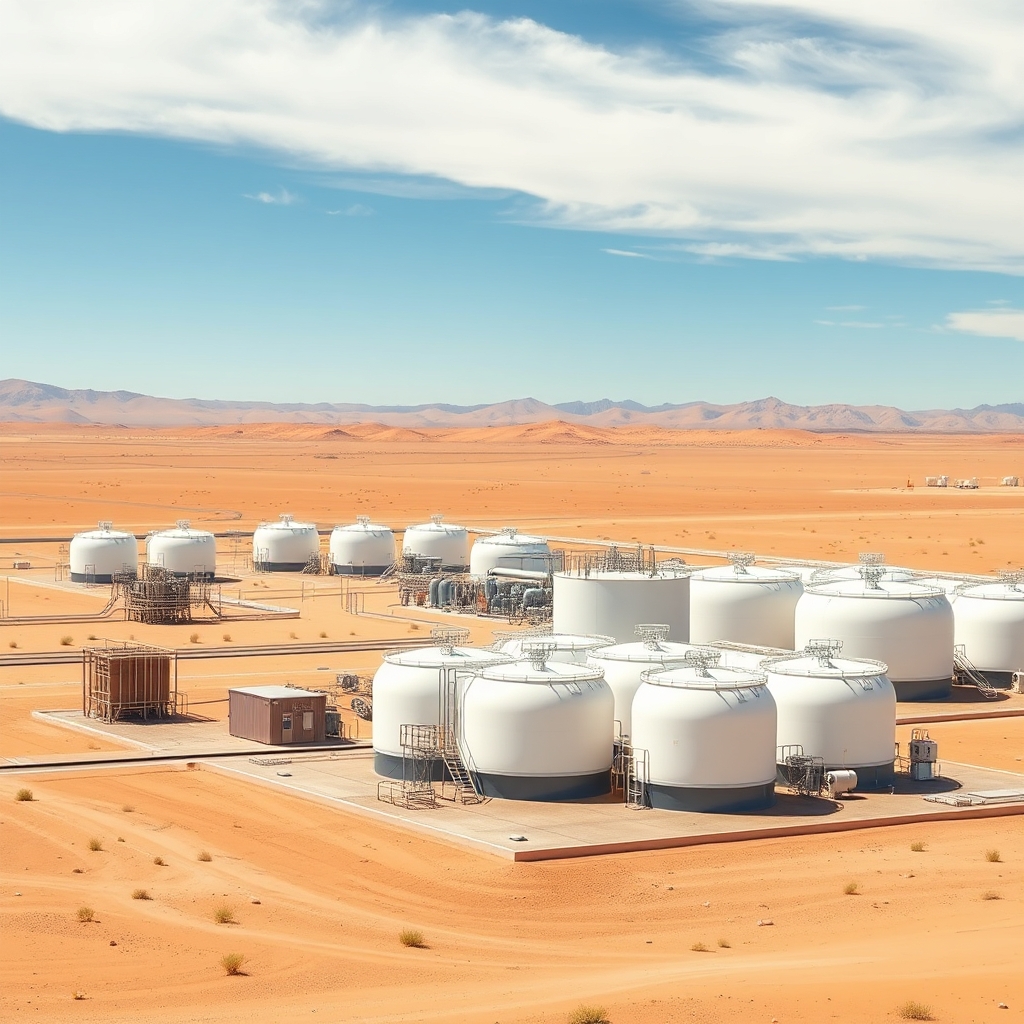
China Huadian has completed the grid connection of its 100 MW/1,000 MWh compressed CO2 storage plant, marking a significant milestone for the technology. According to pv magazine, the facility is located in Mulei County, Xinjiang, within the Gobi Desert of Changji Prefecture.
The grid connection was finalized on Sept. 30. This project represents the first of its scale to utilize compressed carbon dioxide as the primary working fluid for energy storage, moving the technology from theoretical models to operational infrastructure in a remote desert region.
Technical Specifications
- Facility footprint: approximately 565,000 square meters.
- Infrastructure: five gas enclosures, 141 liquid CO₂ units, 97 thermal storage units.
- Nominal discharge duration: 10 hours.
- Technology uses CO₂ as working fluid in closed thermodynamic cycle.
The physical layout of the Mulei installation spans roughly 565,000 square meters, a footprint that accommodates the intricate network of equipment required for large-scale thermal energy storage. At the core of the system are five dedicated gas enclosures, which house the machinery responsible for managing the pressurized fluid. These enclosures work in tandem with 141 liquid carbon dioxide units and 97 thermal storage units, creating a complex but modular architecture that allows the plant to manage energy flows efficiently.
The operational capacity is defined by a nominal discharge duration of 10 hours, meaning the facility can deliver its full rated power output for that period after charging. This duration is significant for grid operators, as it aligns with the evening peak demand window when solar generation drops off. By utilizing carbon dioxide as the working fluid within a closed thermodynamic cycle, the plant leverages the specific physical properties of the gas to store and release energy. Such closed-loop systems generally offer high efficiency and reduced environmental leakage risks compared to open systems, making them a viable option for balancing renewable energy variability in remote desert regions.
Development and Efficiency
The intellectual foundation for this facility rests on research conducted by a team at Xi’an Jiaotong University, led by Professor Xie Yonghui. This academic collaboration provided the theoretical framework necessary to adapt compressed carbon dioxide for large-scale energy storage, bridging the gap between laboratory concepts and industrial application. The transition from research to commercial reality was managed by Exax Energy, a Shenzhen-based firm operating under the Bairang New Energy brand. For developers, the involvement of a specialized commercialization entity is critical, as it handles the regulatory and market integration complexities that pure research institutions rarely address. This structure allows the underlying physics to be packaged into a sellable product for grid operators seeking reliable storage solutions.
Dongfang Electric served as both the EPC contractor and the primary equipment supplier, overseeing the construction and installation of the plant’s core components. The efficiency of the system hinges on its turbine design, which the company states exceeds 92 percent. In thermal energy storage, turbine efficiency directly dictates the net energy return on investment, as higher efficiency means less energy is lost during the conversion process from stored heat to electricity. Such high performance rates are essential for making long-duration storage economically viable, particularly in remote areas where transmission costs can erode project margins. By combining academic innovation with industrial execution, the project demonstrates a viable pathway for scaling up non-battery storage technologies in challenging environments.
Operational Performance
Beyond peak power output, the durability and responsiveness of the Mulei plant define its commercial viability for grid operators. The facility is engineered for an operational lifespan of at least 30 years, a standard duration that aligns with the long-term capital recovery models used in infrastructure financing. For investors, such longevity reduces the frequency of major capital expenditures, allowing the asset to generate stable returns over decades rather than requiring frequent, costly overhauls.
Resilience under repeated stress is equally critical, as the plant is rated to withstand more than 20,000 start-stop cycles. This high cycle capacity indicates that the mechanical components can endure frequent dispatch without significant degradation, a key requirement for storage assets that must respond to daily fluctuations in renewable generation. Unlike technologies that suffer from rapid wear due to frequent cycling, this design supports sustained reliability across thousands of operational days.
Speed of response distinguishes the plant from slower thermal storage alternatives. The system can move from startup to full load in less than 20 minutes. This rapid ramp-up capability allows the facility to address sudden grid imbalances or peak demand spikes effectively. For grid managers, such agility ensures that stored energy is available precisely when needed, enhancing the stability of the power network during periods of high variability.
Environmental Impact
The Mulei facility’s operational profile translates directly into measurable reductions in fossil fuel consumption and greenhouse gas output. By delivering energy to the grid, the plant displaces the need for conventional thermal generation, resulting in an estimated annual saving of 50,000 metric tons of coal. This displacement correlates with a projected reduction of 170,000 metric tons of carbon dioxide emissions per year. These figures underscore the environmental value of integrating long-duration storage into renewable-heavy grids, where curtailment of clean energy often forces reliance on backup gas or coal plants. The table below compares the key environmental metrics associated with the plant’s annual operation.
| Metric | Annual Value |
|---|---|
| Energy Generation | ~200 GWh |
| Coal Savings | 50,000 metric tons |
| CO₂ Emissions Reduction | 170,000 metric tons |
These numbers illustrate how storage infrastructure contributes to decarbonization by optimizing the use of existing renewable resources. Generating approximately 200 GWh annually allows the system to capture and release energy that might otherwise be wasted during periods of high solar or wind production. For grid operators, this efficiency gain reduces the marginal carbon intensity of the electricity supply. The scale of these savings highlights the potential for non-battery storage technologies to support regional climate goals by curbing the operational footprint of traditional power sources without requiring new fossil fuel infrastructure.
What to watch
The immediate next milestone involves the integration of the storage facility into the broader renewable energy complex. The plant is not operating in isolation; it is a designated component of a larger development that includes 600 MW of wind capacity and 400 MW of solar generation. Observers should monitor how the compressed CO2 system interacts with these specific renewable sources, particularly during periods of high irradiance or strong wind events when curtailment is most likely.
Grid operators will closely track the plant’s performance as it absorbs excess generation from the adjacent wind and solar arrays. The success of this project hinges on its ability to store energy that would otherwise be wasted and release it when the renewable output drops. This dynamic testing phase will reveal whether the theoretical efficiency claims hold up under real-world, variable conditions. For investors, the stability of this integrated system is the primary indicator of the project’s long-term commercial viability. If the storage successfully bridges the gap between intermittent renewable production and steady grid demand, it validates the model for similar multi-source developments in other remote regions. The focus remains on operational data from this specific 600 MW wind and 400 MW solar pairing.
Source: pv magazine. This article is an original Luminity report based on the linked source.