
EBRD arranges $265m loan for Egypt's 1.2 GW solar and storage project
The European Bank for Reconstruction and Development is leading a syndicate to finance a 1.2 GW solar plant and 600 MWh battery storage facility in Minya, Egypt. The project, backed by a 25-year power purchase agreement, is set to become the largest solar installation in Africa upon completion in 2027.
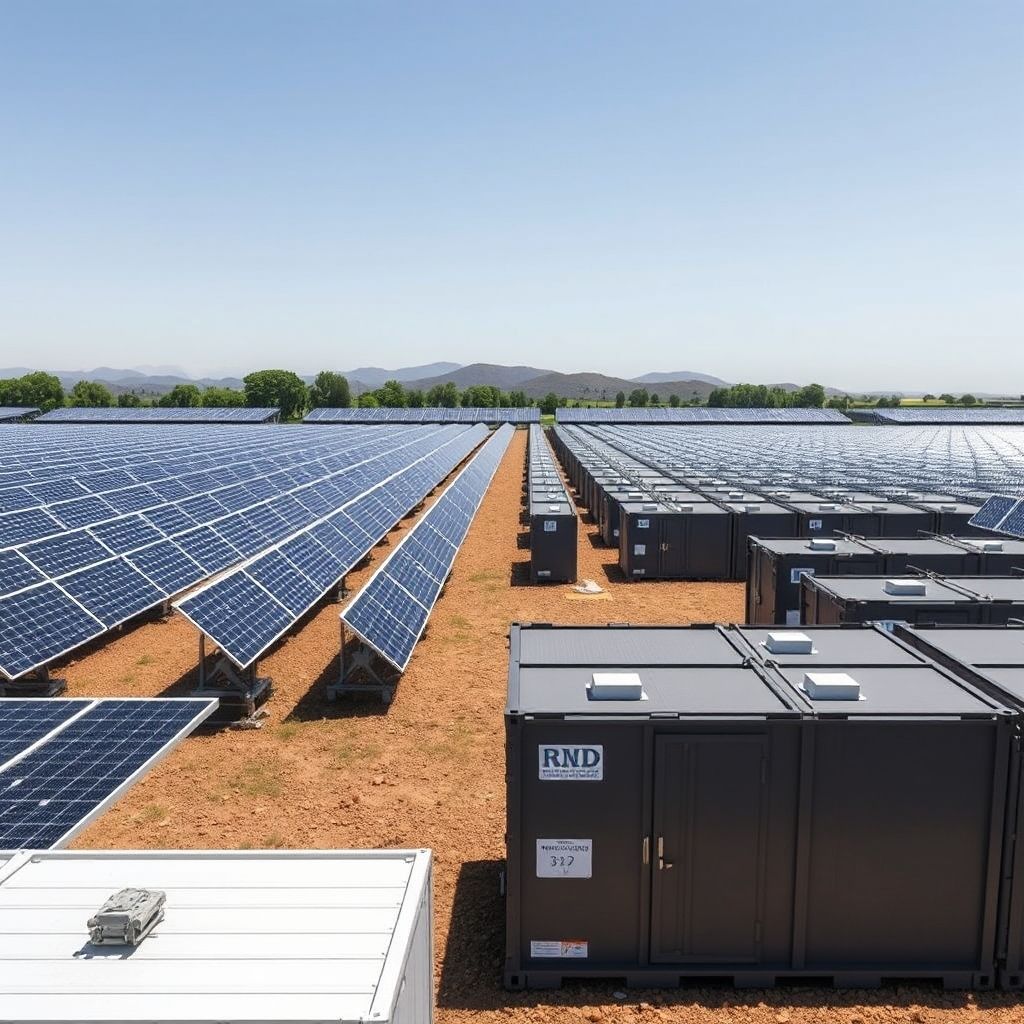
The European Bank for Reconstruction and Development (EBRD) is arranging a loan of up to $265 million for Nefer Menya for Renewable Energy, according to pv magazine. The financing will support the development of a 1.2 GW solar plant and a 600 MWh battery energy storage system (BESS) located in Minya, Egypt.
The project is structured to sell electricity to the Egyptian Electricity Transmission Co. under a 25-year power purchase agreement (PPA). This long-term contract provides the revenue stability necessary to underwrite the substantial debt package for the facility.
Debt Structure and Syndicate
- $160 million A-loan from EBRD own funds
- $75 million B-loan from Bank of Jordan
- Up to $30 million concessional financing from Climate Investment Funds
- DEG, FMO, and Proparco co-financing aggregate debt package up to $566 million
The financing package combines EBRD’s own funds with international co-lenders to bridge the gap between the initial arrangement and the total project cost. The $160 million A-loan represents EBRD’s direct capital commitment, while the $75 million B-loan from Bank of Jordan introduces a regional banking partner into the structure. To lower the overall cost of capital, the deal includes up to $30 million in concessional financing from Climate Investment Funds, a mechanism designed to make large-scale renewable infrastructure more accessible by providing capital at below-market rates.
Bank of Jordan’s role extends beyond providing liquidity; the institution also serves as the original hedge counterparty. This dual function allows the lender to manage currency or interest rate risks directly tied to the loan, creating a more integrated risk profile for the borrower. The broader syndicate expands significantly with the participation of DEG, FMO, and Proparco. Together, these institutions are co-financing an aggregate debt package that reaches up to $566 million. This substantial total indicates that the project’s capital requirements far exceed the initial $265 million arranged by EBRD, requiring a deep pool of international development finance institutions to cover the full scope of the solar and storage build-out.
Ownership and Strategic Partners
Nefer Menya for Renewable Energy operates through a joint venture structure that blends local Egyptian expertise with international development finance. Infinity Power Holding holds a 51% majority stake in the project company, while HAU Energy owns the remaining 49%. This split ensures that control rests with the side bringing specific regional execution capacity, balanced by the institutional backing of the minority partner.
Infinity Power Holding is itself a joint venture between Egypt’s Infinity and Abu Dhabi’s Masdar. The presence of Masdar, a major global player in renewable energy, signals significant strategic intent behind the project’s development. The European Bank for Reconstruction and Development (EBRD) holds an equity stake directly in Infinity Power. This direct investment aligns the lender’s interests with the project’s long-term operational success, creating a layer of accountability beyond the debt facility described earlier.
On the other side of the ownership table, HAU Energy is owned by Meridiam, Hassan Allam Utilities, and the EBRD. This composition brings together a French asset manager, a prominent local utility group, and the same multilateral bank acting as a shareholder. For a project of this scale, having the EBRD involved in both the debt syndicate and the equity structure of the owners is a notable feature. It suggests a comprehensive engagement where the bank supports the project through multiple financial channels. Such dual participation is not uncommon in large-scale infrastructure deals where the financier seeks to mitigate risk by maintaining a stake in the underlying asset. The combination of Meridiam’s asset management capabilities and Hassan Allam Utilities’ local market knowledge provides a robust operational framework for the Nefer Menya entity. This ownership model allows the project to leverage diverse strengths, from international capital access to local regulatory navigation, essential for executing a complex solar and storage build-out in Egypt.
Technical Scope and Market Position
The physical scale of the facility presents a slight discrepancy between marketing materials and official financial disclosures. While the project is widely referenced as a 1.2 GW solar plant, the EBRD’s own disclosure documents list the capacity at 1,000 MW AC. This distinction matters because AC capacity represents the actual power the grid can import, whereas DC ratings often used in supply contracts include losses from inverters and wiring. The EBRD values the total project cost at $764 million, a figure that encompasses the entire build-out, including the associated storage infrastructure.
Component supply was finalized in June when AIKO was selected as the sole module supplier for the 1.2 GWp capacity. Choosing a single supplier for such a massive array simplifies quality control and warranty management, though it concentrates supply chain risk. The technical design prioritizes grid stability through the co-located battery energy storage system. Rather than simply storing excess energy for later use, the battery is specifically engineered to capture daytime solar output and release it during peak demand periods after sunset. This timing aligns the plant’s output with the evening load spikes that typically strain the Egyptian grid, addressing a critical reliability gap rather than just increasing total annual generation.
In terms of regional standing, the EBRD states that the facility will become the largest solar plant in both Egypt and Africa. This designation positions the project as a benchmark for the continent’s renewable energy capacity. For a market still developing its grid integration standards, having a single, ultra-large-scale asset with integrated storage provides a clear template for how future gigawatt-scale projects can manage intermittency. The combination of high AC efficiency and targeted evening discharge sets a technical standard that smaller, standalone solar farms in the region may struggle to match without similar storage integration.
What to watch
The immediate milestone is the project’s scheduled completion in September 2027. With the cabinet having granted the golden license in August, the path to construction is clear, but the timeline will be the primary indicator of execution efficiency. Investors should track whether this schedule holds as the build-out progresses, particularly given the scale of the integrated storage system.
Beyond the single facility, the broader context involves Egypt’s National Wind and Solar Energy (NWFE) program. This initiative targets 10 GW of new private renewable capacity and aims to retire 5 GW of inefficient fossil-fuel generation. The current project supports these national goals, which include raising the renewable share of electricity to 42% by 2030.
Developmental momentum is also evident in corporate strategies. Nayer Fouad, CEO of Infinity Power, states the company is working toward 10 GW of renewable capacity by 2032. Meanwhile, Dalia Wahba, CEO of Hassan Allam Utilities, notes Egypt’s 2030 target. Aida Sitdikova, EBRD director, emphasizes that the project strengthens energy security and grid resilience.
Source: pv magazine. This article is an original Luminity report based on the linked source.