
DTE Energy to run Michigan’s first virtual power plant pilot at Veridian
DTE Energy will remotely control home batteries at the net-zero Veridian development in Ann Arbor, creating Michigan’s first virtual power plant. Enrollment for the residential pilot, which aims to test grid reliability solutions, begins in the coming weeks.
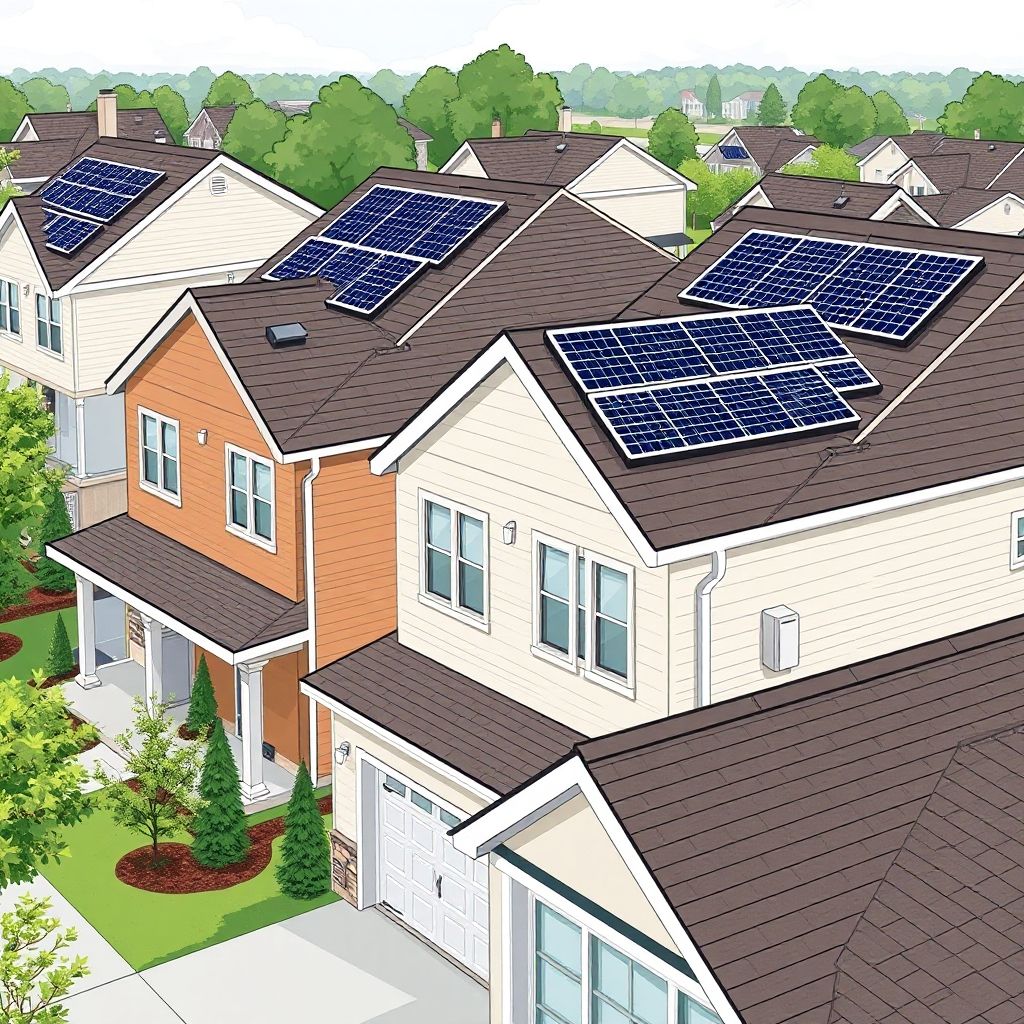
DTE Energy plans to launch Michigan’s first virtual power plant pilot at Veridian at County Farm, a fossil-fuel-free, net-zero-energy development in Ann Arbor, according to the company. The initiative involves remotely controlling home batteries within the community to inject power directly into the grid.
Enrollment for the program is set to begin in the coming weeks, allowing residents of the development to participate in the testing phase.
Pilot Mechanics and Scale
DTE Energy anticipates that nearly 100 battery-equipped homes within the Veridian community will participate in the testing phase. The utility expects the pilot to deliver up to approximately 300 kilowatts of power to the grid, sustained for a duration of three hours.
Sonnen USA is assisting DTE in operating the pilot by providing proprietary software.
The concept for this specific initiative traces back to 2019, when Matt Grocoff, founder of Thrive Collaborative, began considering a virtual power plant pilot at the development.
Resident Incentives and Developer Context
- DTE Energy will compensate residents for their participation in the virtual power plant pilot.
- No specific monetary figures for resident compensation have been disclosed.
- Thrive Collaborative reports that 44 market-rate homes equipped with solar and battery storage have been built at the development so far.
- The developer reports a total of 120 market-rate homes are planned for the project.
- Thrive Collaborative reports that 50 affordable housing units have been constructed at the site without battery storage.
Industry Perspectives and Broader Potential
Joi Harris, president and chief executive officer of DTE Energy, characterized the project as an evaluation of a strategy that might eventually deliver a more affordable method for satisfying rising energy demands while enhancing grid stability.
The Brattle Group calculated that 524 gigawatts of distributed energy resources within virtual power plants could reduce household costs by $122 annually by 2050.
Geoff Ferrell, executive vice president of the VPP business unit at Sonnen USA, characterized Veridian as a testing ground and a strong foundation for a larger-scale program.
Kevin Brehm, manager in the carbon-free electricity practice at RMI, observed that the sector holds vast unused potential. He challenged the need for additional localized experiments by asking, "Do you need another pilot?"
Matt Grocoff, founder of Thrive Collaborative, who developed the idea in 2019, remarked, "We’re getting calls from all over the country."
Sonnen’s Utah Precedent and Veridian’s Ecosystem Design
Geoff Ferrell, executive vice president of Sonnen USA’s VPP business unit, points to the company’s earlier success in Utah as a model for the Michigan pilot. That program began in 2017 at Soleil Lofts, a new apartment building outside Salt Lake City topped with solar panels. According to Ferrell, Rocky Mountain Power and the state utility commission extended the initiative to every residential customer in the utility’s territory before Sonnen had even finished installing batteries in the development’s 600 units. Today, approximately 7,900 homes and businesses participate in the program, now called Wattsmart Battery, across Utah, Wyoming, and Idaho. Ferrell notes that this rapid expansion provided a "really great basis" for scaling.
Meanwhile, Matt Grocoff, founder of Thrive Collaborative, designed Veridian to mimic a biological ecosystem. He describes the community as a resilient web where individual homes, like trees in a forest, produce energy and share it symbiotically across a network rather than relying on a linear grid. Grocoff states that each Veridian home can produce its own energy while mutually beneficially sharing it across this interconnected system. This approach has already attracted interest from developers outside Michigan, including the Peace Hill development in Townsend, Washington. Grocoff reports receiving inquiries from various locations across the country regarding the project's structure.
Source: Canary Media. This article is an original Luminity report based on the linked source.