
Austrian firm to demo 1.2 kW Stirling CHP system for solar complement
Frauscher Motors is preparing a biomass Stirling engine demonstration to complement solar PV in winter. The company reports a 1,201 W electrical output and 28.2% efficiency in preliminary tests.
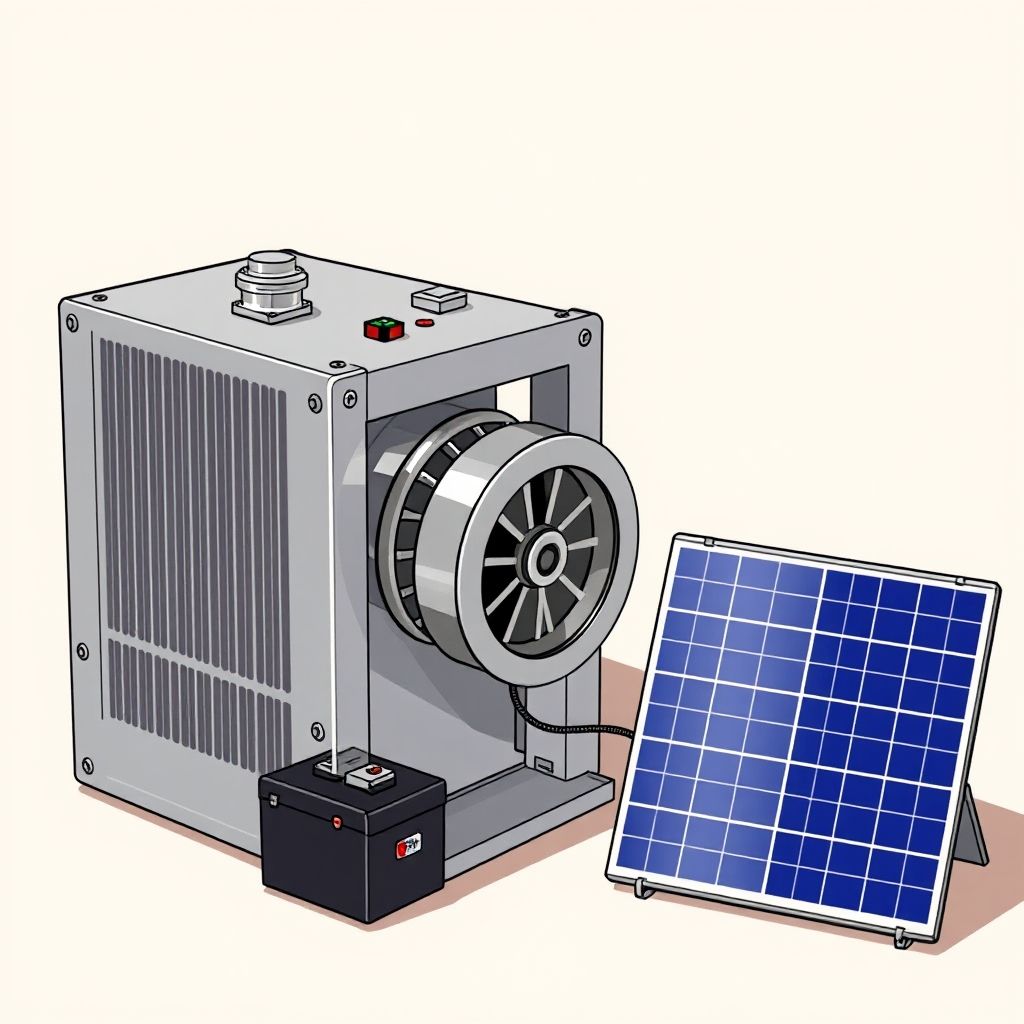
Frauscher Motors, based in St. Marienkirchen near Schärding, will operate the unit from the end of March 2026. The system utilizes a Stirling generator to produce both electricity and heat from biomass fuel.
The Stirling engine technology converts thermal energy into mechanical work, which then drives the electrical generator.
Technical Specifications
The demonstration unit is a Gen70 Stirling generator weighing 29 kg. Measured in January 2025, the system produced 1,201 W of electrical output from a thermal power input of 4,256 W. This resulted in an electrical efficiency of 28.2%. The unit also generated 2.92 kW of cooling heat. At a heater-head temperature of 500 C, the power output was 800 W.
| Parameter | Value |
|---|---|
| Model | Gen70 Stirling generator |
| Weight | 29 kg |
| Electrical output | 1,201 W |
| Thermal power input | 4,256 W |
| Electrical efficiency | 28.2% |
| Cooling heat output | 2.92 kW |
| Output at 500 C heater-head | 800 W |
Integration and Durability
Engineered to run for 10,000 hours without requiring maintenance, the unit is paired with a 5 kWh lithium iron phosphate battery and a 3,000 VA inverter that transforms 48 V DC into 230 V AC. According to CEO Josef Frauscher, in 48-volt frameworks, the link to PV installations is established directly through the storage battery’s charging port.
Project Aims and Uncertainties
- CEO Josef Frauscher indicated that with an assumed 2,000 hours of operation per heating season and a 75% average utilisation rate of the rated output, the system produces 1.5 MWh.
- Frauscher highlighted that establishing the long-term durability of the heat exchanger is a primary objective of the biomass research initiative.
- The firm has already verified a maintenance-free operating duration of 10,000 hours when utilizing natural gas.
- According to Frauscher, no alternative technology transforms thermal energy into electricity with such simplicity, making this approach particularly cost-effective.
- Extended trials are currently underway to evaluate durability and ensure compliance with flue-gas emission standards.
- Key data points, including installation expenses, projected seasonal electricity yields, and the levelized cost of electricity, have not yet been released.
Engine Configuration and Operational Parameters
Utilizing Frauscher’s proprietary Alphagamma Stirling design, the Gen70 unit functions without the need for lubricating oil. According to the manufacturer, the device achieves its peak reported efficiency when the heater head reaches roughly 660 C. Once the 10,000-hour maintenance-free interval concludes, the module necessitates servicing that includes swapping out piston rings and roller bearings. The pilot setup features a heat exchanger designed to harvest energy from both the infrared radiation emitted by the incandescent pellet bed and the convection generated by exhaust gases. A self-cleaning system, triggered concurrently with the burner’s ash-removal cycle, clears accumulated soot from the thermal transfer surfaces. The generator initiates operation automatically upon detecting adequate thermal flow and delivers a direct current charging voltage ranging between 48 V and 53 V. With over twenty years of experience in developing Stirling engine technology, Frauscher Motors provides a range of generators with electrical outputs spanning from about 1.2 kW to 7.5 kW. Their target markets include domestic heating solutions, standalone off-grid systems, and combined renewable energy setups.
Source: pv magazine. This article is an original Luminity report based on the linked source.