
Diesel costs spike 33% globally as solar irrigation boosts African farm incomes
Global diesel prices rose nearly 33% from 2025 to 2026, straining rural businesses and farmers who rely on fuel for irrigation and transport. In Tanzania and Ethiopia, solar-powered pumps replaced diesel systems, leading to doubled mango incomes and significant earnings from onion cultivation for smallholder households.
Data shared by CleanTechnica indicates that worldwide diesel fuel expenses increased by almost 33% between 2025 and 2026. By the second quarter of 2026, the mean global retail price for diesel surpassed the $1.50 per liter mark.
The Cost of Diesel Dependency
During the second quarter of 2026, global retail diesel prices stood 32.9% above their year-ago level and 20% higher than the preceding three months. Across Africa, retail diesel costs averaged a 25% increase over 42 nations between mid-January and mid-June 2026. This regional trend was fueled by distinct national surges; specifically, Nigeria experienced an 86% jump in diesel prices from January to June 2026, while Tanzania and Ethiopia recorded increases exceeding 50% during that same window.
The conflict involving Iran revealed the fragility inherent in the region’s shadow power infrastructure. For agricultural producers and enterprises, these price spikes directly elevate operational expenses. In Nigeria, escalating fuel and fertilizer expenditures drove up the cost of raw groundnuts and groundnut oil by 33% for a women’s groundnut processing cooperative. Likewise, in Myanmar, elevated diesel rates boosted the transportation costs for food and agricultural supplies, subsequently inflating consumer rice prices.
Agricultural Impact in Tanzania and Ethiopia
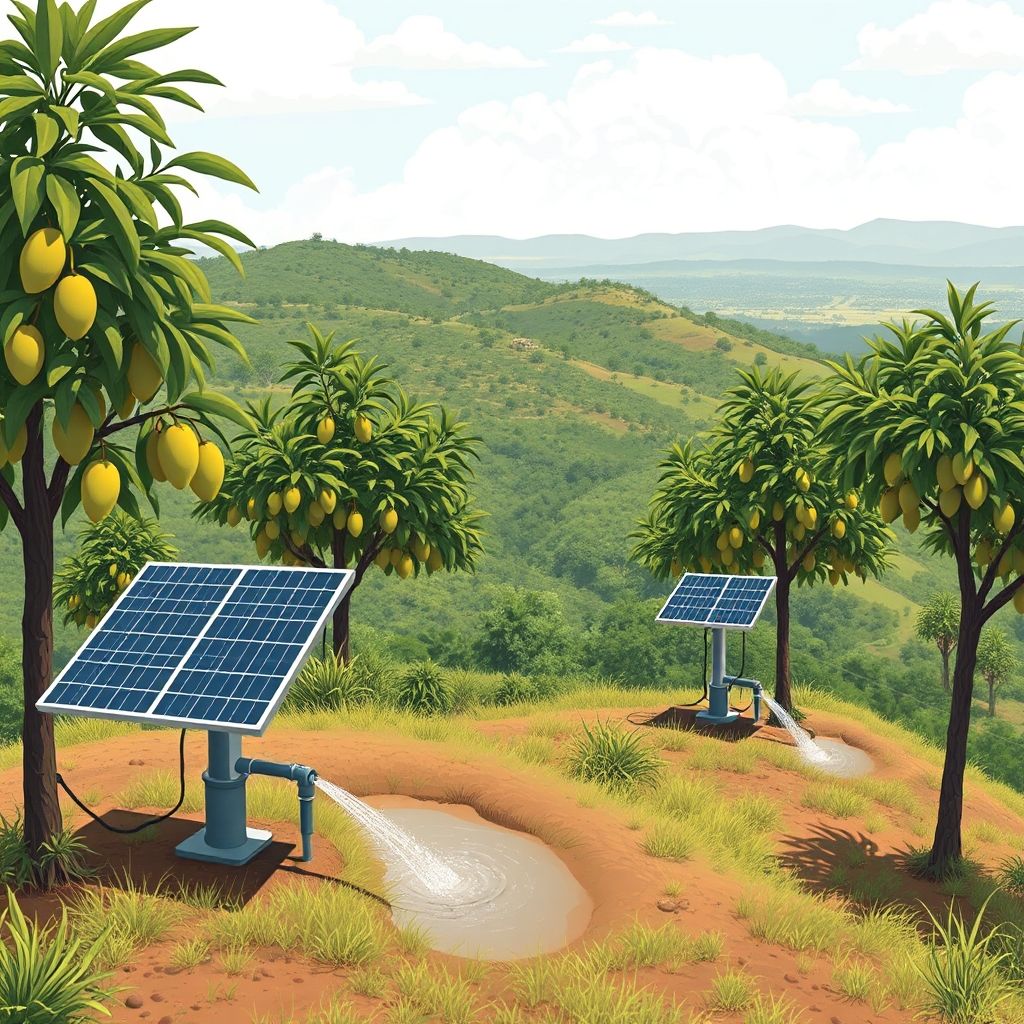
- In Chamwino, located in central Tanzania, mango cultivators had long observed their orchards suffering during extended dry spells.
- Although a diesel-driven pump on adjacent slopes had the technical capacity to draw water from a borehole, the high and erratic fuel prices made regular irrigation unaffordable for small-scale growers.
- In 2021, a trial initiative swapped the diesel equipment for a solar-driven pump integrated with a drip irrigation network.
- During a single growing season, the output of mangoes and the mean revenue from selling them approximately doubled for these growers.
- Ethiopia’s Berbere district is encircled by four waterways.
- In 2025, the World Resources Institute and its collaborators deployed two solar-driven water pumps within the district.
- Families participating in the scheme generated a mean of $709 from onion farming alone during the initial harvest season.
- Prior to the pump installation, these same households made roughly $207 per year from rain-dependent maize and teff crops.
Scale of Diesel Infrastructure
Across sub-Saharan Africa, just 33% of rural residents can access electricity, a shortfall frequently addressed through off-grid mechanisms. A study by the Energy for Growth Hub calculated that 150–190 GW of distributed diesel generator capacity was active across the continent in 2024. This dispersed output was considerable relative to the 268 GW of grid-connected capacity present in Africa during that same period.
| Metric | Value (2024) |
|---|---|
| Distributed diesel generator capacity (Africa) | 150–190 GW |
| Grid-connected capacity (Africa) | 268 GW |
| Diesel-to-grid ratio (Sub-Saharan Africa, excl. South Africa) | Nearly 1.5 times |
In Sub-Saharan Africa, with South Africa excluded, diesel generator capacity reached nearly 1.5 times the level of grid-connected capacity. In at least 26 African nations, diesel infrastructure surpassed grid capacity, suggesting that off-grid diesel serves as the main power source in many markets rather than a secondary backup. This extensive reliance on diesel contrasts sharply with the recent trend in solar adoption, where approximately three-quarters of Africa’s solar expansion from 2023 to 2025 originated from distributed systems.
Fertilizer Costs and Myanmar Logistics
The onset of the Iran conflict triggered a 30–45% surge in fertilizer prices across multiple African markets, heightening the likelihood that cultivators will lower usage levels, change their crop selections, or fail to meet planting deadlines. In Myanmar, a nation that sources more than 90% of its fuel from abroad and depends largely on road networks, rising diesel costs have elevated the expenses associated with transporting foodstuffs and agricultural supplies.
What to watch
Africa is set to install 17 GW of solar capacity in 2026, marking a 45% increase over 2025 levels. This expansion equates to roughly 100,000 panels installed each day across the continent.
Source: CleanTechnica. This article is an original Luminity report based on the linked source.