
Review finds zwitterions enable multiple functions in perovskite solar cells
A review by Zhengzhou University researchers details how zwitterionic molecules serve as multifunctional additives in perovskite solar cells. The study highlights their role in defect passivation, crystallization control, and interface engineering, with examples of significant efficiency gains.
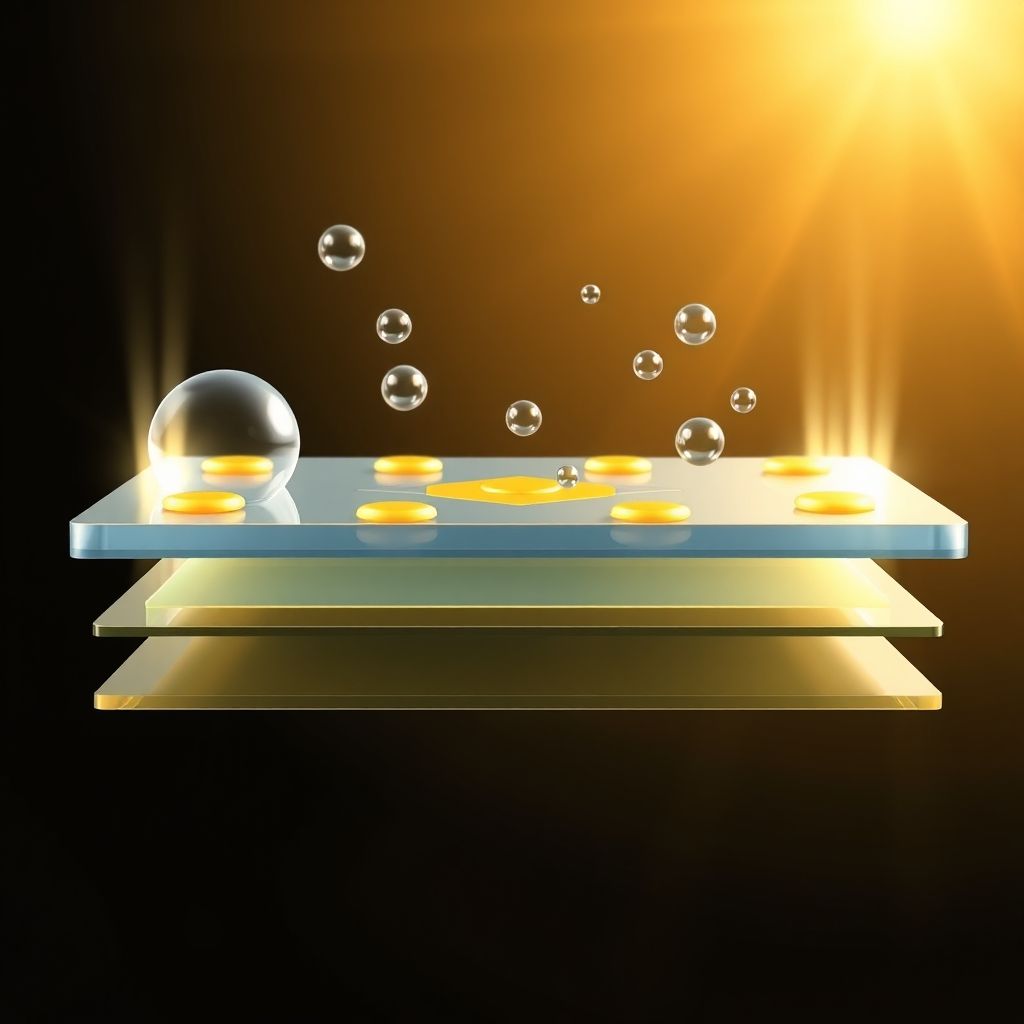
Researchers at Zhengzhou University have published a new review detailing the role of zwitterions in perovskite solar cells. These molecules are electrically neutral yet possess both positively and negatively charged functional groups. The study indicates that this dual-charge architecture allows zwitterions to engage in a wider range of interactions compared to traditional Lewis acid/base passivators, single ionic additives, or certain polymer-based modifiers.
Multifunctional Roles
Scientists at Zhengzhou University observe that zwitterions, based on their molecular arrangement and positioning, can act as a single integrated unit to handle defect passivation, crystallization modulation, and interfacial energy-level tuning. Inside perovskite absorbers, these compounds execute distinct tasks such as passivating defects, regulating crystallization, and stabilizing phases. They maintain the stability of the photoactive black phase in cesium- and formamidinium-based perovskites.
Efficiency and Stability Gains
- Incorporating L-asparagine into tin-based perovskites boosted efficiency from 10.54% to 13.31%.
- The use of formamidine sulfinic acid allowed a wide-bandgap device to reach 22.06% efficiency.
- Adding a zwitterionic compound to PEDOT devices raised the average efficiency from 10.29% to 14.29%.
- Applying L-tryptophan at the NiOx/perovskite interface resulted in 23.79% efficiency at a 1.56 eV bandgap and 20.41% efficiency at a 1.68 eV bandgap.
- Devices utilizing L-tryptophan sustained stable performance for over 1,600 hours.
Interface and Processing Solutions
Zwitterions positioned at electron transport layer and perovskite interfaces modify work functions and lower electron extraction barriers. For device fabrication, liquid-type zwitterions offer a practical remedy for the poor solubility often associated with solid-state compounds. A zwitterionic polymer interlayer raised device efficiency from 17.31% to 19.16%, while a carboxylate-based compound increased efficiency from 15.08% to 17.10%. Naphthalene diimide-based zwitterions can capture silver and iodide ions, thereby suppressing interfacial degradation in the solar cell.
Future Directions
Scientists at Zhengzhou University recommend developing an extensive repository containing molecular descriptors, processing variables, and device performance data to enable supervised learning algorithms to identify the best zwitterion candidates for particular functional layers. Additionally, they advocate for the use of generative models to create new zwitterionic architectures that surpass current chemical boundaries. They believe zwitterions could shift from being supportive additives to a central molecular framework for enhancing perovskite photovoltaics in terms of durability, scalability, and real-world utility. These insights are detailed in their article, “Research progress of zwitterions in perovskite solar cells,” which appeared in Sustainable Chemistry for Energy Materials.
Electrode Engineering and Industry Context
Zwitterionic interlayers modify the work functions of metals at electrode interfaces to enhance charge extraction. These materials also suppress ion migration and electrode degradation, a benefit especially notable for silver contacts. On the commercial front, Insolation Energy Ltd. and Caelux Corp. established a five-year collaboration in October 2026 to bring 3 GW of perovskite-tandem modules to market by 2028. The deal covers technology verification, manufacturing preparation, and adherence to India’s ALMM rules, with the joint goal of reaching module efficiencies of 29% by 2028.
Source: pv magazine. This article is an original Luminity report based on the linked source.