
Government approves Rs 1,860 billion Green Energy Corridor Phase III
The government has approved Green Energy Corridor Phase III, a Rs 1,860 billion scheme to evacuate 135 GW of renewable energy and deploy 50 GWh of battery storage by FY 2032-33. This move aims to address transmission bottlenecks that have led to significant renewable curtailment in recent months.
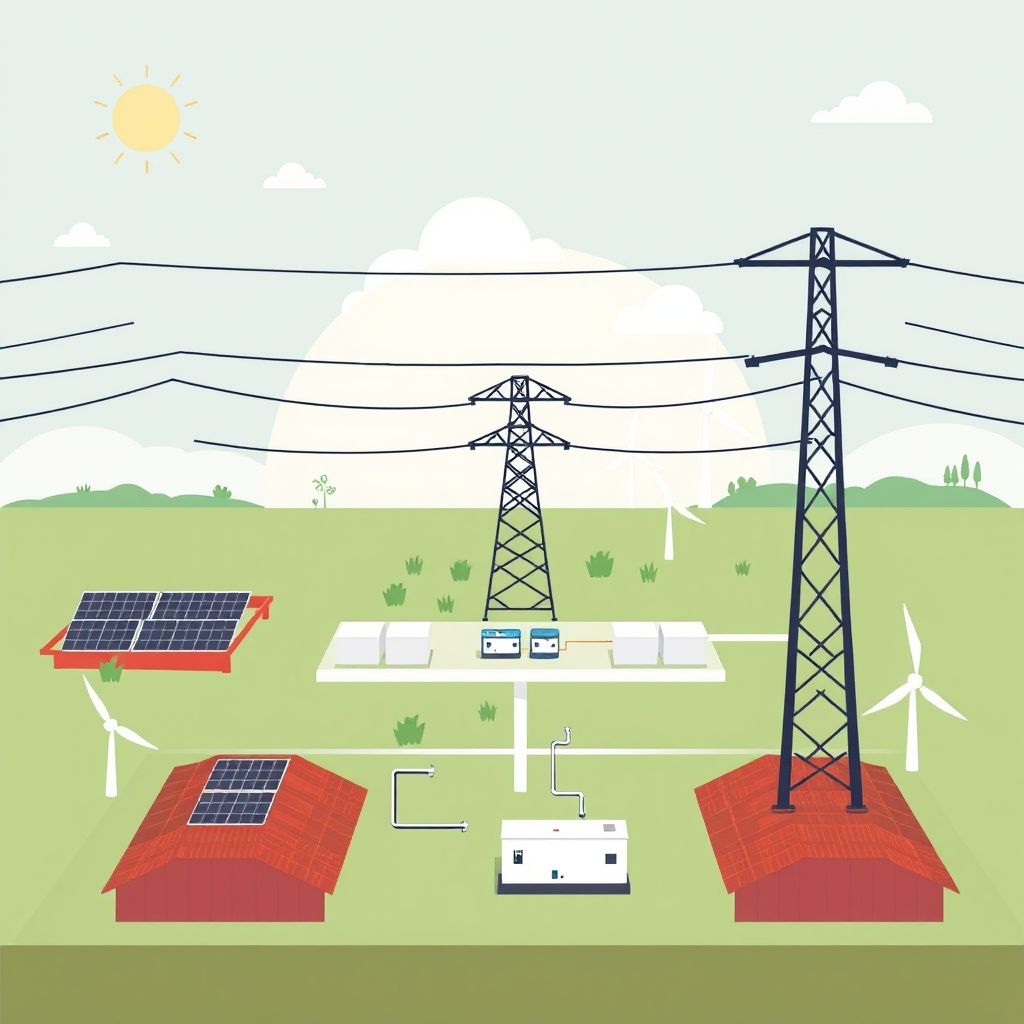
The government has approved the third phase of the Green Energy Corridor, a project with a total outlay of Rs 1,860 billion. According to Renewable Watch, the initiative is designed to evacuate up to 135 GW of renewable energy.
The Infrastructure Gap
Developers typically face a significant temporal mismatch between power generation and grid connection. Solar and wind projects generally require only 12 to 18 months to develop, whereas transmission infrastructure projects take three to five years. To address this imbalance, Green Energy Corridor Phase III includes a target to deploy 50 GWh of battery energy storage systems.
Transmission Investment Needs
India’s inter-state transmission system requires an investment of Rs 5,000 billion to Rs 6,000 billion by FY 2030-31 to support the expanding renewable capacity. While specific completion dates for this broader infrastructure remain undefined, the Green Energy Corridor Phase III project sets a distinct target for its own completion in FY 2032-33.
Recent Curtailment Data
According to the Centre for Research on Energy and Clean Air, 1.8 billion units of renewable electricity were curtailed in India during July and August 2026. This amount equaled 4.2 per cent of solar generation across that two-month span.
Background
- Luminity disclosed on 10 October that 8,133 GWh of solar energy was curtailed in India during the April–June quarter of 2026, with monthly solar curtailment hitting a high of 3,235 GWh in May 2026.
- Peak electricity demand stood at 270 GW throughout July and August 2026.
- The Union Cabinet gave its nod to Phase III of the Green Energy Corridor scheme on September 30, 2026.
- The total budget for this scheme is ₹1,86,405 crore.
See the earlier report on solar curtailment and the Green Energy Corridor for details on the initial approval and curtailment metrics.
Credit Risk and Grid Management
Brickwork Ratings notes that transmission constraints directly impact project bankability, as curtailed power without adequate compensation weakens operating cash flows and debt-servicing capacity. Niraj Rathi, Senior Director Ratings at Brickwork Ratings, explains that two projects with similar tariffs may face different risk profiles depending on evacuation infrastructure readiness and contractual safeguards. To bridge near-term gaps while larger transmission projects develop, the sector relies on better utilisation of existing networks, faster clearances, and digital grid-management solutions. Battery storage helps balance renewable variability, though the effectiveness of the 50 GWh deployment under GEC-III depends on timely implementation and commercially viable operating models. Lenders increasingly assess when a project can connect and generate predictable cash flows, rather than just its paper economics. Payment delays by distribution utilities also remain relevant, as they can affect cash flows even when electricity is supplied as contracted. The financial health of these utilities influences the overall credit quality of renewable generation projects, which remain differentiated by execution quality and liquidity availability to absorb delays.
Source: Renewable Watch. This article is an original Luminity report based on the linked source.