
Akaysha Energy warns transmission cancellations threaten Western Victoria renewable projects
Akaysha Energy’s Nick Carter stated that cancelling planned transmission links in Victoria is as damaging to clean energy investment as delaying coal plant closures. He warned that political uncertainty over these projects could halt wind and solar development in the region.
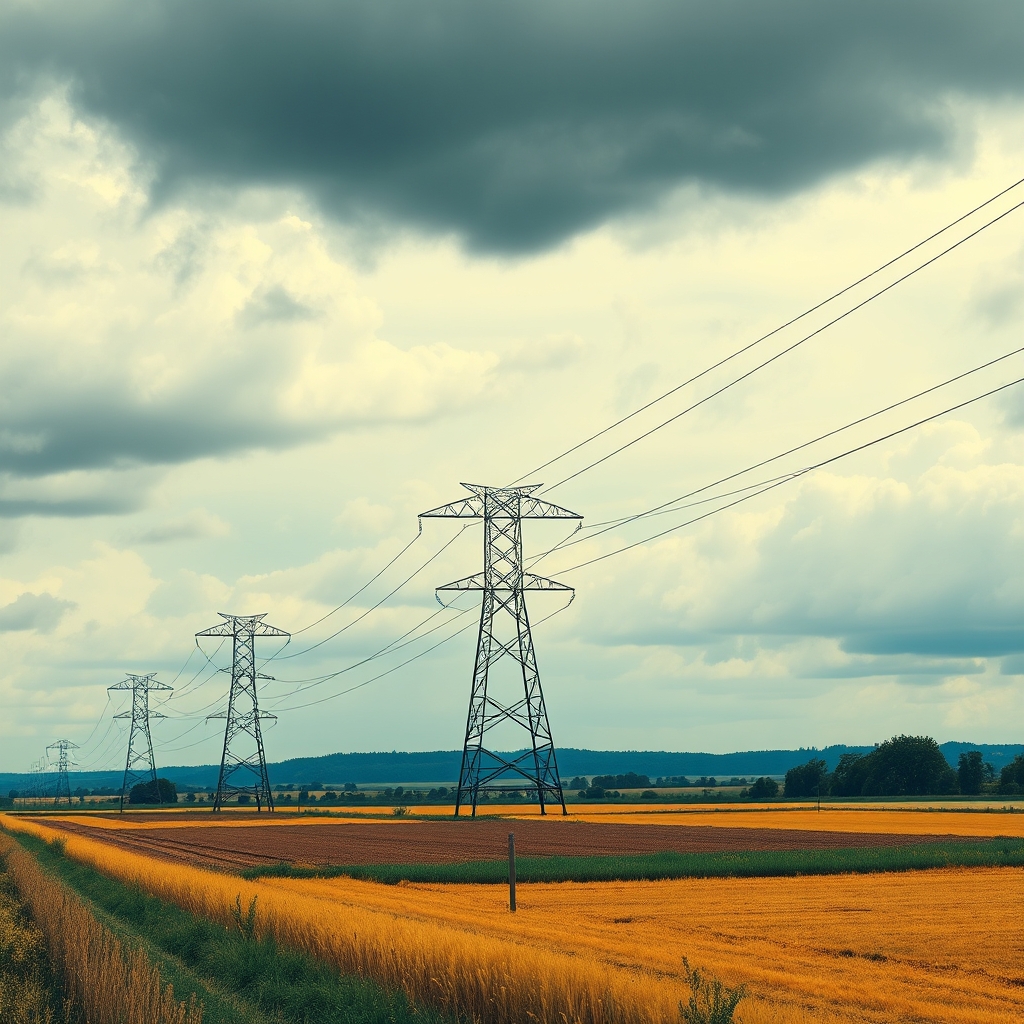
Akaysha Energy has warned that the cancellation of transmission links poses significant challenges for clean energy investors, according to a report by RenewEconomy. Nick Carter, the head of Akaysha Energy, highlighted these concerns while speaking at the AFR energy and climate summit in Sydney on Tuesday. The company argues that such cancellations create massive issues for those investing in renewable infrastructure, particularly within the Western Victoria region. Carter’s remarks underscore the growing tension between planned grid expansions and current project timelines. By bringing attention to this disconnect, Akaysha Energy aims to signal to stakeholders that reliable transmission capacity is essential for the viability of new renewable energy developments. The comments reflect a broader industry sentiment regarding the need for coordinated infrastructure planning to support the energy transition.
Political Stalemate
The core issue extends beyond technical delays, rooted deeply in the political volatility surrounding grid infrastructure. For market participants, uncertainty regarding transmission delivery represents a primary operational and financial risk. When the regulatory or legislative environment shifts abruptly, developers face prolonged periods of limbo where capital remains locked but progress stalls. This instability disrupts long-term planning cycles, making it difficult for investors to secure financing or commit to construction schedules that rely on predictable government support.
Transmission build-out typically demands bipartisan support because these projects involve massive public expenditure and land use changes that transcend single election cycles. Grid expansions often require approvals from multiple levels of government, meaning a change in political leadership can halt or redirect initiatives mid-stream. Without consensus across the political spectrum, the continuity required for multi-year infrastructure projects is compromised, leaving developers exposed to policy reversals that can render earlier commitments obsolete.
In Victoria, transmission projects have increasingly become a political football, subject to intense public debate and partisan maneuvering. This politicization adds a layer of complexity to what should be a technical planning process. When grid upgrades are viewed through a partisan lens rather than as essential public utilities, decision-making becomes slower and more reactive. For the energy sector, this dynamic creates an environment where reliability is sacrificed for political expediency, ultimately hindering the coordinated infrastructure planning necessary to support the broader energy transition. The resulting friction between political agendas and engineering realities leaves key stakeholders navigating a landscape where technical merit often yields to political timing.
Affected Infrastructure
- VNI-West and Western Renewables Link projects face potential cancellation in Victoria.
The specific transmission infrastructure at risk includes the VNI-West and Western Renewables Link projects, both of which face potential cancellation within the state. These initiatives were designed to connect renewable energy generation zones to the main grid, serving as critical conduits for moving electricity from production sites to load centers. Transmission lines of this nature typically require substantial lead times for permitting, land acquisition, and construction, meaning that any disruption to their progression creates immediate operational bottlenecks for connected power stations.
For developers, the viability of a renewable project is heavily dependent on having a guaranteed, timely connection to the grid. When transmission projects are threatened with cancellation, the entire value chain is disrupted. Investors rely on the certainty that the physical infrastructure to carry their generated power will be in place when their plants come online. Without this assurance, financial models become unstable, as the cost of securing alternative connections or waiting for future upgrades can erode project returns. The potential loss of these specific links highlights how dependent regional renewable development is on the successful delivery of underlying transmission assets.
Regional Impact
The potential cessation of wind and solar development in Western Victoria represents a direct consequence of transmission uncertainty, threatening to stall the region’s clean energy growth. For a region like Western Victoria, which possesses significant renewable resource potential, the absence of reliable grid connections can effectively freeze new project pipelines. Developers typically require firm interconnection agreements before committing substantial capital to construction, meaning that ambiguity regarding transmission availability often leads to project abandonment or indefinite delays.
This scenario carries broader implications for local economies and energy security. Renewable energy projects are not just power plants; they are major industrial investments that create jobs, stimulate local supply chains, and contribute to regional tax bases. When these developments halt, communities lose out on economic benefits and the state misses an opportunity to diversify its electricity mix. Without these new generation assets, the region may struggle to meet future demand or reduce reliance on older, higher-emission sources.
The interplay between generation and transmission is fundamental to grid stability. Wind and solar farms produce electricity that must be moved efficiently to where it is needed. If the conduits for this energy are uncertain, the source itself becomes economically unviable. This dynamic underscores why coordinated planning between generation developers and transmission network service providers is essential. Without clear signals on grid capacity, the investment climate remains fragile, discouraging the long-term commitments necessary to build a resilient, low-carbon energy system. The risk of development ceasing highlights the tangible cost of infrastructure delays to both industry and consumers.
What to watch
With the regulatory deadlock persisting, immediate attention must turn to whether state and federal authorities can establish a unified framework for transmission planning. Readers should monitor upcoming government consultations and parliamentary debates to see if bipartisan consensus emerges, as this is typically the prerequisite for unlocking stalled infrastructure approvals. In the absence of such political alignment, developers are likely to remain in a state of cautious hold, delaying final investment decisions until grid connection certainty improves.
Another critical area to observe is the reaction of financial institutions and project developers. As capital remains tied up in limbo, watch for shifts in financing structures or reports of project deferrals. Investors generally require clear, long-term policy signals to underwrite multi-year construction schedules; without these, the pipeline for new renewable assets in Western Victoria may contract further.
Finally, keep an eye on alternative technical solutions or interim grid strategies that network service providers might propose. If traditional high-voltage line cancellations proceed, the industry may turn to other methods to manage congestion and integrate available renewable capacity. Understanding how these stopgap measures perform will offer insight into the broader resilience of the grid during this period of transition and political uncertainty.
Source: RenewEconomy. This article is an original Luminity report based on the linked source.