
Ameresco Solar-Storage Project Powers Oregon Wastewater Facility Fully
Ameresco installed a solar-plus-storage system at the Roseburg Urban Sanitary Authority main office, offsetting 100% of its electricity use. The $1 million project, funded by state grants, is the first phase of a larger multi-site energy program.
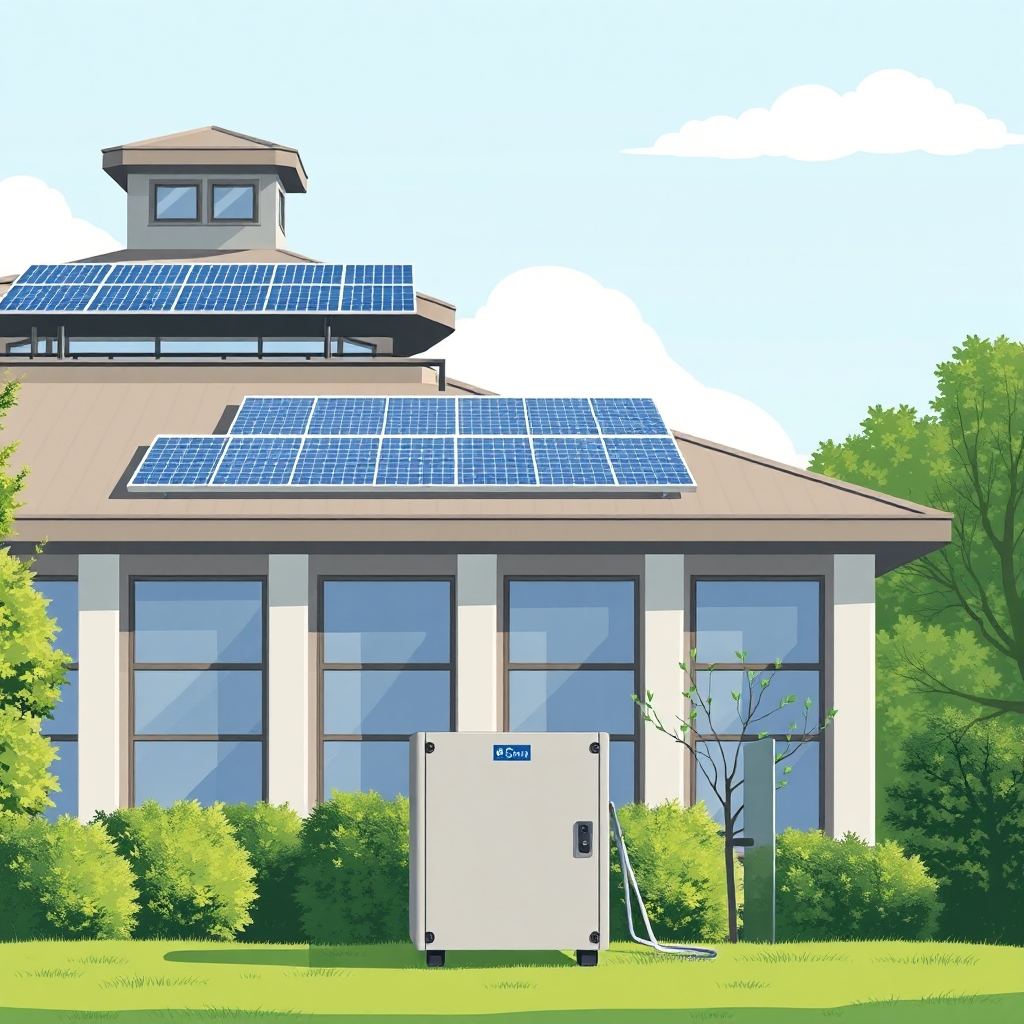
Ameresco has completed a solar-plus-storage project at the Roseburg Urban Sanitary Authority (RUSA) main office in Oregon. According to Solar Power World, the installation represents a $1 million investment in clean energy infrastructure. The system is designed to offset 100% of the facility’s electricity use, aligning with broader efforts to reduce reliance on grid power for municipal operations.
The project combines photovoltaic generation with battery storage to ensure consistent power supply. By integrating these technologies, RUSA aims to stabilize energy costs and enhance operational resilience. This move supports the organization’s sustainability goals while demonstrating the feasibility of fully renewable energy systems for public sector facilities. The completion marks a notable achievement in regional clean energy adoption.
Financial Support
Securing capital for municipal renewable energy installations often hinges on navigating complex state and regional funding mechanisms. For this Oregon wastewater facility, the financial foundation rests heavily on public incentives designed to accelerate clean energy adoption in the public sector. The project received a substantial grant of $870,870 from the Oregon Department of Energy’s Community Renewable Energy Program, commonly known as C-REP. This specific funding stream targets local governments and community organizations, aiming to lower the upfront capital barriers that typically deter municipalities from investing in large-scale solar and storage systems. By covering a significant portion of the installation costs, such grants allow public entities to preserve their operating budgets for core sanitation services while still achieving long-term energy independence.
Complementing this state-level support, the initiative also drew additional financial backing from Energy Trust of Oregon. This organization operates as a nonprofit utility-owned entity, typically providing grants and technical assistance to projects that reduce energy consumption and increase efficiency across the state. Their involvement underscores a broader trend where multiple funding sources are layered to make full-energy-offset projects economically viable for public agencies. For developers and municipal leaders, this combination of direct state grants and utility-backed support illustrates how public-private partnerships can bridge the gap between ambitious sustainability goals and fiscal reality. Such financial structures are critical for demonstrating that fully renewable systems can be procured without imposing immediate strain on local tax bases, thereby encouraging other public facilities to consider similar transitions.
System Specifications
The technical core of this Oregon installation blends photovoltaic generation with battery storage to meet the facility’s total energy demand.
- 39.4-kW solar system generates approximately 51,580 kWh annually
- 184-kWh battery energy storage system paired with the solar array
- Storage ensures critical functions continue during power disruptions
The photovoltaic array, rated at 39.4 kilowatts, is sized to produce roughly 51,580 kilowatt-hours of electricity each year. This output figure is critical for validating the project’s claim of fully offsetting the site’s consumption. In municipal contexts, accurately matching annual generation to annual load requires precise metering and historical data analysis. If the system generates significantly more than needed, excess power may be exported or curtailed, depending on local interconnection rules. Conversely, underperformance could leave gaps that the grid must fill, undermining the zero-carbon goal. Developers typically use such specific annual yield estimates during the design phase to ensure the system meets contractual or sustainability targets.
Paired with the panels is an 184-kilowatt-hour battery energy storage system. While the solar array handles daily energy needs, the battery serves a distinct reliability function. It ensures critical sanitation operations continue during grid outages or power disruptions. This dual-purpose design addresses both economic and operational risks. For public utilities, uninterrupted service is a regulatory and public safety priority. Batteries bridge the gap between solar availability and immediate demand, smoothing out fluctuations and providing backup power. This configuration is increasingly common in municipal projects where resilience is as valuable as cost savings. The combination allows the facility to maintain essential functions independently of the wider grid, enhancing overall infrastructure stability.
Future Expansion
The completed installation at the main office serves as the initial segment of a broader, multi-phase energy program for Roseburg Urban Sanitary Authority. This staged approach allows the utility to implement renewable infrastructure across its diverse operational footprint, moving beyond a single building to encompass its entire treatment infrastructure. By starting with the administrative center, the project establishes a functional baseline and technical precedent for the subsequent phases, which target the facility’s core treatment processes. This sequential deployment strategy is common in municipal energy transitions, where capital constraints and operational risks are managed by tackling manageable units before scaling up to larger, more complex industrial sites.
The program’s next two stages involve substantial capacity increases at the remaining RUSA sites. Phase 2 will introduce a 900-kilowatt ground-mounted solar photovoltaic system at the wastewater treatment plant. This configuration is standard for facilities with available land, offering straightforward installation and maintenance access. Following this, Phase 3 plans to deploy a 400-kilowatt floating solar photovoltaic system at the natural treatment system. Floating arrays are increasingly utilized in water treatment contexts because they utilize existing water surfaces, avoiding land-use conflicts. The water beneath the panels can help keep modules cool, potentially improving efficiency, while the panels themselves can reduce evaporation rates and inhibit algae growth.
The following table outlines the planned capacity for the upcoming phases:
| Phase | Location | Technology | Capacity |
|---|---|---|---|
| 2 | Wastewater Treatment Plant | Ground-mounted Solar PV | 900 kW |
| 3 | Natural Treatment System | Floating Solar PV | 400 kW |
These figures indicate a step up from the initial office installation. For developers, such phased expansions demonstrate how municipal clients can integrate large-scale generation without disrupting existing operations. The shift from rooftop to ground and floating arrays also highlights the versatility required in modern utility-scale solar design.
What to watch
Attention now turns to the execution timeline for the utility’s broader energy program. Construction on the remaining two phases is anticipated to conclude before the end of the year. For municipal stakeholders, this compressed schedule highlights the logistical complexity of installing large-scale ground-mounted and floating arrays while maintaining continuous water treatment operations. Readers should monitor how the utility manages interconnection and grid synchronization during this period, as seamless integration is vital for realizing the projected benefits without service interruptions.
The project’s leadership has framed these expansions as essential steps toward modernization and improved community well-being. Jim Baird, General Manager of Roseburg Urban Sanitary Authority, emphasized that upgrading infrastructure serves both operational needs and broader public interests. Meanwhile, Louis Maltezos, Co-President of Ameresco, noted the value of these systems in enhancing energy efficiency and reducing emissions. These perspectives reflect a growing consensus among public agencies that renewable integration is no longer optional but a standard component of long-term infrastructure planning.
As the final phases come online, the focus will shift from installation to performance verification. Typically, such projects undergo rigorous monitoring to ensure actual output matches design estimates. Investors and local officials will look for data confirming that the combined capacity delivers the promised reliability and environmental benefits. Success here could set a precedent for similar multi-site municipal projects, demonstrating that phased deployment can effectively balance capital constraints with ambitious sustainability goals.
Source: Solar Power World. This article is an original Luminity report based on the linked source.