
Trump administration moves to remand permits for East Coast offshore wind projects
The Justice Department has asked a federal court to send back the construction permit for the New England Wind project, joining a broader effort to reconsider approvals for East Coast wind farms. Critics argue the moves create uncertainty for operational and proposed projects, while developers defend the validity of existing permits.
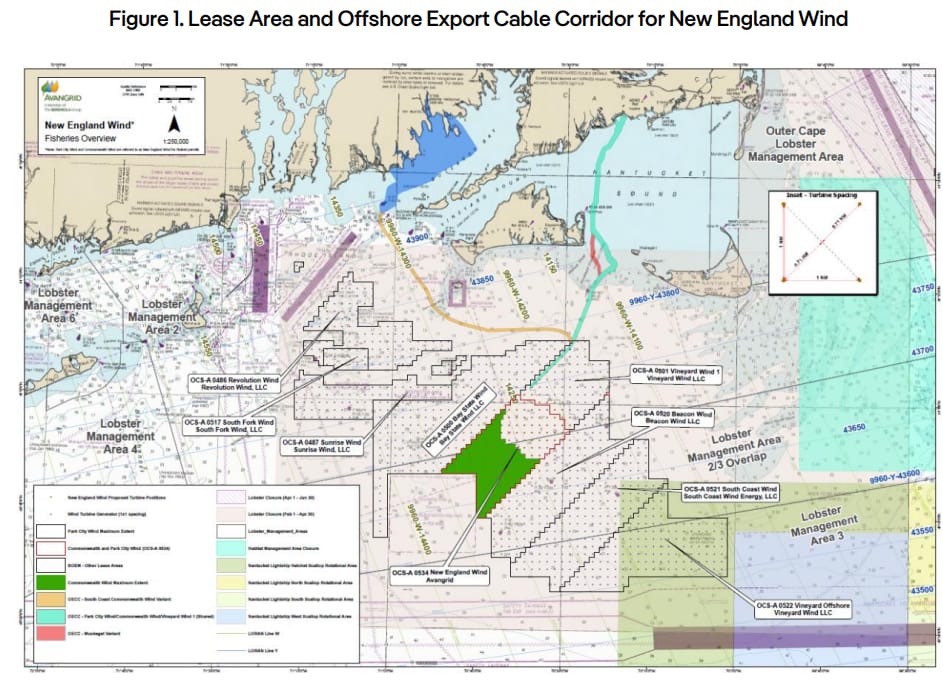
The Trump administration is moving to reconsider federal permits for offshore wind projects along the East Coast. As part of this effort, the Department of Justice has asked a federal court to remand the construction permit for the New England Wind project. This action follows the administration’s return to power in January 2025. The move comes as the administration reviews its stance on clean energy infrastructure.
Legal Challenges to New England Wind
The Justice Department’s petition targets the New England Wind initiative, a 2-gigawatt facility proposed off the Massachusetts shoreline. By seeking to remand the construction permit, the administration subjects this specific authorization to court review, underscoring how approved renewable energy infrastructure remains exposed to changing political winds.
Nancy Sopko, vice president of external affairs at US Wind, countered the legal tactics by stressing the project’s long regulatory track record. She noted, "After over a decade of analysis, several federal agencies properly issued final permits to the project, which is one of the largest new energy projects in the region." This position rests on the notion that the permitting phase was completed following years of interagency examination, implying the authorization is legally robust.
It is crucial to separate the speaker’s corporate affiliation from the project in question. US Wind is factually identified as the developer of the Maryland Offshore Wind project, not the New England Wind development. Nevertheless, Sopko’s remarks address the New England Wind effort directly, portraying it as a significant regional energy asset that has already passed through intricate federal approvals. The ongoing legal dispute now requires the judiciary to decide if the original permitting rulings hold up against the administration’s present legal arguments.
Broader Scope of Permit Reviews
The administration’s scrutiny extends beyond the New England Wind project to other East Coast developments, indicating a wider regulatory sweep rather than an isolated legal action.
- Revolution Wind: 704-megawatt wind farm generating power off Connecticut and Rhode Island.
- Maryland Offshore Wind: 1.7-GW project proposed near Ocean City, Maryland.
- Atlantic Shores facility near New Jersey under review since Sept. 30.
- SouthCoast Wind farm off Massachusetts coast under review since late last year.
These four facilities represent the current scope of active administrative reviews. The inclusion of projects at different stages of development and in different states suggests the Department of the Interior is applying a uniform standard to existing authorizations. For instance, the Atlantic Shores facility has been under review since Sept. 30, while the SouthCoast Wind farm has faced similar scrutiny since late last year. This timeline indicates that the review process was already underway before the most recent legal challenges to New England Wind.
The geographic spread is notable, covering waters off Connecticut, Rhode Island, Maryland, New Jersey, and Massachusetts. This broad jurisdictional reach implies that the administration’s concerns are not limited to a single coastal region or a specific type of lease. By targeting both operating assets like Revolution Wind and proposed developments like Maryland Offshore Wind, the government is signaling that no project is exempt from re-evaluation. This approach forces developers across the entire East Coast to reassess the stability of their federal permits, as the criteria for maintaining authorization appear to be shifting under the current administration’s oversight.
Industry and Political Reactions
Critics from environmental advocacy groups and congressional lawmakers have condemned the administration’s regulatory shifts, framing the actions as part of a broader strategy to halt offshore wind development. Pasha Feinberg, an offshore wind strategist at the Natural Resources Defense Council, characterized the moves as a deliberate pattern aimed at preventing the sector's buildout. In her assessment, this energy source is one that U.S. people desperately need, suggesting that the regulatory uncertainty undermines a critical resource for the nation.
The legal and political fallout extends to concerns about the stability of existing infrastructure. Tony Irish, senior counsel at Public Employees for Environmental Responsibility, warned that such actions create vast uncertainty for projects that are already approved and operational. He noted that this instability is not limited to wind farms but affects transmission lines and both offshore and onshore infrastructure generally.
Political opposition has also voiced strong objections to the legal maneuvers. Sen. Sheldon Whitehouse (D-R.I.) offered a blunt critique of the administration’s approach, stating, "This is how you blow up a permitting deal." His comment underscores the view among some legislators that the legal challenges serve to dismantle established regulatory agreements rather than refine them. The combination of advocacy group statements and senatorial criticism highlights a significant divide over the future of East Coast renewable energy projects, with opponents arguing that the current trajectory threatens both economic certainty and energy security.
What to watch
The immediate legal focus will center on the administration’s formal alignment with the complaints filed by ACK for Whales, Green Oceans, and Ocean City. This agreement signals that the government intends to support the arguments raised by these groups in court, rather than merely initiating its own independent review. Readers should track how this shared legal position influences the trajectory of the remand proceedings for the New England Wind project.
Since the administration has explicitly sided with these specific complainants, the upcoming judicial hearings will likely test the validity of the claims originally brought forward by the organizations. The outcome will determine whether the court upholds the initial federal permits or accepts the arguments that led to the current legal challenge. This development ties the broader political pushback directly to the specific legal mechanisms now in play, making the stance of these three groups a central element of the case.
Source: Canary Media. This article is an original Luminity report based on the linked source.