
Tongwei achieves 26.03% certified efficiency in high-sheet-resistance TOPCon cell
Tongwei has developed a TOPCon solar cell featuring a high sheet resistance selective emitter, achieving a certified efficiency of 26.03%. The research, published in Solar Energy Materials and Solar Cells, demonstrates that this structure can improve minority carrier lifetime and maintain high fill factors.
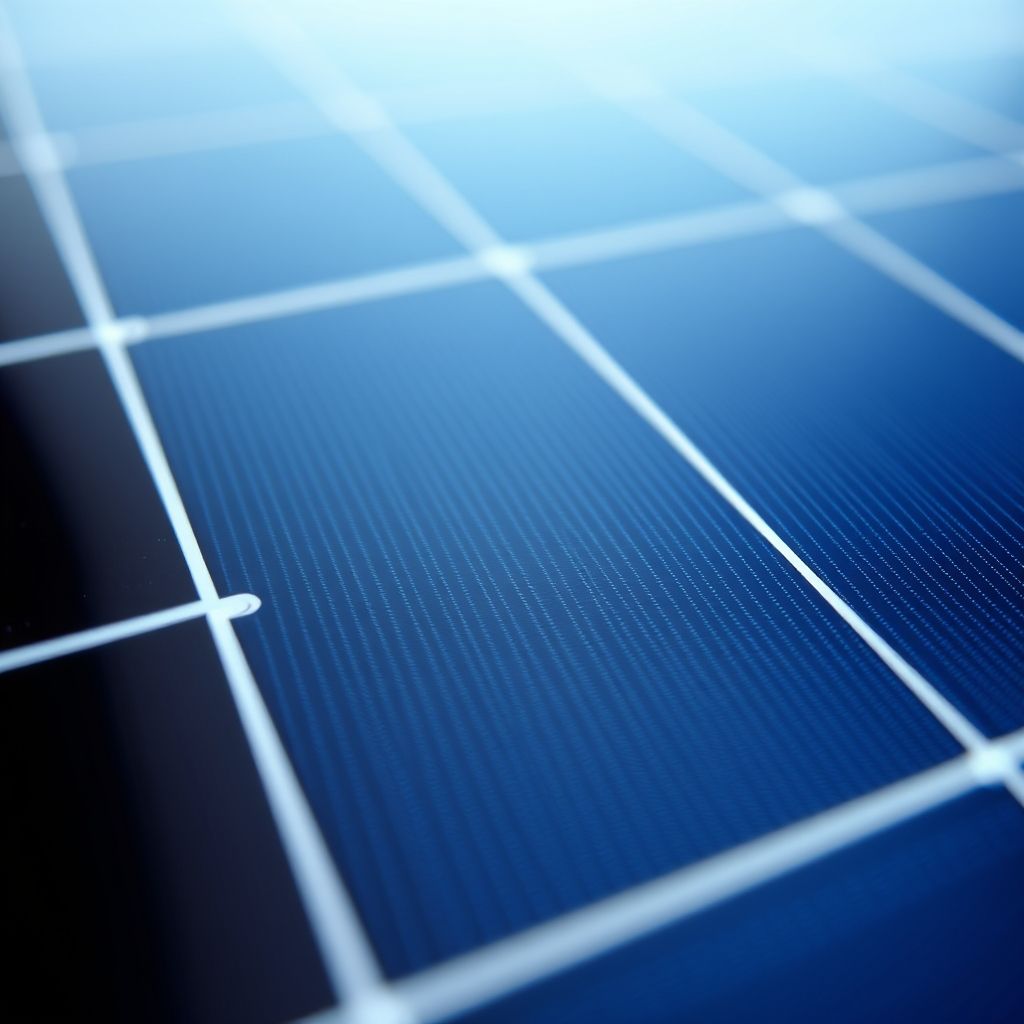
Tongwei engineered a TOPCon solar cell with an emitter exhibiting high sheet resistance, reaching a verified efficiency of 26.03%. The organization states that this value was validated through independent assessment by Germany’s Solar Energy Research Hamelin (ISFH).
These results were presented in a paper appearing in the journal Solar Energy Materials and Solar Cells.
Selective Emitter Design
Corresponding author Xiajie Meng described the fabrication method as a non-destructive photoresist-based etching process used to form the selective emitter structure. This technique allows for the formation of a selective emitter structure. The resulting configuration exhibits a sheet resistance of 450 Ω/sq beneath metal contacts and 1,600 Ω/sq in non-contacted regions. Meng noted that the 1,600 Ω/sq figure represents the highest reported for TOPCon cells to date, to the best of the team's knowledge.
The study demonstrates that photoresist-based selective etching can produce emitters with exceptionally high sheet resistance without compromising the quality of electrical contacts. According to Meng, this successful implementation confirms that TOPCon technology remains highly competitive for commercial applications.
Performance Metrics
Average efficiency increased by 0.16 percentage points, while open-circuit voltage and fill factor both improved. The selective emitter’s fill factor also surpassed that of the locally boron-doped finger structure.
| Parameter | Selective Emitter | Previous/Baseline |
|---|---|---|
| Average Efficiency | 25.98% | 25.82% |
| Open-Circuit Voltage | 745.5 mV | 742.6 mV |
| Fill Factor | 83.76% | 83.54% |
| Fill Factor (Boron-Doped) | 83.76% | 83.34% |
Simulation and Future Potential
Computational models within the research demonstrate that raising sheet resistance from 800 Ω/sq to 2,000 Ω/sq enhances both minority carrier lifetime and surface passivation. The analytical outcomes pinpointed a contacted-region width of roughly 200 µm as yielding peak efficiency. The study assessed potential metal finger widths ranging from 7 µm to 9 µm, paired with a grid pitch between 500 µm and 550 µm.
Regarding the locally boron-doped finger structure, corresponding author Xiajie Meng noted that simulations suggest combining silicon wafers with elevated bulk resistivity and tighter front contact spacing may unlock additional performance benefits, though empirical confirmation remains pending. Meng further observed that these insights could assist producers in optimizing emitter doping profiles and contact geometries, thereby facilitating further efficiency increases and the prospective industrial implementation of this technology.
Background
- The research group consisted of the University of Electronic Science and Technology of China and Jiangsu Inspiray Equipment Co., Ltd.
- During a gathering in Hangzhou on 11 October 2026, key figures in the solar sector proposed a floor price of CNY 0.79/W ($0.117/W FOB) for TOPCon modules, a detail Luminity included in its 16 October 2026 report.
- That same Luminity article indicated that FOB China rates for TOPCon M10 cells were $0.0463/W, while TOPCon 210R cells were priced at $0.0454/W on 13 October 2026.
- On 17 October 2026, JinkoSolar introduced its TAC technology, which features amorphous silicon passivation within a back-contact TOPCon cell architecture, as described in Luminity’s 29 October 2026 piece.
- Shakti Pumps (India) Ltd debuted a 620 Wp TOPCon module featuring a 16-busbar cell layout at REI Expo 2026 on 27 October 2026, as Luminity recorded on 27 October 2026.
Source: pv magazine. This article is an original Luminity report based on the linked source.