
Sodium-ion storage orders cross 70 GWh as supply agreements expand
Sodium-ion battery technology has entered commercial production with over 70 GWh of supply agreements, according to Saur Energy. A Wood Mackenzie report indicates that while current unit costs are higher than LFP, total ownership costs are lower over a 20-year period.
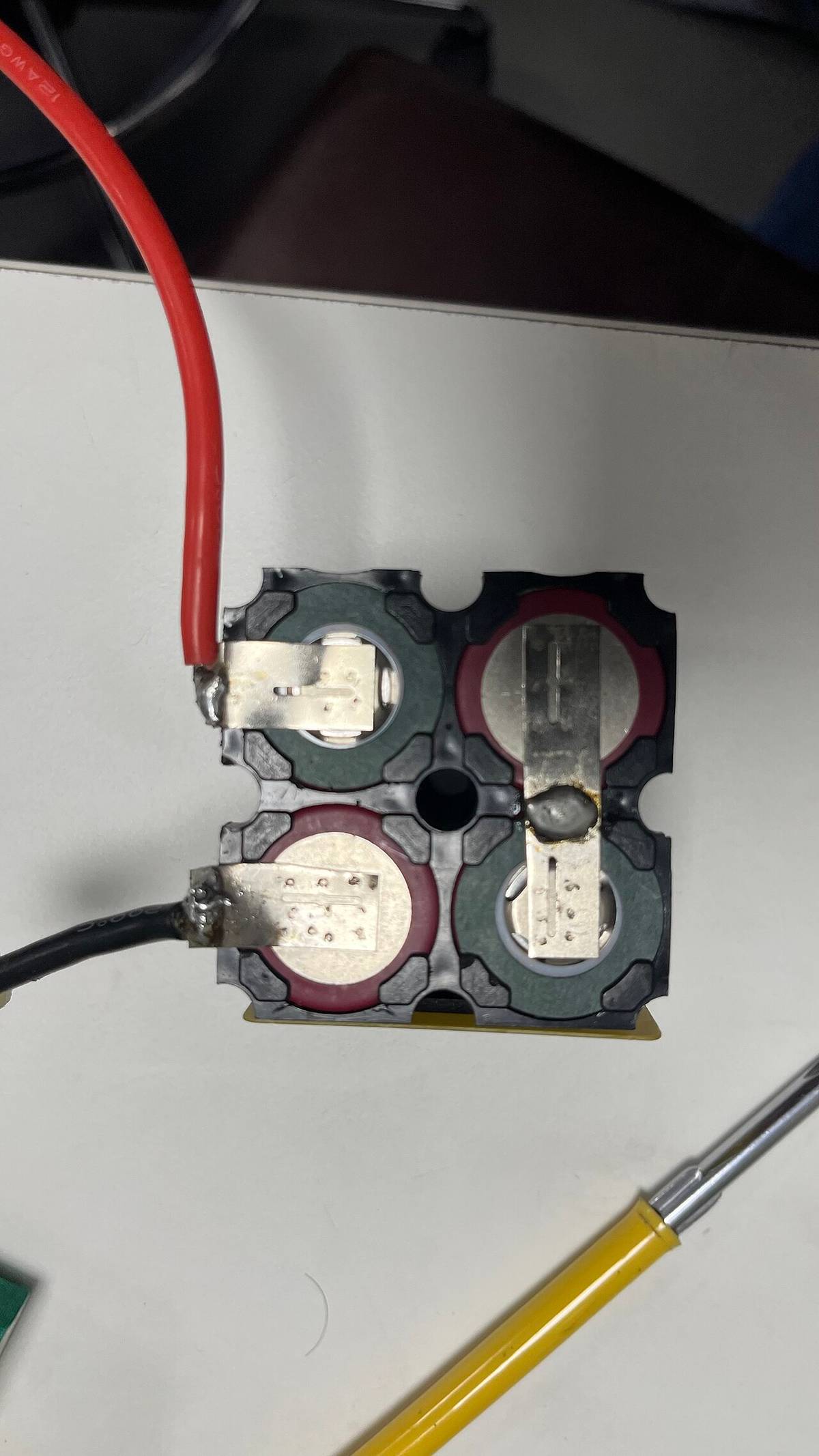
Sodium-ion battery technology has reached commercial production, with supply agreements now exceeding 70 GWh, according to Saur Energy.
A Wood Mackenzie report cited by Saur Energy provides cost context for the transition. It estimates the global average cost for sodium-ion systems at $229 per kilowatt-hour, compared with $200 per kilowatt-hour for lithium iron phosphate (LFP) batteries. Despite the higher upfront capital cost, the report notes that sodium-ion technology offers a total cost of ownership 21 percent lower than LFP over a 20-year project life.
Cost Trajectory and Parity
Wood Mackenzie projects that sodium-ion cells will reach cost parity with lithium iron phosphate (LFP) by the end of 2026. Full parity at the module and system levels is not expected until after 2030. This timeline reflects the current manufacturing concentration, as China accounts for almost all global sodium-ion production. The firm anticipates an 18-20 percent learning rate for Chinese manufacturers between 2026 and 2035.
Manufacturer Capacity and Partnerships
BYD is planning 30 GWh of sodium-ion production capacity, whereas CATL aims to ship a minimum of 1 GWh of sodium-ion units by the end of 2026. In July, Alfen and CATL revealed a 5 GWh sodium-ion collaboration, which further strengthens the commercial supply network.
Policy Incentives and Market Barriers
- China waives the consumption tax on sodium-ion batteries until the end of 2028.
- A 2 percent levy applies to LFP batteries from September 2026, increasing to 4 percent in September 2027.
- Tariffs imposed by the US on Chinese energy storage cells amount to approximately 58 percent.
- India provides a $1.25 billion incentive program along with duty exemptions for manufacturing equipment.
India Pilot Projects and Unknowns
NTPC sought proposals for a 100 kWh sodium-ion pilot project on 9 September, with submissions closing on 15 October. Separately, the Global Energy Alliance for People and Planet requested a 200-300 kWh system in August. These early-scale deployments contrast with NTPC Green Energy’s 10 November tender for 10 GW/40 GWh of lithium iron phosphate storage.
The sector faces uncertainty regarding India’s long-term role in the supply chain. It remains unclear whether the country will primarily import sodium-ion technology or develop domestic manufacturing capabilities. No specific timeline exists for Indian operators to gather the cycle-life and thermal data necessary to validate the technology’s performance in local grid conditions.
Regulatory Shifts and Project Specifications
In Europe, the EU Battery Regulation’s carbon-footprint disclosure rules act as a tailwind for the technology. NTPC Green Energy’s 10 GW/40 GWh tender, issued on 10 November, specifically covers LFP containers and grid-forming power conversion systems. Wood Mackenzie notes that sodium-ion’s economic advantage holds across two- to four-hour durations, a range that aligns with the four-hour systems implied by the NTPC tender. The firm identifies China’s export controls and German trade policy as risks to growth, while US manufacturing credits favour domestic sodium-ion production despite slow gigafactory expansion.
Source: Saur Energy. This article is an original Luminity report based on the linked source.