
NAED Energy claims 96,000-wafer-per-hour throughput for new tandem cell deposition platform
Miami-based NAED Energy Holding has announced the PV-1 PECVD-V vertical in-line deposition platform, which the company says achieves a throughput of 96,000 wafers per hour. The system is designed specifically for two-terminal perovskite/heterojunction tandem cells targeting 30% efficiency.
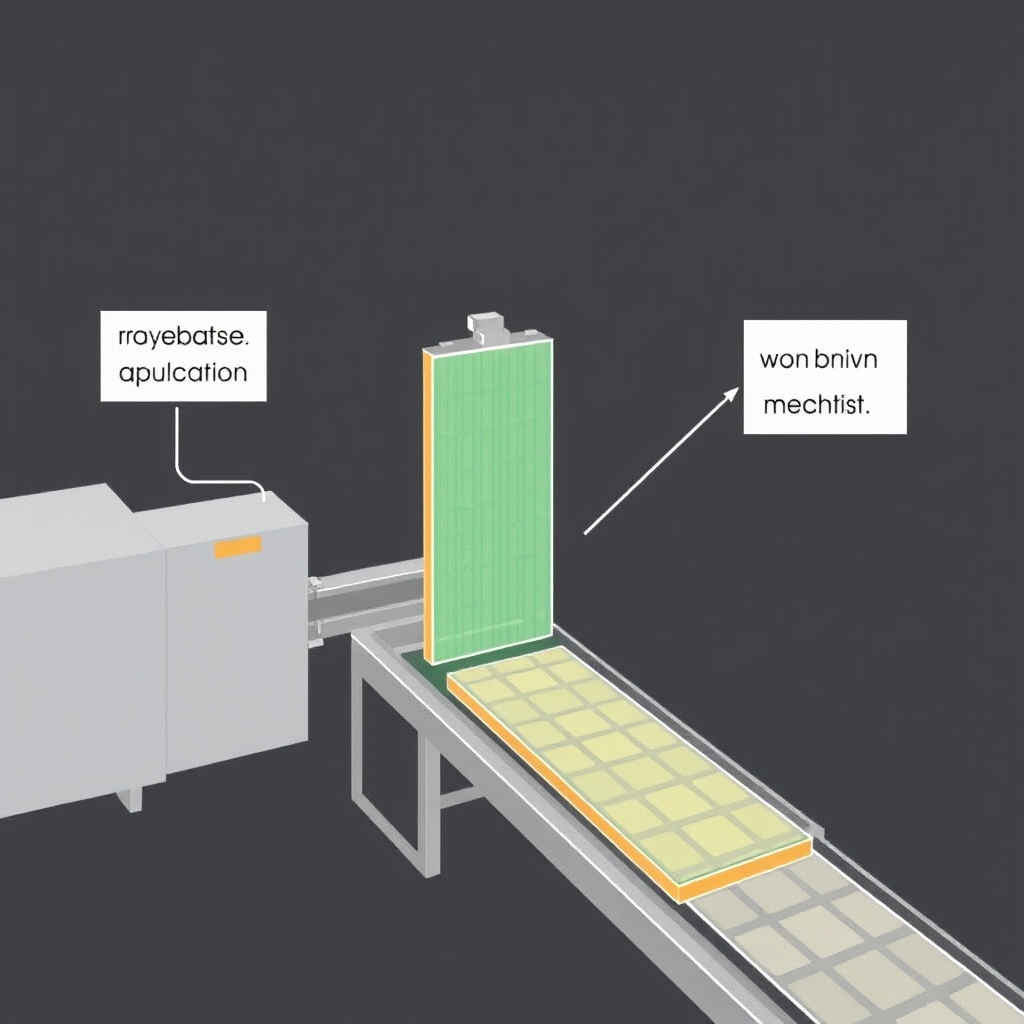
Miami-based NAED Energy Holding has announced the PV-1 PECVD-V, a new vertical in-line deposition platform for tandem cell manufacturing. According to the company, the system is rated for a throughput of 96,000 wafers per hour.
The company says this capacity is double the 48,000 wafers per hour achieved by its previous XL-class platform.
Vertical Design and Tandem Focus
The PV-1 PECVD-V integrates plasma-enhanced chemical vapor deposition (PECVD) and physical vapor deposition (PVD) into a unified shared-carrier line. This vertical in-line configuration enables wafers to travel upright throughout all processing phases.
Engineered specifically for T2X two-terminal perovskite/heterojunction tandem cells targeting 30% efficiency, the system was designed for tandem applications from the outset. According to Malcom Longair, media and development lead at NAED, this vertical architecture facilitated a doubling of throughput and avoided the need to retrofit tandem capabilities onto a platform originally developed for different purposes.
Manufacturing Status and Commercial Plans
NAED Energy is currently assembling the PV-1 PECVD-V, with six of its thirteen process tools already complete and seven units in production. The company designs these tools in-house and has them machined at its United States facility.
Commercially, NAED is taking reservations for production tool slots to secure capacity for early customers. The company plans to sell finished products, specifically cells and glass-glass modules, with initial units starting at 600 watts.
Intellectual Property and Financial Valuation
NAED Energy has pending US patent applications that span its deposition line, carrier-turning mechanism, wafer-retention carrier, and T2X cell architecture.
The value of the company’s intellectual property was determined to be $179 million. This appraisal utilized the ASC 820 Level 3 fair-value method, which depends on unobservable inputs instead of market prices. The identity of the appraiser conducting this evaluation was not disclosed.
Background
- Distinctions exist between vertical and tandem architectures: four-terminal systems apply perovskite layers to glass substrates, whereas two-terminal setups integrate the material directly onto silicon cells, a factor pertinent to the T2X configuration mentioned previously. An earlier report examined this structural variance.
- Heliene CEO Martin Pochtaruk indicated that the collaboration with Caelux was chosen in part because of the partner’s domestic U.S. production of perovskite-compatible glass. A previous story addressed this supply chain choice.
- Detailed technical specs and measured station test results for the new platform can be obtained by qualified manufacturers who request them.
- The release does not identify specific clients, financiers, management personnel, or the site of the manufacturing facility.
Operational Footprint and Industry Context
NAED Energy Holding characterizes its business activities as extending across South Florida, New York, Nevada, and Indonesia, yet the precise site for the PV-1 production line is not identified. In the wider industry landscape, Longi established a global benchmark of 35.5% efficiency for a perovskite-silicon tandem cell in July, whereas Tandem PV initiated commercial perovskite-silicon manufacturing in California in April, later revealing a demonstration module achieving 30.4% efficiency.
Source: pv magazine USA. This article is an original Luminity report based on the linked source.