
Romanian study finds grid-forming residential storage cuts frequency deviation by 66%
Bucharest University of Economic Studies researchers compared grid-forming and grid-following inverters in a 5 kW residential solar-plus-storage system. The analysis found that while grid-forming units cost more upfront, they offer superior stability and positive economic returns in Romania's emerging electricity market.
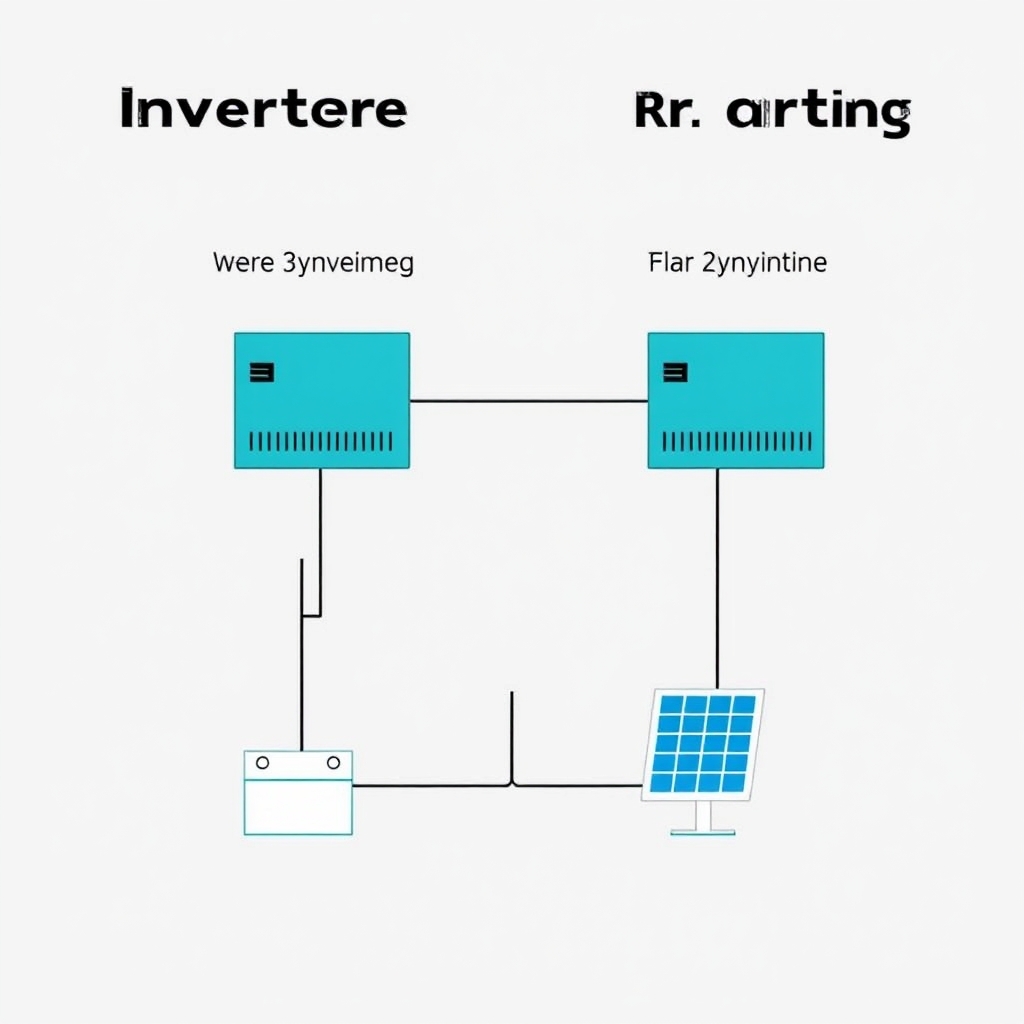
Researchers from the Bucharest University of Economic Studies evaluated grid-following versus grid-forming inverters for home-based solar and storage setups. By merging dynamic performance testing with a techno-economic review, the team assessed how these technologies function specifically within Romania.
Compared to conventional grid-following methods, grid-forming technology provides unique benefits regarding stability, recovery, islanding functions, and financial gains.
The study employed electromagnetic transient simulations to represent a 5 kW residential photovoltaic array paired with a 10 kWh lithium iron phosphate battery. Each inverter type was subjected to the same operational parameters.
Simulation Setup
- Modeling Platform: A 5 kW household solar array coupled with a 10 kWh lithium iron phosphate battery was simulated using MATLAB/Simulink.
- Simulation Type: Identical operating conditions were used to run electromagnetic transient simulations for both grid-following and grid-forming inverter setups.
- Test Disturbances: The systems faced a 1.2 kW load step-up and a 20% voltage drop that persisted for 200 milliseconds.
- Key Metrics: Evaluation relied on frequency deviation, voltage deviation, stabilization time, and the rate of change of frequency.
- Research Gap: Although prior work emphasizes control strategies and large-scale integration, this paper fills the void regarding country-specific economic analyses for emerging markets such as Romania.
- Operational Differences: Grid-following units depend on external grid references to maximize self-consumption, while grid-forming tech improves voltage regulation, power-flow management, and frequency stability during outages.
The analysis also identified an indicative transition point toward inverter-dominated operation, derived from installed-capacity trends and long-term Romanian grid scenarios. The study was published in the Journal of Energy Storage.
Performance Metrics
Under the simulated disturbance conditions, grid-forming inverters exhibited markedly better dynamic stability. The following table compares the primary performance indicators for the two configurations:
| Metric | Grid-Following | Grid-Forming |
|---|---|---|
| Max RoCoF | 18.99 Hz/s | 6.34 Hz/s |
| Max Frequency Deviation | 0.62 Hz | 0.18 Hz |
| Frequency Settling Time | 7.5 s | 3 s |
| Max Voltage Deviation | 0.20 p.u. | 0.08 p.u. |
| Voltage Recovery Time | 5 s | 2 s |
By autonomously setting voltage and frequency references, grid-forming technology facilitates active grid support and islanded operation without dependence on external grid signals. A techno-economic analysis, which factored in ancillary service income, avoided outage expenses, battery wear, and decreased renewable curtailment, indicated that grid-forming systems stayed financially viable across diverse electricity price and battery cost scenarios. Conversely, researchers noted that grid-following systems are considerably more vulnerable to market fluctuations and frequently fail to deliver appealing financial returns.
Economic Assessment
A 15-year techno-economic model applied a 6% discount rate to assess capital outlays, operational expenses, savings from self-consumption, income from grid exports, and energy arbitrage. The baseline initial costs were established at €7,000 for grid-following architectures and €8,500 for grid-forming units. Within this framework, grid-forming setups produced an annual net cash flow of €1,142, which is almost twice the €615 observed in grid-following configurations. As a result, grid-forming systems secured a positive net present value of €2,591 with an internal rate of return near 10.4%. Conversely, grid-following systems exhibited a negative net present value of −€1,027 and an internal rate of return of roughly 3.7%.
Although grid-forming technology displayed a higher standard levelized cost of energy at €0.206/kWh versus €0.174/kWh for grid-following, the adjusted levelized cost of energy fell to €0.118/kWh once flexibility and resilience advantages were factored in. The extra €1,500 outlay for grid-forming inverters was recouped in about 2.85 years. Nevertheless, financial viability depends on participation in flexibility markets, the monetary worth attributed to grid services, and premises that still need validation with seasonal data. These results are detailed in the paper “Can grid-forming inverters pay off? A techno-economic analysis of photovoltaic and battery systems in low-inertia power systems.”
What to watch
Upcoming studies need to examine the synchronized management of grid-forming prosumers, aggregators, energy communities, and AI-driven adaptive control. Additional avenues for future inquiry encompass vehicle-to-grid technologies, hydrogen storage solutions, and peer-to-peer energy trading mechanisms.
Source: pv magazine. This article is an original Luminity report based on the linked source.