
Residential storage hits 1 GWh in Q2 2026 as solar installs drop 19%
Ohm Analytics reports that residential battery deployments reached nearly 1 GWh in Q2 2026, offsetting a 19% year-over-year decline in solar installations. Tesla and other providers are leveraging VPP programs and state incentives to position batteries as standalone grid assets rather than solar add-ons.
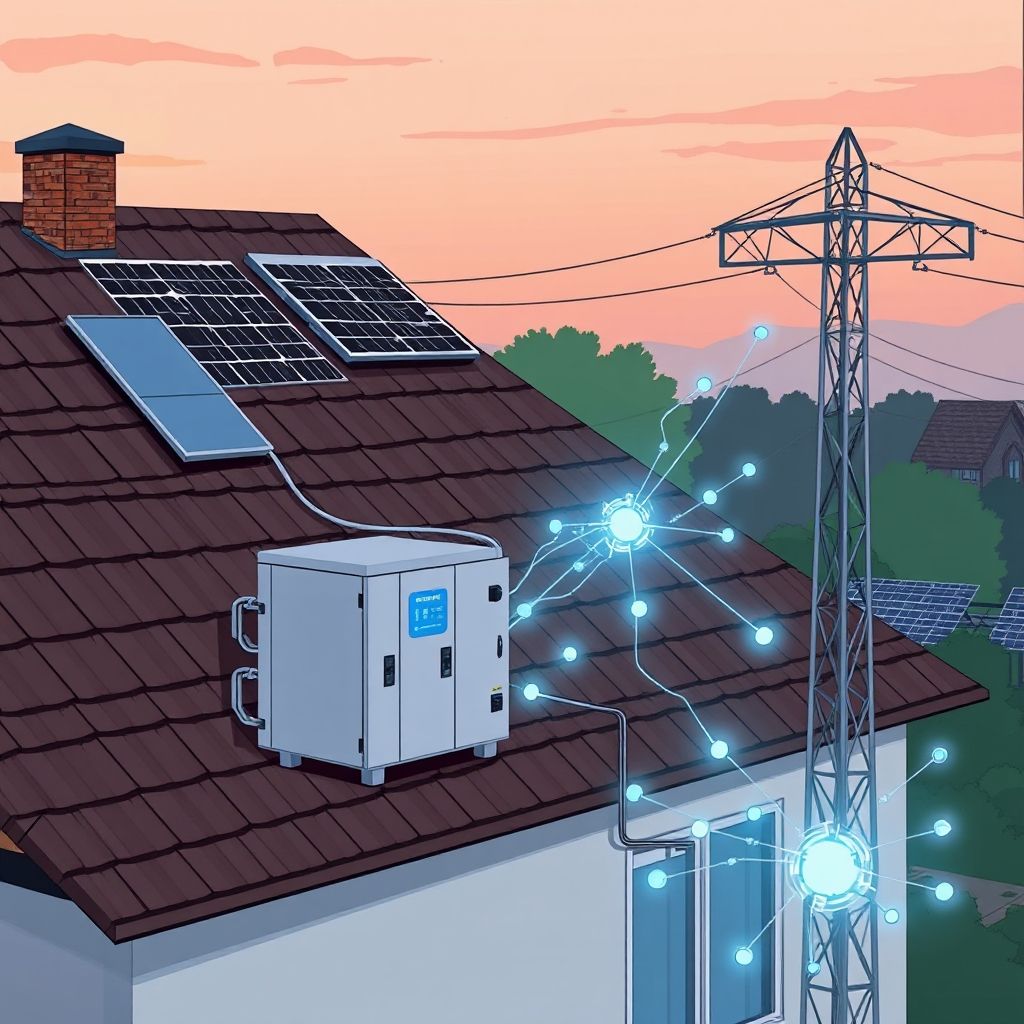
The residential solar market is undergoing a structural pivot, with installation volume falling 19% year-over-year according to Ohm Analytics.
Ohm Analytics data shows that residential storage deployments in Q2 2026 reached nearly 1 GWh. This volume has driven the national battery attachment rate to 49%.
Market Shift Dynamics
- Ohm Analytics data indicates an 80% storage attachment rate for California NEM 3.0 projects.
- Texas storage deployments increased by 132% year-over-year, with 75% of this expansion resulting from standalone battery retrofits, according to Ohm Analytics.
- Ohm Analytics partner Ryan Feeney identified this pattern as a defining trend of the year in the firm’s quarterly report.
- Feeney observed that although residential solar sales dropped 19% year-over-year, the installation of nearly a gigawatt-hour of storage in Q2 kept the overall sector approximately stable.
- FranklinWH Energy Storage VP Ronnie Pettersson explained that installer dialogues are evolving from calculating rooftop solar capacity to assessing actual battery requirements.
- Ohm Analytics indicates that 30% to 35% of residential batteries are presently participating in VPP programs.
VPP Integration and Scale
Tesla currently manages over 1.5 million Powerwalls globally, with its VPP programs representing 2.5 GW of capacity, equivalent to nearly 5 GWh of storage. In California, the utility and virtual power plant business development lead, Doug Middleton, notes that the California Powerwall VPP fleet capacity has increased by 50% year-over-year. During summer grid dispatches, this aggregated fleet delivered more than 600 MW.
Middleton distinguishes this model from traditional demand response, describing it as demand-sited generation. He argues this provides a capability set distinct from what grid operators have historically experienced with distributed assets. By offering VPP participation as an upfront discount through partners, financiers, and EPCs, monthly payments for battery purchases can drop from approximately $200 to $100, according to Middleton.
Data from the Connecticut Green Bank indicates that FranklinWH and Tesla fleets achieved over 90% participation rates in their respective programs.
Incentive Structures
Incentive mechanisms vary sharply by region, shaping both the economics of battery adoption and the reliability of virtual power plant fleets.
| Region / Program | Incentive Type | Value |
|---|---|---|
| Massachusetts Connected Solutions | Capacity compensation | Up to $400/kW-year |
| Massachusetts Distribution Service | Adder | $125/kW-year |
| Texas ERCOT Program | Annual participation payment | Up to $325/year |
| New Jersey GridSmart | Upfront rebate & financing | $5,000 rebate, zero-interest |
| California Ava Community Energy | Upfront rebate (low-income) | Up to $6,000 |
While Massachusetts and Texas offer ongoing compensation tied to capacity or annual participation, New Jersey and California’s Ava Community Energy focus on lowering initial capital costs through rebates and financing. Notably, the absence of defined wholesale market compensation for exporting power in CAISO and PJM regions means homeowners in those areas cannot earn revenue from selling surplus battery energy to the grid, a key revenue stream available in other markets.
Connecticut Green Bank data reveals that competing OEMs have registered participation rates below 70% in VPP programs. This stands in contrast to the over 90% participation rates previously noted for FranklinWH and Tesla fleets.
Puerto Rico Grid Resilience
In Puerto Rico, Tesla’s aggregated Powerwall network functions as a continuous marginal generation resource specifically deployed to prevent local utility rolling blackouts. This operational model contrasts with standard demand response, as it provides firm capacity rather than merely reducing load.
What to watch
Doug Middleton, Tesla’s utility and virtual power plant business development lead, points to ongoing load growth from large loads as a key factor maintaining cost pressure that enables residential fleets to compete alongside real resources rather than remaining pilot projects. He notes that many current policies were established before battery storage became a mature technology, meaning the sector participates through mechanisms originally designed for large loads.
Source: pv magazine USA. This article is an original Luminity report based on the linked source.