
Southeast University PV-TEG system detects hotspots, cuts panel heat in field tests
Scientists from Southeast University and the University of Technology Sydney have developed a self-powered photovoltaic-thermoelectric generator (PV-TEG) system that simultaneously harvests waste heat and localizes thermal anomalies on solar panels. Field tests in Taizhou, China, demonstrated the system’s ability to reduce local surface temperatures by up to 7.7 C while maintaining wireless connectivity.
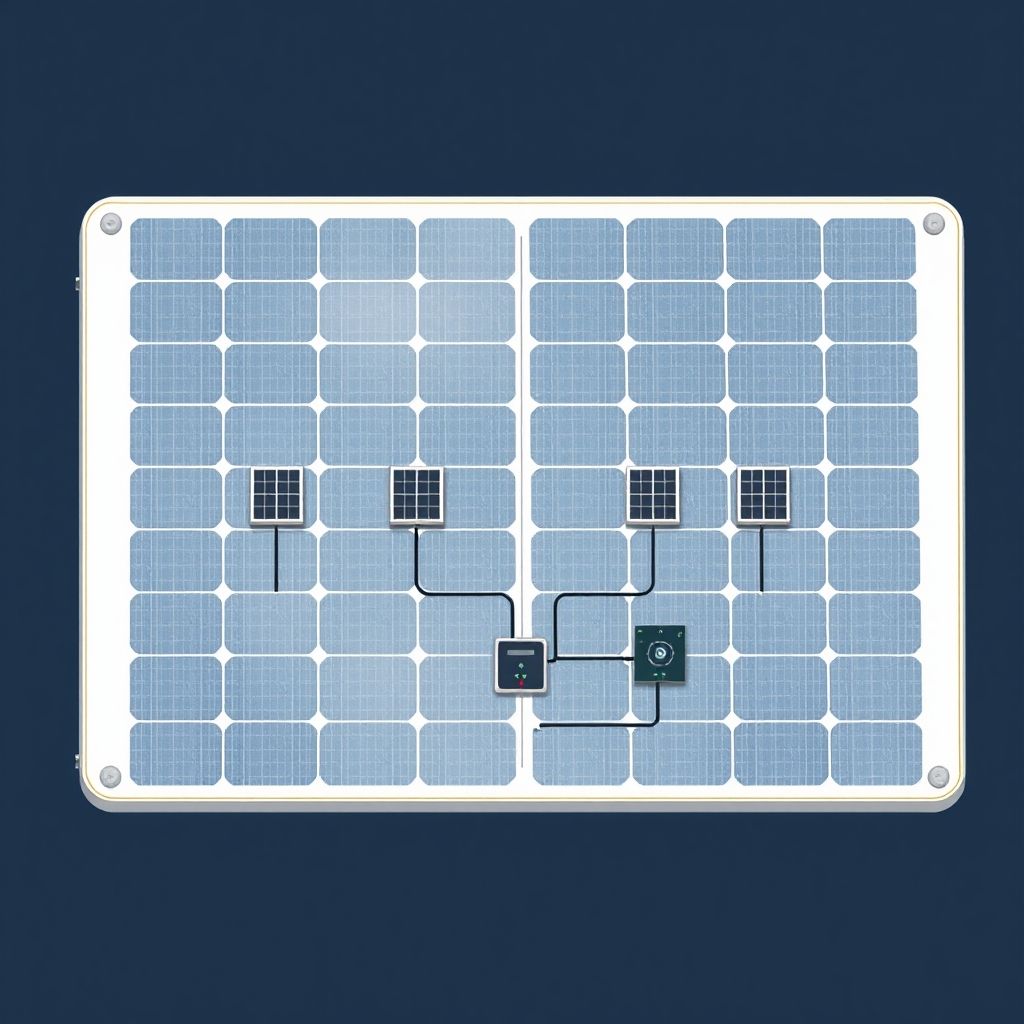
Researchers at Southeast University in China and the University of Technology Sydney in Australia have created a self-powered photovoltaic-thermoelectric generator (PV-TEG) system. This integrated unit merges hotspot localization, passive thermal management, energy harvesting, and wireless monitoring. The scientists explain that the design aims to identify localized heat problems on solar panels while concurrently regulating panel temperature and supplying power to its own monitoring parts, all without requiring an external power source.
Simulation and Design
The research team modeled a 500 mm × 500 mm photovoltaic region equipped with four rear-mounted thermoelectric generators and an aluminum heat sink. Baseline simulations assumed 1,000 W/m² irradiance and a 25°C ambient temperature. Under these conditions, the integrated system achieved a local temperature reduction ranging from 8.15 K to 12.40 K. The electronics activate once the generated voltage reaches 4.0 V and deactivate when it drops to 2.8 V.
Field Performance
Outdoor testing of the prototype was conducted on a rooftop antenna array at a telecom site in Taizhou, eastern China. The evaluation spanned a 10-hour window from approximately 8 a.m. to 6 p.m. Throughout this duration, the self-powered device accomplished roughly 45 wireless data transmissions without relying on an external battery.
| Metric | Field Test Result |
|---|---|
| Localization error | ~9.93 mm |
| Max local temp reduction | 7.7°C |
| Average temp reduction | 5.4°C |
Researcher Insights
- Jingming Cai, the lead author, highlighted that the study’s primary breakthrough lies in expanding the typical function of TEGs beyond simple waste-heat recovery.
- He clarified that the approach converts solar panel waste heat into a dual-purpose resource for both power generation and diagnostic data.
- Cai remarked on the team’s surprise regarding the precise ability of a compact setup of only four thermoelectric generators to pinpoint thermal anomalies.
- He outlined a future goal for solar panels to autonomously track their thermal condition, detect early signs of failure, and minimize reliance on power-hungry monitoring systems.
The results were published in the journal Applied Thermal Engineering.
Methodology and Publication Details
Jingming Cai, the corresponding author, recently released research in Applied Thermal Engineering under the title “A self-powered PV-TEG system for integrated hotspot monitoring and local thermal management based on thermoelectric voltage response.” Cai explained that this work expands the function of TEGs beyond their standard use for waste-heat harvesting. To verify the system’s capabilities, the team applied black tape to three distinct spots to generate controlled thermal disturbances, recording voltage changes to determine the coordinates of these anomalies. Each location underwent three separate tests, while infrared imaging confirmed the exact position and temperature of every anomaly. The monitoring circuitry engaged when the capacitor voltage hit 4.0 V and disengaged at 2.8 V to permit recharging. According to Cai, the setup executed roughly 45 wireless transmissions during a 10-hour daytime field test while operating without any external power source.
What to watch
The research team plans to investigate system performance under electrically induced photovoltaic hotspots and complex outdoor conditions.
Source: pv magazine. This article is an original Luminity report based on the linked source.