
IEA projects India renewable capacity to reach 530 GW by 2030
The International Energy Agency projects India’s renewable energy capacity will reach 530 GW by 2030, with solar PV accounting for over 80% of new additions. India is currently the world's second-fastest-growing renewable energy market and second-largest solar module manufacturer.
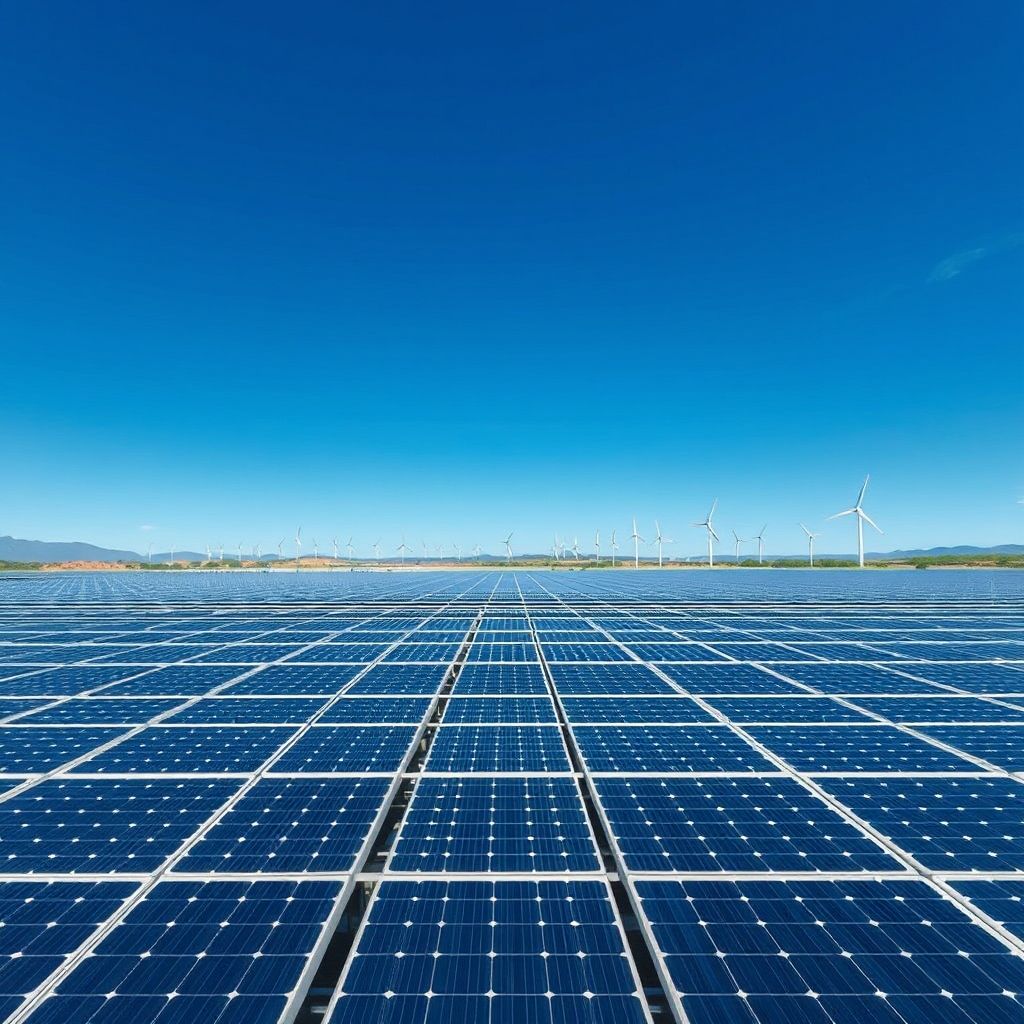
The International Energy Agency (IEA) projects that India’s renewable energy capacity will reach 530 gigawatts by 2030.
According to the IEA, solar photovoltaic installations are expected to drive the majority of this growth, accounting for over 80% of total capacity additions by the end of the decade.
Current Capacity and Generation
According to IEA data, India’s renewable energy capacity crossed the 300 GW mark in the fourth quarter of 2026. This achievement aligned with non-fossil fuel sources attaining 50% of the national installed capacity in 2025. Output levels increased concurrently, as renewable electricity generation surpassed 500 TWh during 2025. In that same period, solar PV displaced hydropower to become the primary source of renewable power in the country.
Technology and Manufacturing Outlook
The IEA notes that India is currently the world’s second-largest solar PV module manufacturer, with domestic production capacity reaching 225 GW by September 2026. Looking ahead, the agency projects India will become the world’s second-largest wind equipment manufacturer by 2030.
| Technology | Projected Capacity by 2030 |
|---|---|
| Solar PV | >350 GW |
| Wind | ~90 GW |
| Hydropower | 75 GW |
The IEA forecasts that distributed solar PV capacity will triple, surpassing 100 GW by the end of the decade.
Economic Impact and Grid Integration
The IEA estimates that renewable additions prevented coal imports from rising by 110 million tonnes in 2025. This expansion also kept electricity import dependence below 30%, a threshold it would have exceeded otherwise. Between 2011 and 2025, renewable electricity generated over USD 100 billion in import expenditure savings. The agency projects these savings will more than double by 2030, as renewables are expected to meet 35% of electricity demand.
The variable renewable energy share in electricity supply is set to rise from 14% to 26% by 2030. To manage this variability, corporate power purchase agreements are projected to support 20% of utility-scale additions by that date. The IEA notes that addressing grid and storage challenges could accelerate deployment between 2026 and 2030 by over 20%.
Background and Policy Context
- According to the IEA, India holds the position of the world's fourth-largest liquid biofuel market, with output expanding sixfold from 2020 to 2025.
- The nation aims to achieve net-zero greenhouse gas emissions by 2070, establishing the long-term direction for its energy shift.
- In a report dated 13 October 2026, Luminity noted that India’s aggregate cross-border transmission capacity is currently 10,323 MW, with expectations of rising to approximately 25,800 MW by 2030-31, as covered in a previous article.
- The Grid Connected Rooftop Solar Phase II initiative has been integrated into the PM Surya Ghar: Muft Bijli Yojana, allowing households that previously received central rooftop subsidies to claim support for extra capacity totaling up to 3 kW, as outlined in a Luminity guide.
What to watch
The IEA projects renewable electricity generation will approach 950 TWh by 2030.
Source: Saur Energy. This article is an original Luminity report based on the linked source.