
Grepow sodium-ion pouch cells target cold-climate industrial niche
Shenzhen-based Grepow has launched a series of sodium-ion pouch cells designed for industrial equipment and cold-weather applications. The company reports that its development cell retained 94% capacity after 2,000 cycles, outperforming lithium iron phosphate in internal comparative tests.
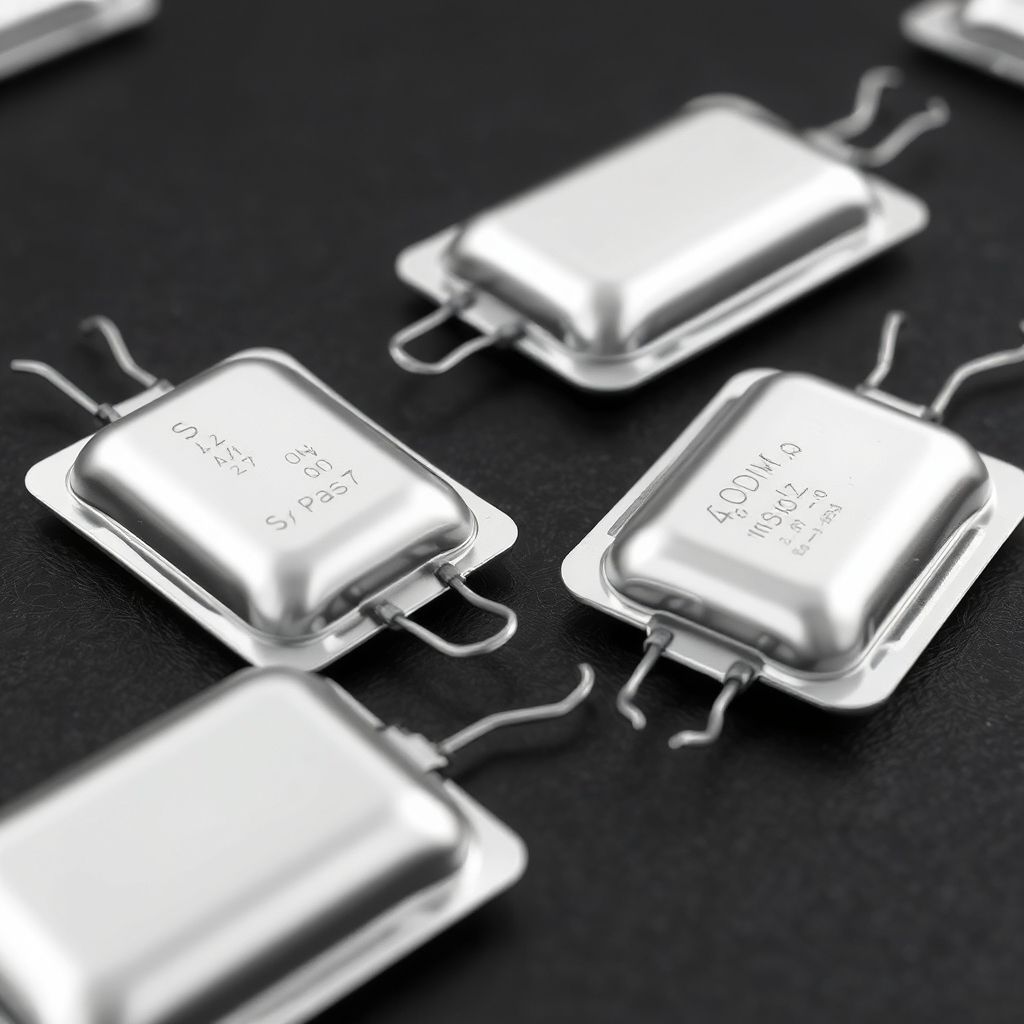
Shenzhen-based Grepow launched a new sodium-ion pouch cell series on Nov. 12, expanding its existing product lineup that currently includes nickel-metal hydride and lithium polymer batteries. The new offering comprises five distinct models, each featuring a nominal voltage of 3.0 V.
According to the company, this addition to its portfolio targets specific industrial applications.
The five models in the new series are designed to complement Grepow’s established battery lines. The launch date of Nov.
Cell specifications and ratings
The new series comprises five models: four smaller cells ranging from 2 Ah to 6.5 Ah capacity, and a 7 Ah flagship unit. The smaller cells utilize a 3.4 V charge cutoff, while the flagship model operates at 4.0 V.
| Model Type | Capacity | Charge Cutoff |
|---|---|---|
| Four smaller cells | 2–6.5 Ah | 3.4 V |
| Flagship cell | 7 Ah | 4.0 V |
These cells support lab discharge up to 45C for 30 seconds and pulse discharge up to 100C for two seconds.
Cold-weather performance and durability
Grepow subjected the new sodium-ion cells to rigorous internal evaluations under severe cold. After a four-hour rest at both -20 C and -30 C, the cells completed 28C pulse discharge tests. They also maintain continuous 0.2C discharge at -20 C, a capability appropriate for extended cold exposure. When compared at -20 C, the sodium-ion cell outperformed a lithium iron phosphate (LFP) cell in high-rate pulse discharge.
Durability metrics derive from a development cell that preserved 94% of its capacity after 2,000 cycles at 25 C. During this identical 2,000-cycle trial, an LFP cell held 83% capacity. Grepow forecasts the sodium-ion cell will surpass 4,000 cycles prior to dropping to 80% capacity, although this remains a projection rather than a finished test outcome. These numbers lack independent verification, and real-world results will fluctuate depending on pack design and operating conditions.
Target applications and customization
Grepow targets industrial equipment, cold-weather power, and specialty high-current applications. Specific use cases include vehicle jump starters, construction machinery, telecom backup, robotics, and stationary storage. The company offers customization for cell selection, pack structure, and battery management systems. Commercial viability ultimately depends on real-world cycle life and customer preference compared to lithium iron phosphate alternatives.
Background
- Wood Mackenzie places the worldwide mean expense for sodium-ion setups at $229/kWh, versus $200/kWh for LFP cells, a disparity the company forecasts will vanish at the cell stage by the close of 2026.
- According to the identical study, complete price equivalence at the module and system tiers will not arrive until following 2030.
- The organization foresees an 18–20% learning curve for Chinese producers from 2026 through 2035, maintaining sodium-ion’s financial edge across storage durations ranging from two to four hours.
- Agreements for sodium-ion supply have exceeded 70 GWh in aggregate quantity, while designated manufacturing capability presently exceeds market requirements.
- This chemistry provides lower fire risk, wider operational temperature ranges, and guaranteed raw material access, given that sodium appears in the earth’s crust approximately 1,000 times more often than lithium.
What to watch
No timeline has been provided for real-world validation of the cycle-life projections.
Source: pv magazine. This article is an original Luminity report based on the linked source.