
Model shows silver from China’s retired PV modules peaks in 2044
A Nankai University study projects that silver recovered from retired Chinese photovoltaic modules will peak at 739 metric tonnes annually in 2044, nine years before the peak in retired capacity. The research highlights that while silver intensity per watt has dropped significantly, the sheer volume of installed modules ensures substantial future secondary supply.
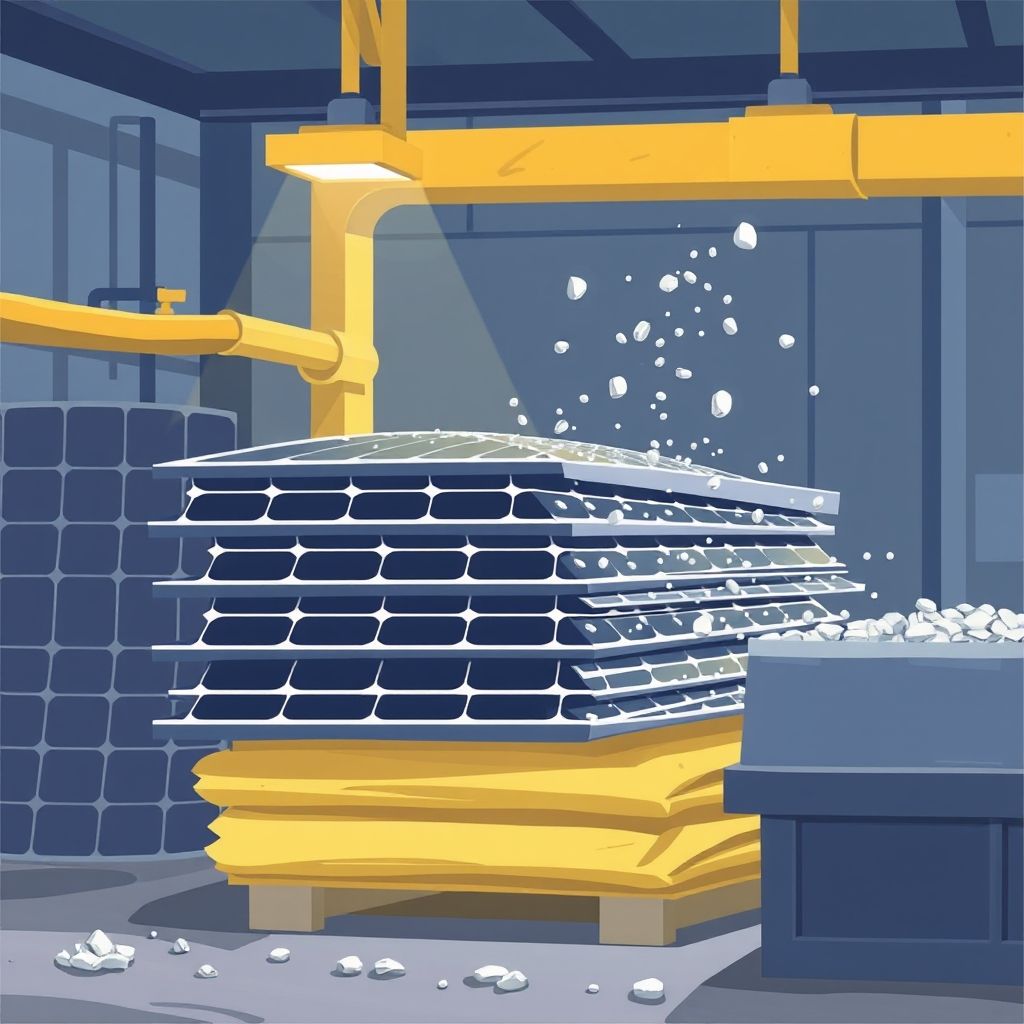
A new model projects that silver recovered from retired photovoltaic modules in China will reach an annual peak of 739 metric tons in 2044, according to a report reported by pv magazine.
A study by Nankai University found that the average silver intensity in Chinese modules fell by 62% between 2018 and 2025. Consequently, the peak in recoverable silver occurs earlier than the peak in total retired capacity.
Intensity vs. Volume
- Silver intensity in Chinese modules fell from 23.33 mg/W to 8.86 mg/W between 2018 and 2025, according to a Nankai University study.
- Despite this drop, the total annual silver used in new installations rose 170% over the same period, increasing from 1,150 MT to 3,109 MT.
- Projected annual silver recovery peaks vary between 566 MT and 1,425 MT depending on assumed module lifetimes.
- Silver constitutes only 0.03% of total module mass, yet Fraunhofer CSP notes it can be more valuable than glass, aluminum, or silicon.
Fleet Composition
China’s installed PV fleet held 17,784 metric tons of silver at the end of 2025, accounting for 99.5% of all silver installed in the country since 2000. The technology mix of retired modules shifts as older generations reach end-of-life.
| Year | Crystalline Silicon | PERC | TOPCon |
|---|---|---|---|
| 2025 | 88.4% | — | — |
| 2044 | 48.6% | 31.1% | 16.6% |
| 2060 | — | 91% (combined) | — |
While early-generation crystalline silicon modules dominated retirements in 2025, PERC and TOPCon technologies are projected to constitute 91% of retired silver by 2060.
Recovery Scenarios
The model tests how quickly recycling efficiency improves to estimate cumulative silver yields between 2025 and 2060. A constant 21% recovery rate yields 3,607 metric tons of silver over that period. If recovery efficiency reaches 90% by 2030, the cumulative total rises to 15,336 metric tons. Delaying that 90% threshold to 2045 reduces the yield to 13,682 metric tons, while achieving it only by 2060 results in 10,612 metric tons. The analysis was supported by a Tianjin government project and a central government fund for local science and technology development.
Methodology and Regulatory Context
Researchers at Nankai University aligned technology-specific silver usage metrics with worldwide photovoltaic silver consumption and panel manufacturing figures, applying a uniform coefficient of 1.113 to transform Chinese AC ratings into DC values. The analytical framework omits cross-border module trade and stockpile fluctuations, restricting its scope to deployment activities between 2000 and 2025. Although two members of the seven-person research group are employed by the Green Technology Research Institute at China Resources Recycling Group, the publication clarifies that the corporation offered neither financial support nor operational involvement. In separate experimental work, the Netherlands Organisation for Applied Scientific Research documented 97% silver extraction efficiency with 99.7% purity through a laser-supported technique, whereas a group led by the University of Glasgow secured over 95% targeted recovery using laser-induced delamination.
What to watch
Projections from the model’s baseline scenarios indicate that annual end-of-life silver streams will exceed 500 metric tons beginning in 2039, with 80% of the simulations identifying the peak window as falling between 2039 and 2048. According to IEA-PVPS estimates, recycled silver has the potential to cover 30% to 45% of the total cumulative PV demand over the 2025–2050 timeframe.
In March, China’s industry ministry, alongside five other government departments, released guidelines aiming to achieve 250,000 metric tons of cumulative recycling by 2027.
Source: pv magazine. This article is an original Luminity report based on the linked source.