
Chicago program trains formerly incarcerated men for solar jobs
A Safer Foundation initiative on Chicago’s West Side uses a transitional center to prepare justice-involved individuals for solar installation careers. The program has certified over 100 people and placed 79 in jobs since its launch, supported by state and federal grants.
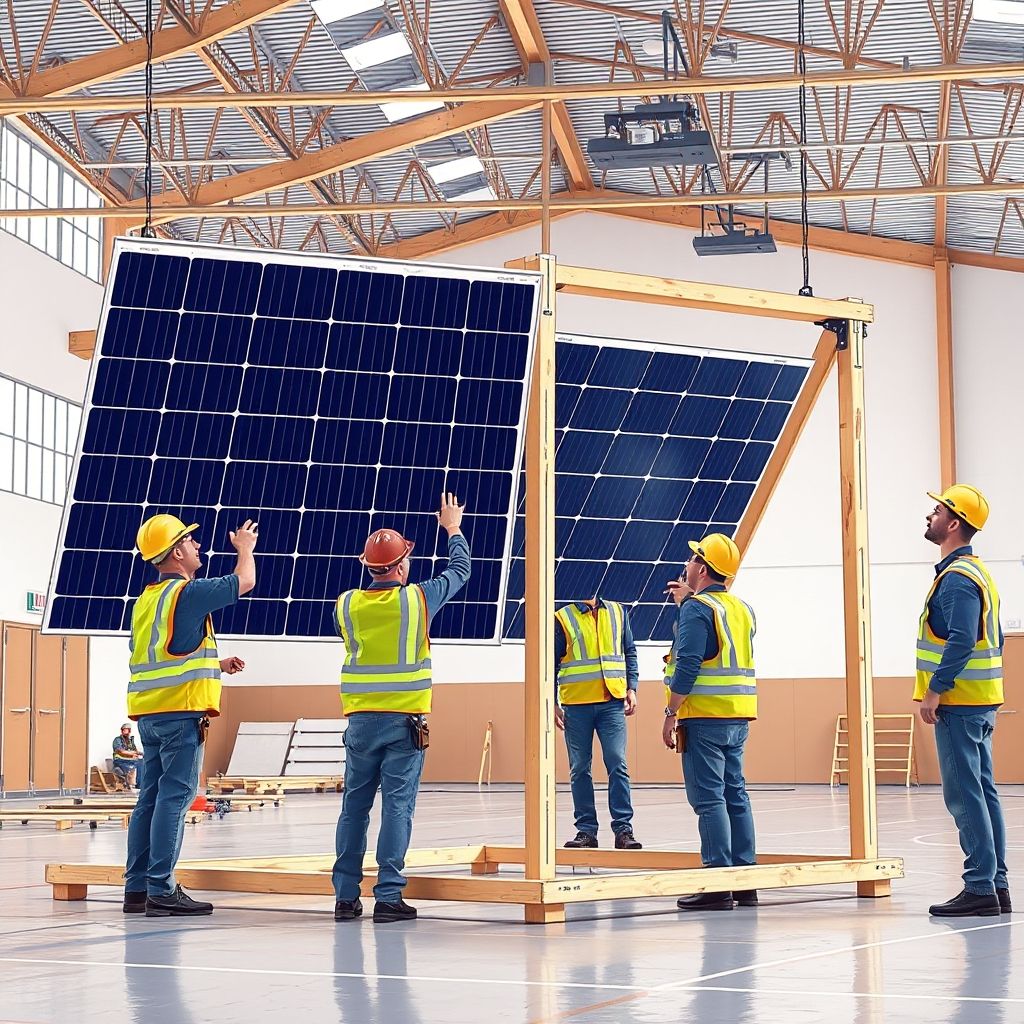
On the Chicago West Side, a former Sears Roebuck campus hosts an adult transitional center housing 250 men completing criminal sentences. Within this facility, a former gymnasium has been converted into a training site. It contains a two-story under-construction home used for solar installation practice. The program aims to prepare formerly incarcerated men for jobs in the solar industry. Men practice installing panels on the two-story structure. The training site is distinct from the housing areas.
Legislative and Funding Context
Illinois clean energy laws passed in 2017 and 2021 provide the legislative framework for this initiative. Funding streams include a 2017 state grant under the Future Energy Jobs Act, a 2021 federal grant, and 2021 state funding from the Climate and Equitable Jobs Act. These sources support training for residents of Chicago’s South and West Sides, with eligibility extending to individuals involved in the justice system or foster care.
Safer President and CEO Mark Yates noted that people with criminal convictions are "better workers" because "they feel this is their one and only chance to get something right." The state grant also funds an expansion to launch training inside an Illinois prison, targeting individuals within three years of release.
Training Model and Support
- Katrice Harris, the training and employment account executive at Safer, noted that while the program targets individuals facing substantial obstacles, the staff members are fully certified and prepared to facilitate job placement for these participants.
- The course structure is built to ensure participants obtain the necessary credentials to secure employment and achieve self-sufficiency.
- The instructional period involves one month of foundational skills training, followed by three to six weeks focused on solar or weatherization techniques.
- Participants receive financial stipends as part of their engagement in the program.
- Complementary services offered include remedial education, interpersonal skills coaching, childcare, vehicle maintenance, mental health care, substance abuse recovery, anger management, and financial literacy instruction.
- Safer oversees 148 units of subsidized and affordable housing, integrating a residential element with the vocational training provided.
Katrice Harris highlighted that pairing technical certifications with comprehensive social services effectively tackles the unique hurdles encountered by formerly incarcerated individuals as they pursue stable careers in the renewable energy field.
Outcomes and Employer Partnerships
Since 2021, the Safer Foundation has helped more than 100 individuals earn clean energy certifications, with 79 securing employment in the sector. The program’s trainee pool is approximately 75% justice-involved, a demographic that employer partners Millennium Solar Electric and SunRun actively recruit.
| Metric | Count |
|---|---|
| Clean energy certifications | >100 |
| Jobs secured | 79 |
| Justice-involved trainees | ~75% |
Mark Yates, Safer’s President and CEO, noted that participants have "been incarcerated beyond technology advances." To address this, Safer launched a construction company in 2016 focused on renovation and carpentry, providing foundational trade skills before solar-specific training.
On-Site Infrastructure and Prison Expansion
Safer’s facility features a mock-up home where trainees can practice wiring and operating an inverter, providing practical experience in the electrical aspects of solar energy. The curriculum specifically targets physical fears, such as acrophobia, by allowing students to acclimate to roof work while secured in safety harnesses. This immersive method exceeds the scope of many solar training programs, ensuring students encounter realistic industry conditions.
After their release, participants are directed to Safer for mentorship and introductions to potential employers. The organization also seeks to assist the large population of unhoused individuals with criminal records, providing services such as secure storage for personal belongings while they are employed.
To foster a sense of normalcy and empowerment rather than an “institutional” atmosphere, Safer operates an on-site food pantry designed like a grocery store, with personal shoppers assisting individuals in their selections. The organization’s ties with employers help mitigate hesitation in hiring candidates with criminal histories or employment gaps. The job development team cultivates these relationships and establishes MOUs in which employers commit to hiring these clients and offering them a second chance.
Source: Canary Media. This article is an original Luminity report based on the linked source.