
Sizable Energy targets 2027 for offshore gravity storage demonstrator with Naples data center
Italian startup Sizable Energy has moved from concept validation to active project development for its offshore gravity-based energy storage system. The company plans to deploy an integrated demonstrator with a Naples data center in the first half of 2027, following successful tests in Italy and the Netherlands.
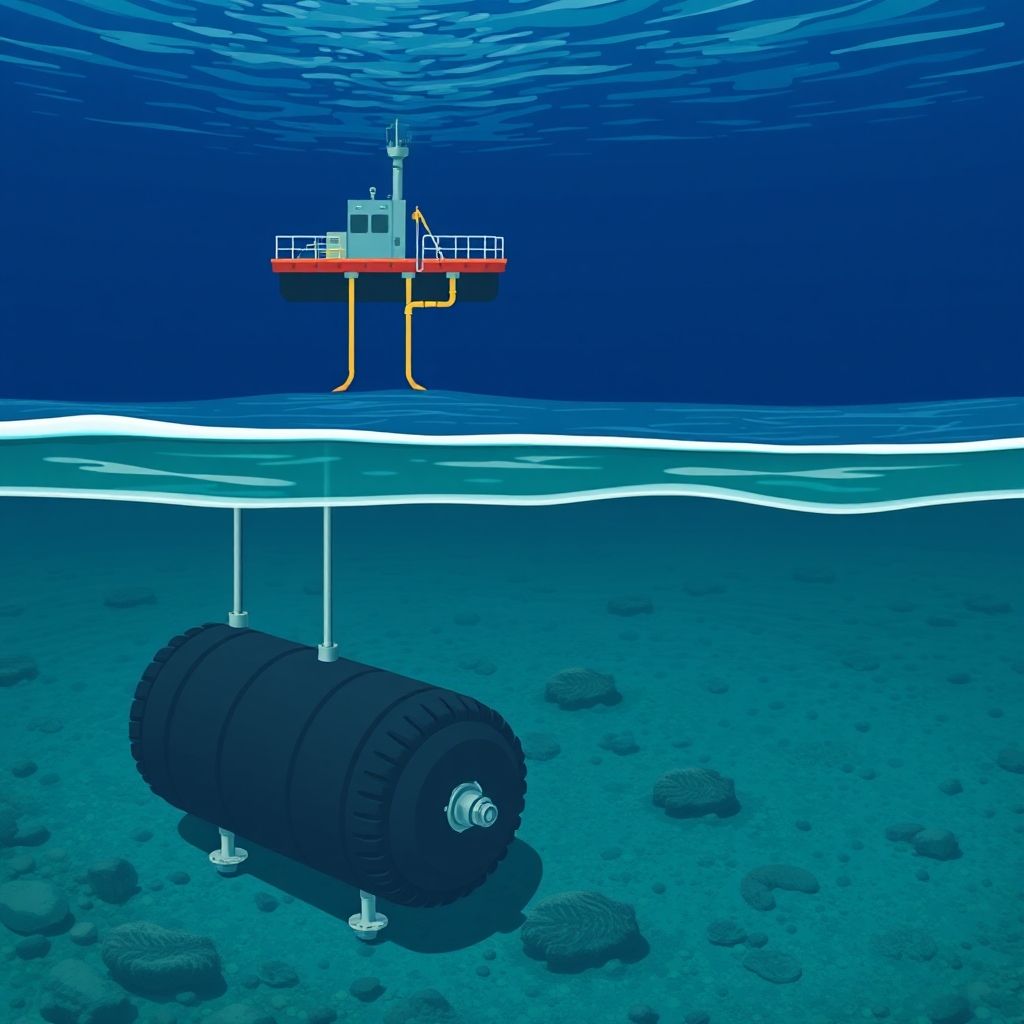
Sizable Energy is engineering an offshore gravity-based energy storage solution that leverages seawater and high-density brine. As described by the firm, the technology utilizes flexible seabed and surface reservoirs to replicate the mechanics of pumped hydro storage.
Simone Biondi, co-founder of Sizable Energy, noted that the company finished its demonstration and concept-validation phase and transitioned into project development during the previous year.
Validation and Testing
Sizable Energy has completed offshore tests in Reggio Calabria in collaboration with the University of Reggio Calabria. Prior to these field trials, the company conducted earlier tank testing at Marin, a Dutch marine research institute.
The company has not provided specific cost figures for the storage system, nor has it given a timeline for the completion of the projects planned for Calabria and Sicily.
Project Pipeline and Expansion
- An integrated demonstrator paired with the Naples data center is scheduled for the first half of 2027.
- Pre-FEED and FEED activities are currently underway for projects in Calabria and Sicily.
- The international project pipeline exceeds 10 GWh, with opportunities in the Mediterranean and Middle East.
- Advanced discussions are occurring for projects in the Caribbean.
Technical Specifications and Context
The Power Shell concept integrates offshore gravity storage, floating solar arrays, and data centers into a single operational unit. Sizable Energy estimates the service life of its gravity-based technology exceeds 30 years, contrasting with the 10 to 15 year lifespan typically associated with conventional batteries.
Site selection for the system requires water depths of at least 500 meters. Simone Biondi, co-founder of Sizable Energy, described the technology as being at a first-of-a-kind stage. For grid integration, Terna’s Macse mechanism has been identified as a potential project framework.
Design Parameters and Grid Integration
Sizable Energy’s architecture decouples generation capacity from energy storage, enabling independent scaling according to water depth, the number of units deployed, and total reservoir size. Co-founder Simone Biondi stated that the platform is capable of delivering grid responsiveness, frequency regulation, reserves, balancing services, and either physical or synthetic inertia, contingent on its specific setup. The firm regards lithium-ion battery storage as a complementary technology rather than a rival, emphasizing that their storage expenses are determined by reservoir dimensions instead of the quantity of battery cells.
Infrastructure for floating solar arrays can be shared with the storage reservoirs, including mooring systems and grid interconnection cabling. Biondi described how long-duration storage enables the redistribution of solar power from peak daytime production to meet evening and overnight demand, thereby addressing periods of low renewable availability. In the context of offshore wind, the storage solution can utilize existing export cables, permitting cable sizing to align more closely with average output levels rather than peak loads. This arrangement allows surplus power to be stored offshore and transmitted when cable capacity opens up, which lowers connection expenses and minimizes curtailment.
The enterprise is investigating direct power purchase agreements with major consumers, such as data centers, to establish stable long-term income streams. Biondi highlighted data centers and other constant-load facilities as suitable applications requiring uninterrupted renewable electricity. This technology is designed for utility-scale initiatives measured in gigawatt-hours, while traditional battery systems are deemed more appropriate for smaller-scale applications.
Source: pv magazine. This article is an original Luminity report based on the linked source.