
India’s 168 GW Solar Boom Exposes Critical Skilled Manpower Gap
With solar capacity hitting 168 GW, the sector faces a severe shortage of trained technicians and engineers. While government schemes and policies drive adoption, the pace of installation now outstrips the ability to build skilled teams.
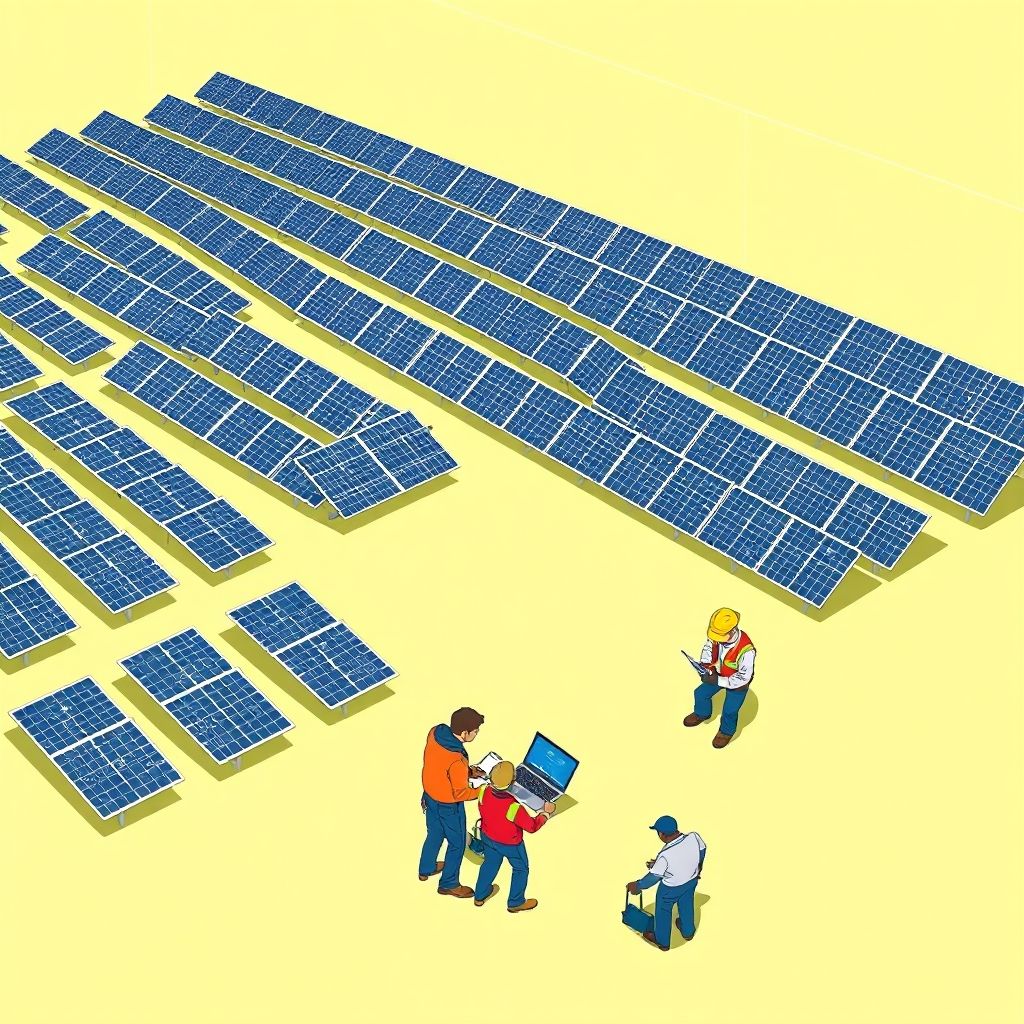
India’s solar sector faces a critical shortage of skilled manpower as the industry scales rapidly. Total installed solar capacity reached 168 GW by August 2026, reflecting a significant acceleration in deployment. According to pv magazine India, nearly 18 GW of solar capacity was added in the first five months of the current fiscal year. This surge has shifted the primary constraint from capital availability to human capital. The rapid expansion highlights a growing disconnect between infrastructure growth and workforce readiness.
The Capability Gap
The sector’s expansion has outpaced the development of the human infrastructure required to sustain it. While physical assets can be erected with relative speed, the cognitive and technical frameworks needed to operate them evolve on a much slower timeline. An EPC firm executive notes that the challenge is no longer just about adding capacity, signaling a fundamental shift in what limits growth. The bottleneck has moved from securing land or financing to finding personnel who understand complex grid integration and maintenance protocols.
Consultants in the field observe that a factory can be built in months, but building skilled teams takes years. This disparity creates a temporal mismatch that affects project timelines and operational stability. For new installations, this gap means that initial commissioning phases often rely on a thin layer of experienced engineers, stretching their bandwidth across multiple sites. The delay in workforce maturity is not merely an administrative inconvenience; it represents a structural risk that can undermine the efficiency gains expected from newer, higher-efficiency technologies.
Industry experts summarize the situation by stating, "We are adding capacity faster than we are building capability." This dynamic suggests that the current pace of deployment is outstripping the educational and vocational pipelines that supply the sector. Without a corresponding surge in training and retention strategies, the industry risks creating a cycle where new plants struggle to reach full operational potential. The focus must therefore shift from purely quantitative growth metrics to qualitative assessments of workforce readiness, ensuring that the human element keeps pace with the hardware.
Evolving Technical Roles
The nature of solar employment is shifting from manual assembly to complex system management, demanding a broader skill set from the workforce.
- Rooftop solar requires decentralized teams of trained technicians.
- Solar roles now require electrical engineering, digital monitoring, and specialized technical knowledge.
This transition reflects the increasing complexity of modern photovoltaic systems. Unlike centralized utility-scale plants where maintenance might be handled by a single on-site crew, distributed rooftop installations necessitate a geographically dispersed network of technicians. These individuals must manage multiple, separate sites, requiring strong logistical coordination and independent problem-solving abilities. The decentralized model means that troubleshooting cannot rely on a single headquarters team; instead, local expertise is essential for rapid response to faults or performance dips across a fragmented asset base.
Simultaneously, the technical threshold for entry-level positions has risen significantly. Modern solar installations are no longer just about wiring panels; they involve integrating with smart inverters, battery storage, and grid-tied systems that generate vast amounts of operational data. Consequently, technicians must possess foundational knowledge in electrical engineering to understand circuit behavior and safety protocols. They also need proficiency in digital monitoring platforms to interpret real-time performance metrics, identify degradation patterns, and optimize energy yield. This blend of hardware expertise and data literacy ensures that system operators can maintain efficiency as technology evolves, moving beyond simple installation to active performance management.
Policy and Training Response
Government initiatives are attempting to close the workforce deficit through targeted training and supply-side regulation. The Ministry of New and Renewable Energy trained over 1.2 lakh candidates in FY2025-26, providing a direct pipeline of technical personnel for the expanding grid. Such large-scale vocational programs are essential because they address the immediate shortage of hands-on technicians who can handle installation and basic maintenance tasks. By standardizing training curricula, these efforts help ensure that new entrants possess the foundational electrical and safety knowledge required for modern photovoltaic systems. This structured approach reduces the reliance on ad-hoc, on-the-job learning, which often leads to inconsistent quality and higher long-term maintenance costs for project owners.
Parallel to workforce development, regulatory frameworks are reshaping the industry’s operational environment. The PM Surya Ghar scheme aims to accelerate rooftop solar adoption, a segment that specifically demands the decentralized technical skills discussed earlier. Simultaneously, ALMM and DCR policies are reshaping domestic solar supply chains. These regulations influence which components reach the market and how they are sourced, indirectly affecting the technical knowledge required for integration. When supply chains shift toward specific domestic standards, technicians must adapt to new module characteristics and inverter protocols. For developers, navigating these policy shifts is as critical as hiring staff, because compliance dictates which technologies can be deployed. The interplay between training outputs and regulatory inputs determines whether the sector can sustain its growth trajectory without compromising system reliability or safety standards.
What to watch
The coming months will reveal whether the workforce pipeline can keep pace with deployment. A recent CEEW-NRDC study estimates that the clean energy transition could generate over 4.4 million jobs, signaling a massive labor demand that current training outputs may not yet satisfy. For project developers, this scale of hiring pressure means that recruitment bottlenecks could directly impact commissioning schedules. If skilled technicians are scarce, installation phases may stretch out, forcing operators to rely on less experienced staff for critical grid-integration tasks. This often leads to initial performance dips that take months to resolve, eroding the expected return on investment for early-stage assets.
Beyond hiring numbers, readers should monitor how these manpower shortages manifest in operational metrics. Industry projections suggest that a lack of skilled personnel may cause project delays, lower performance, and higher operational costs. These three factors are interconnected; delayed commissioning pushes revenue recognition later, while lower performance due to suboptimal maintenance increases the cost per kilowatt-hour generated. Investors tracking solar portfolios will likely see these inefficiencies reflected in asset valuations. As the sector scales, the ability of state utilities and independent producers to retain trained engineers will determine whether the projected job growth translates into stable, high-yield power generation or a wave of underperforming installations that burden the grid with variability and reliability issues.
Source: pv magazine India. This article is an original Luminity report based on the linked source.