
Himachal Pradesh Launches First Battery-Backed Solar Plant in Spiti Valley
Chief Minister Thakur Sukhvinder Singh Sukhu inaugurated a 2 MW solar plant with 1 MWh battery storage in Rongtong, Kaza. The project, completed in December 2024, is the state’s first hybrid solar-storage facility and is expected to generate 36 lakh units annually.
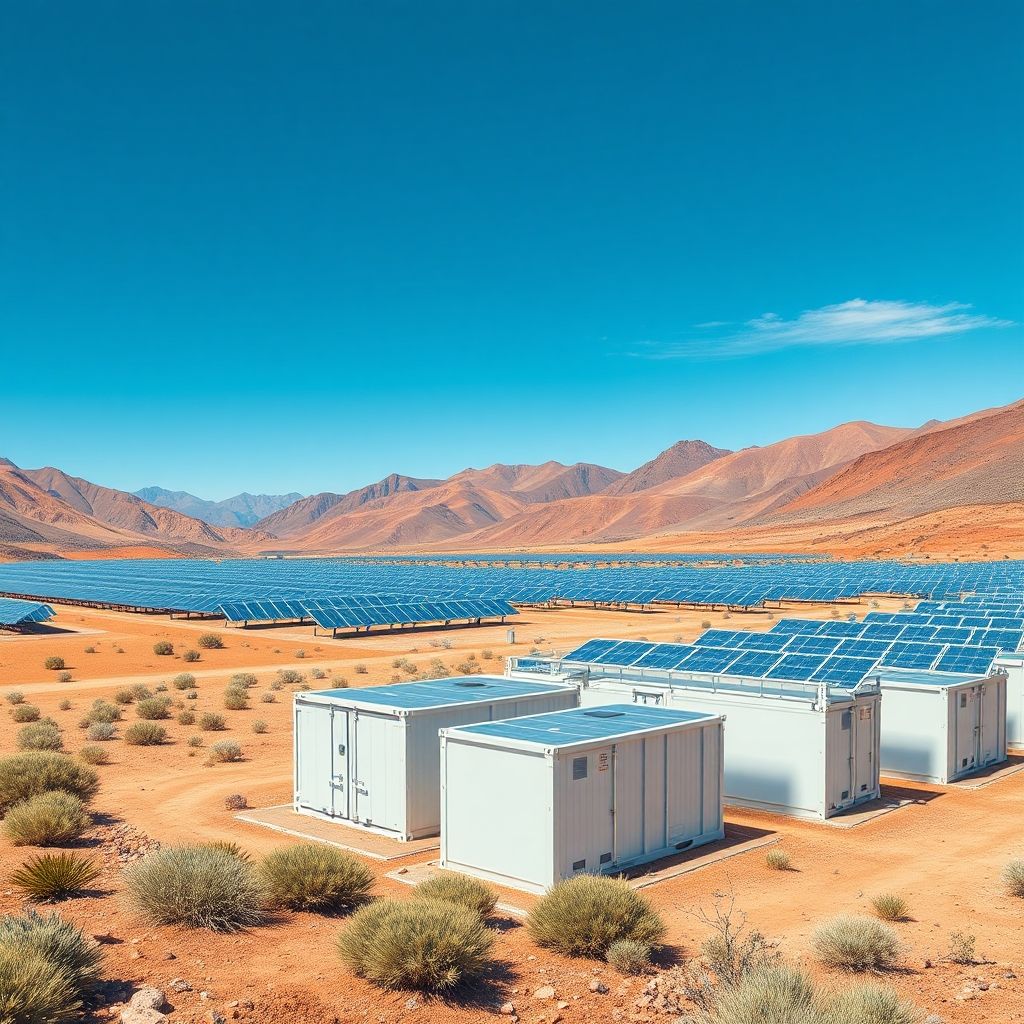
Chief Minister Thakur Sukhvinder Singh Sukhu officially inaugurated a new renewable energy facility in the remote Spiti Valley region of Himachal Pradesh. The site, located at Rongtong in the Kaza district, marks a significant milestone for the state’s clean energy infrastructure.
This installation is the first solar project in Himachal Pradesh to be paired with battery storage. By integrating these technologies, the state aims to enhance grid stability in high-altitude areas where energy demand is growing. The inauguration highlights the region's commitment to sustainable development in challenging terrains.
Technical Specifications
- Solar generation capacity of 2 MW
- Battery Energy Storage System (BESS) capacity of 1 MWh
- Site elevation of approximately 3,600 metres above sea level
The facility combines a 2 MW solar array with a 1 MWh battery storage unit. This configuration allows the plant to store excess solar energy generated during peak sunlight hours for release during periods of low irradiance or high demand. For high-altitude locations, such storage is critical because solar output can fluctuate rapidly due to weather changes, while the grid may lack immediate backup capacity to smooth these variations. The 1 MWh storage capacity provides a buffer that helps maintain voltage stability and supports local loads without relying solely on distant transmission lines.
Operating at an altitude of roughly 3,600 metres presents unique engineering challenges for both the solar modules and the battery systems. At such elevations, air density is lower, which can affect heat dissipation for electronic components and inverters. The cold temperatures typical of the Spiti Valley can influence battery chemistry and performance, requiring systems designed for wide temperature ranges. The integration of these technologies at this height demonstrates an approach to renewable energy development that accounts for local environmental conditions, ensuring reliable power delivery in remote areas where traditional grid infrastructure is limited.
Financial and Generation Data
The total investment for this Spiti Valley facility stands at Rs. 4.42 crore. This figure encompasses the solar array, battery storage system, and associated civil works required to operate at such a remote, high-altitude site. In the renewable energy sector, project costs for small-scale solar plants are often driven less by the modules themselves and more by the complexity of installation, grid connection, and land preparation. For remote locations like Rongtong, logistical hurdles can significantly inflate expenses compared to flatland projects, as transporting heavy equipment to elevations above 3,000 metres requires specialized vehicles and routes. Understanding these cost drivers is essential for evaluating the economic viability of similar off-grid or microgrid initiatives in other mountainous regions.
The plant is projected to generate 36 lakh units of electricity annually. This output estimate reflects the specific solar irradiance levels available at the site and the efficiency of the installed technology. Annual generation figures for solar projects vary based on geographic location, weather patterns, and system performance over time. For local consumers and grid operators, this volume of power helps reduce dependence on diesel generators or long-distance transmission, which often incur higher operational costs and carbon emissions. The integration of battery storage ensures that a portion of this generated energy is available when the sun is not shining, improving the overall utility of the investment for the local community.
Project Timeline
Construction on the Spiti Valley facility began on May 30, 2023. The project was subsequently commissioned in December 2024, marking the transition from active site development to operational status. This roughly eighteen-month build period reflects the logistical complexities inherent in high-altitude renewable energy installations. Unlike standard flatland projects, where supply chains are often streamlined, sites at such elevations face delays due to limited access roads, seasonal weather windows, and the specialized handling required for heavy equipment. For developers, this timeline highlights how terrain can extend project schedules, impacting financing structures and return-on-investment calculations. The gap between groundbreaking and commissioning is a period where capital is committed but no revenue is generated, making efficient logistics management a key financial lever for such remote ventures.
Since its launch, the plant has accumulated a total generation of 22,58,752 units through September 30, 2026. This figure represents the cumulative output delivered to the local grid over the first two years of operation. Tracking generation against time allows stakeholders to assess real-world performance relative to theoretical projections. In the battery storage sector, early operational data is critical for validating system efficiency and reliability under varying climatic conditions. For grid operators, consistent generation records help in planning load management and ensuring that the stored energy is being utilized effectively to offset peak demand. The data serves as a practical benchmark for future similar projects, offering insight into how well the technology performs in sustained, real-world conditions rather than just initial testing phases.
What to watch
The immediate focus shifts to verifying whether the plant’s actual performance matches its projected annual output. Early operational data through late 2026 provides the first real-world benchmark, but long-term reliability at such extreme altitudes remains the critical unknown. Grid operators will likely monitor how effectively the battery system manages voltage stability during seasonal temperature swings, a factor that can degrade storage efficiency over time. For local stakeholders, the key question is whether the facility can consistently displace higher-cost diesel generation without significant maintenance interruptions.
Sukhu described the facility as a "new symbol of development in Spiti Valley," a characterization that sets high expectations for its broader impact on regional energy security. Readers should look for updates on any subsequent expansions or policy adjustments in the valley that might replicate this model. Success here depends not just on the hardware surviving the cold, but on the logistical framework holding up under sustained operation. If the current generation rates hold steady, this project could serve as a practical template for other remote, high-altitude communities seeking to reduce grid dependency. The coming months will reveal if the initial enthusiasm translates into durable, cost-effective power delivery for the region.
Source: Saur Energy. This article is an original Luminity report based on the linked source.