
IEA: Southeast Asia must triple renewables to meet electrification demand
The International Energy Agency states that Southeast Asia needs to triple its renewable energy generation to support a projected 65% rise in electricity demand by 2035. The report highlights that current policies are insufficient, leaving the region reliant on coal and facing rising fossil fuel import costs.
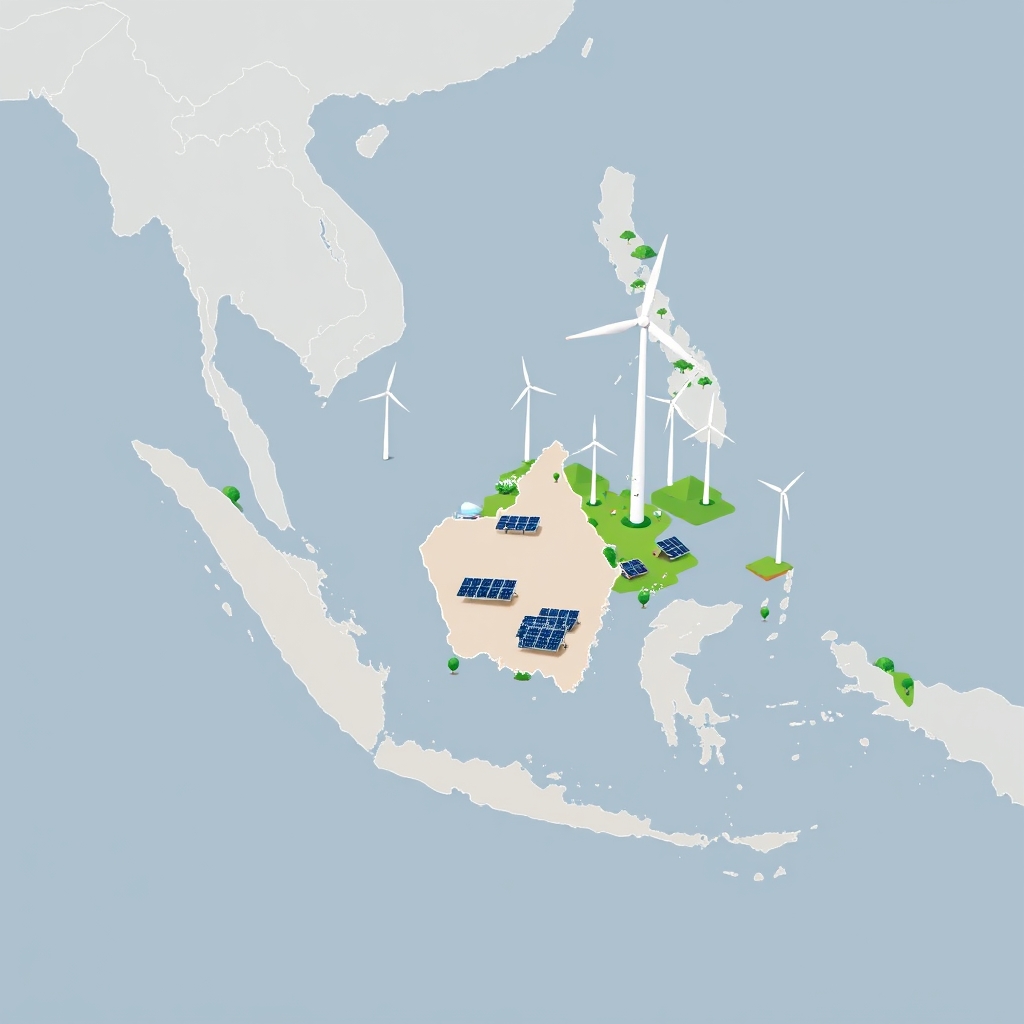
The International Energy Agency (IEA) states that Southeast Asia must triple renewable generation to support regional electrification. The report projects electricity demand will rise by nearly 65 percent, or around 900 TWh, over the coming decade.
The IEA estimates this share will grow from 25 percent in 2025 to 41 percent by 2035.
The Electrification Gap
Under current policies, the IEA projects electricity will account for 32 percent of final energy consumption by 2035.
Coal Dependence and Regional Variance
The IEA reports that coal remains the dominant fuel for electricity generation across the region, though reliance varies by country.
| Country | Coal Share of Generation |
|---|---|
| Indonesia | Around 70% |
| Philippines | Nearly 60% |
Renewable Growth and Cost Dynamics
- The IEA reports that renewables fulfilled roughly 40% of the region’s expanding electricity demand over the past decade.
- The share of electricity produced by renewable sources rose from 17% in 2015 to more than 25% by 2025.
- Combined solar and wind generation increased from 4 TWh to over 65 TWh, yet this amount represents just over 4% of the region’s total power output.
- By 2025, the global weighted average levelised cost of electricity was USD 0.033/kWh for onshore wind and USD 0.044/kWh for solar PV.
- From 2010 to 2025, battery costs fell by 90%, and global battery storage capacity expanded by 108 GW in 2025, reflecting a 40% year-on-year increase.
Financial Barriers and Import Savings
According to IEA projections, Southeast Asia will commit USD 57 billion to energy capital expenditures in 2026. This total includes USD 22 billion directed toward renewables and USD 15 billion for grid infrastructure. A major obstacle for developers funding this growth is that regional financing costs are double those found in advanced economies.
Under existing trends, the region’s annual import bill for fossil fuels is set to climb from USD 100 billion in 2025 to over USD 200 billion by 2035. Fast-tracking the energy transition could lower this expense by approximately 30 percent by 2035. The IEA further indicates that this transition would cut end-use CO₂ emissions by nearly 25 percent.
Grid Constraints and Policy Frameworks
In its November 2026 publication, Accelerating Electrification in Southeast Asia, the IEA cautions that building and planning transmission infrastructure takes significantly more time than constructing solar installations, EV charging facilities, or data centers. This mismatch risks leading to connection bottlenecks and the curtailment of renewable energy. To address these challenges, the agency suggests enhancing current network capabilities through dynamic line ratings, smart inverters, and AI-driven grid management. Additionally, it points to flexibility solutions—including battery energy storage systems, demand response, managed EV charging, and virtual power plants—as essential for managing rising levels of solar and wind integration.
From a policy perspective, the report notes that Malaysia, Thailand, and Vietnam utilize direct power purchase agreements, complemented by competitive bidding processes and standardized contracts. The ASEAN Power Grid is viewed as a potential channel for cross-border renewable electricity trading, although the IEA stresses that realizing this requires extensive transmission spending and regulatory alignment. The agency further observes that prior to the Middle East conflict, the region depended on that area for roughly 60% of its crude oil imports and one-third of its natural gas imports, leaving it vulnerable to geopolitical shocks.
Source: Saur Energy. This article is an original Luminity report based on the linked source.