
Fox ESS Launches Power Cube With Integrated Winter Heating
Fox ESS has introduced the Power Cube, a home battery system featuring integrated heating to maintain performance in cold Australian winters. The launch follows a period of rapid market growth, with installations tripling between February and April.
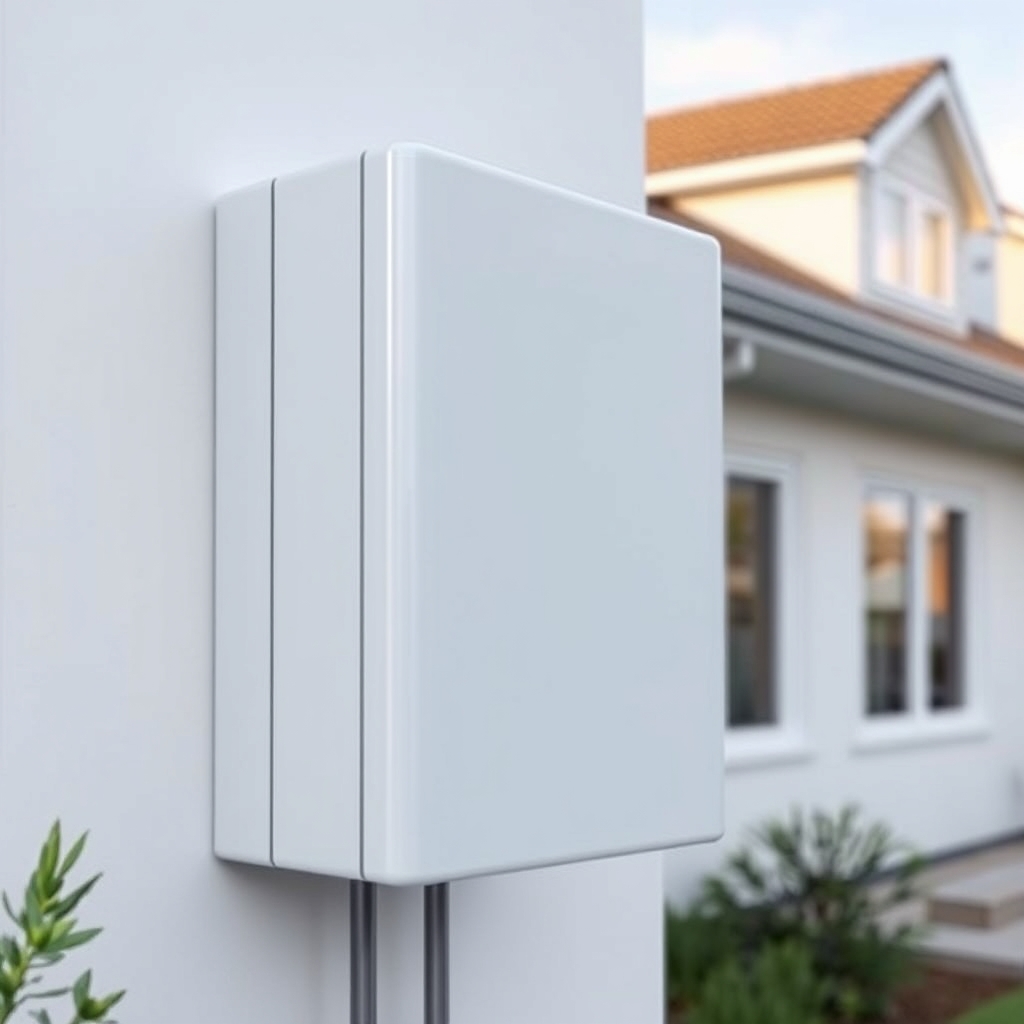
Fox ESS has launched the Power Cube, a home battery system that incorporates integrated heating to maintain performance in cold weather. The product is designed to address the specific challenges of low-temperature environments, ensuring reliable energy storage when ambient conditions drop.
Brooks Richard, managing director of APAC and Middle East at Fox ESS, stated that the Power Cube has been designed with the Australian market in mind. This targeted approach reflects the company’s focus on adapting its technology to the climatic and grid-specific needs of the region, where consistent battery efficiency is a key consideration for residential users.
Market Momentum
The launch of the Power Cube coincides with a period of accelerating deployment for Fox ESS across the region. The company reports a steady climb in monthly installations over the first four months of the year, reflecting growing adoption of residential energy storage solutions. In February, Fox ESS installed over 12,000 systems. By March, that figure rose to 19,000, before reaching 25,000 units in April.
This upward trajectory suggests that demand for home battery systems is not merely stable but expanding rapidly as more households seek to manage energy costs and reliability. The jump from the February baseline to the April total indicates a significant increase in unit volume within a short timeframe. For a product like the Power Cube, which specifically targets cold-weather performance, this growth pattern underscores the potential market size for specialized hardware in regions with varied climatic conditions. The data points to a maturing residential storage market where installation capacity and consumer interest are scaling in tandem, providing a substantial foundation for the introduction of new, feature-specific models.
Technical Specifications
The Power Cube relies on a modular architecture built around EQ5500 battery units. These individual modules provide storage capacities ranging from 10.92 kWh to 49.14 kWh, allowing installers to scale the total system size to match specific household consumption patterns. This modularity is critical for residential applications where energy demand varies significantly between small apartments and large detached homes. By offering distinct capacity increments, the system avoids the common limitation of fixed-size battery packs that may leave users with excess, underutilized storage or force them to purchase multiple separate units to reach their target capacity.
Power delivery is handled through two distinct electrical configurations to accommodate different residential grid connections. Single-phase models deliver output between 5 kW and 12 kW, suitable for standard urban housing connections. Three-phase models extend this capability, offering a range from 5 kW to 15 kW. This higher upper limit on three-phase systems is essential for homes with heavy electrical loads, such as electric vehicle chargers or high-wattage heating elements, ensuring the battery can discharge energy fast enough to support peak demand without tripping circuit breakers.
Durability and longevity are addressed through specific engineering standards. The system carries a 10-year warranty, providing a long-term performance guarantee that aligns with the typical lifespan of residential infrastructure. The unit features an IP66 rating. This Ingress Protection classification indicates the enclosure is fully protected against dust and powerful water jets. For a system designed to operate in cold, potentially wet outdoor or semi-outdoor environments, this level of sealing is necessary to prevent moisture ingress that could compromise internal electronics or battery integrity over time.
| Specification | Range / Value |
|---|---|
| Storage Capacity (EQ5500) | 10.92 – 49.14 kWh |
| Single-Phase Output | 5 – 12 kW |
| Three-Phase Output | 5 – 15 kW |
| Warranty | 10 years |
| Ingress Protection | IP66 |
These figures define the operational boundaries of the device. The variance in kilowatt output between single and three-phase models reflects the differing current-carrying capacities of residential wiring standards. A higher kilowatt rating does not increase total stored energy but determines the rate at which that energy can be released. The IP66 rating specifically matters for the integrated heating function; while the heater maintains internal temperature, the external enclosure must withstand environmental exposure to ensure that the thermal management system operates safely without risk of short-circuiting from external moisture.
Industry Context
- Finn Peacock, founder of Solar Quotes, notes that low temperatures cause lithium batteries to behave unpredictably, describing the issue as "just doing what lithium batteries do when they get cold."
- Peacock identifies the standard engineering remedy for this problem, stating, "The solution, in cold climates, is a battery heater."
- He observes that "Fox, like many budget battery manufacturers, didn’t include heaters" in previous models.
- Brooks Richard, managing director of APAC and Middle East at Fox ESS, asserts that the new system "delivers superior round-trip efficiency and a flexible range of capacities."
Lithium-ion chemistry becomes less responsive in freezing conditions, a physical reality that reduces usable capacity and can damage cells if not managed. The integrated heating element in the Power Cube addresses this by maintaining optimal internal temperatures, a mechanism Peacock describes as the necessary fix for cold-climate reliability. The absence of such heaters in earlier budget-tier products meant users in cooler regions often faced diminished performance during winter months. By incorporating this thermal management directly into the unit, the manufacturer removes the need for external heating solutions that might complicate installation or increase cost.
Richard’s emphasis on round-trip efficiency highlights how the heated system preserves energy conversion rates that would otherwise degrade in the cold. This technical adjustment allows the battery to maintain consistent performance metrics regardless of ambient temperature, ensuring that the stored energy remains accessible and efficient for the household. The combination of thermal stability and the flexible capacity options mentioned by Richard provides a more robust foundation for residential energy storage in diverse climatic zones.
What to watch
The immediate next step for the Power Cube is its public debut at the All-Energy Conference and Exhibition in Melbourne. This event serves as the primary venue for the product’s launch, offering a direct opportunity for industry professionals, installers, and potential customers to examine the hardware in person. For residential energy storage, physical demonstrations often play a decisive role in adoption, particularly for new features like integrated winter heating that require tangible verification of design and build quality.
Attendees at the exhibition will likely focus on how the modular EQ5500 units integrate within the broader Power Cube architecture. Seeing the assembly process and the physical form factor of the heated enclosure can help clarify installation requirements that are not fully apparent from technical specifications alone. The Melbourne show also acts as a testing ground for market reception in a region with diverse climatic conditions. Feedback gathered from local installers and homeowners during this period may influence future distribution strategies and refine how the product is positioned for other cold-climate markets. As the first major public appearance of the system, the conference provides a concrete milestone to track the transition from product announcement to real-world availability.
Source: RenewEconomy. This article is an original Luminity report based on the linked source.