
Ember study: Behind-the-meter generation offers five times more grid relief than data center load shifting
An Ember analysis finds that on-site generation and storage can provide nearly five times more grid flexibility than shifting data center workloads. The study covers nine markets, noting that while load shifting is theoretically possible, its effective impact on peak demand is limited compared to local power production.
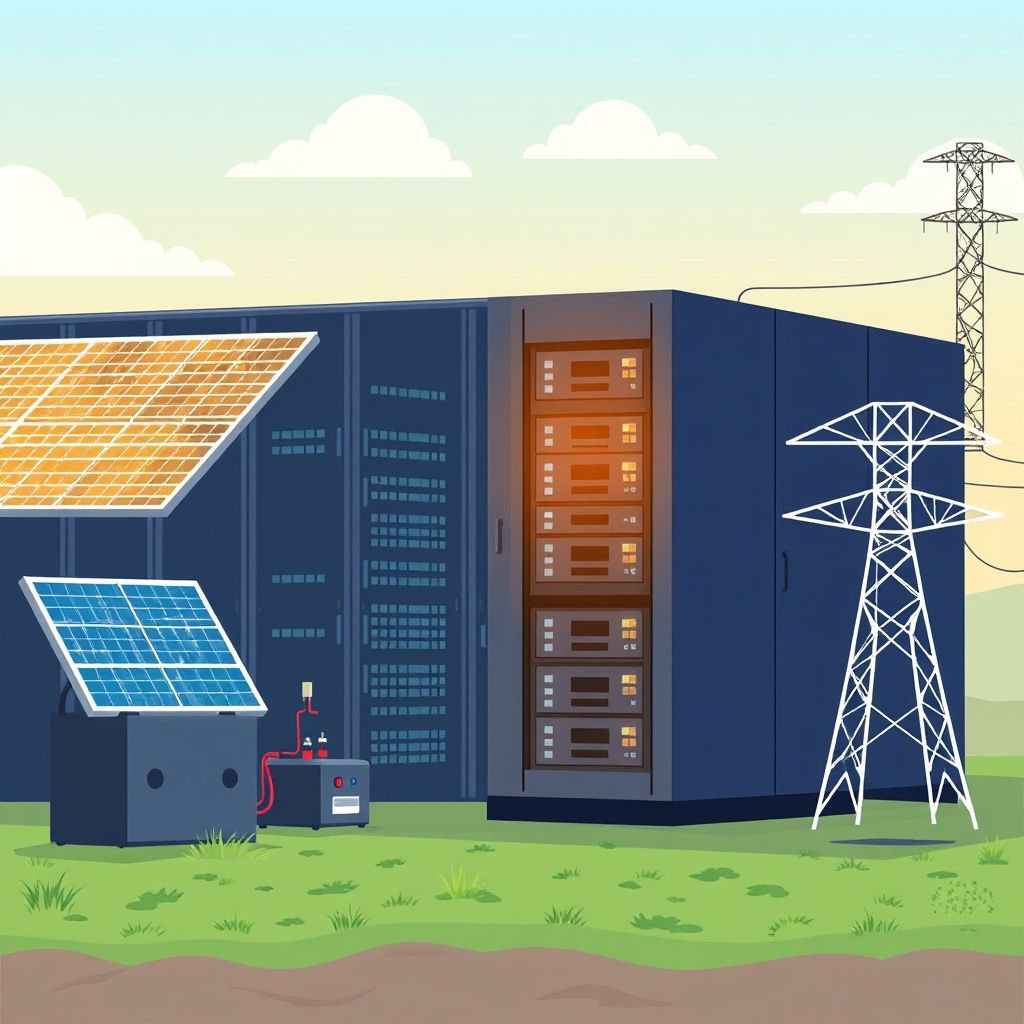
Ember’s new analysis, published in October 2026, evaluates grid flexibility options for data centers across nine markets in the United States, Europe, and Southeast Asia. The study finds that behind-the-meter generation and storage deliver nearly five times more grid relief than load shifting.
The report focuses on the potential for data centers to mitigate stress on the power system through on-site resources.
Theoretical vs. Effective Shifting
Ember estimates that only 6.5% of global data center capacity is theoretically shiftable. However, the share effectively available for grid stress response drops to just 3%. By 2030, AI inference, cloud services, and enterprise workloads are projected to represent 87% of global capacity.
Market-Specific Impact
Ember’s analysis highlights that load shifting yields minimal peak demand reductions across the studied regions. In Ireland, shifting data center loads could cut peak demand by 100 MW by 2030. This amount represents just 1.5% of the projected peak load for the market. The impact is even smaller in the other analyzed markets, which include the United Kingdom and Germany.
| Market | Projected Peak Demand Reduction | Percentage of Projected Peak |
|---|---|---|
| Ireland | 100 MW | 1.5% |
| Other Markets | N/A | 0.1% to 0.6% |
Texas Case Study Comparison
Ember’s Texas analysis models two large data centers with a combined projected load of 5.6 GW. Under this scenario, load shifting reduces grid demand by 0.55 GW. In contrast, on-site generation reduces grid demand by up to 2.7 GW.
Regulatory Response and Recommendations
- The Irish energy authority swapped out flexibility obligations for compulsory generation and storage rules applicable to sites larger than 10 MW.
- Ember suggests weaving behind-the-meter assets into grid planning and interconnection standards.
- According to Ember, there is no universal flexibility approach that fits every data center.
Workload Composition and BYOC Mechanics
Ember’s methodology assigns specific flexibility percentages to different computing tasks: 35% for AI training, 5% for inference, and none for traditional data centers. This distinction matters because AI model training can be interrupted or relocated with fewer operational consequences than low-latency services. The study defines the behind-the-meter approach as "bring-your-own-capacity" (BYOC), which allows facilities to maintain workloads while temporarily replacing grid electricity with on-site renewable generation, batteries, or other backup technologies. The report notes that while the Texas example is outside Europe, it illustrates the scale of flexibility available when grid connections become a bottleneck, a dynamic relevant to the regulatory debates in Ireland, the United Kingdom, and Germany.
Fossil Fuel Risks and Investment Duplication
Ember warns that on-site generation relying on fossil fuel technologies could lock in infrastructure and emissions for decades. The analysis also identifies a risk of duplicating investments, where a data center installs its own firm capacity while the system operator procures additional capacity to meet the same potential demand. Storage is highlighted as particularly relevant because it partially decouples data center electricity consumption from real-time grid availability, supplying power during congestion or peak demand without passing infrastructure costs to other consumers.
What to watch
While Ember advises weaving behind-the-meter assets into grid planning and interconnection standards, the report lacks a schedule for achieving this comprehensive adoption.
Source: pv magazine USA. This article is an original Luminity report based on the linked source.