
Ember models show hybrid wind-solar-battery plants can supply 90% of Kazakhstan demand
A new analysis by Ember indicates that hybrid renewable plants could meet up to 90% of Kazakhstan’s electricity needs at a delivered cost below $60/MWh. The study highlights that these systems are cheaper than new coal, which costs between $70 and $170/MWh, while addressing the aging of the country’s current coal fleet.
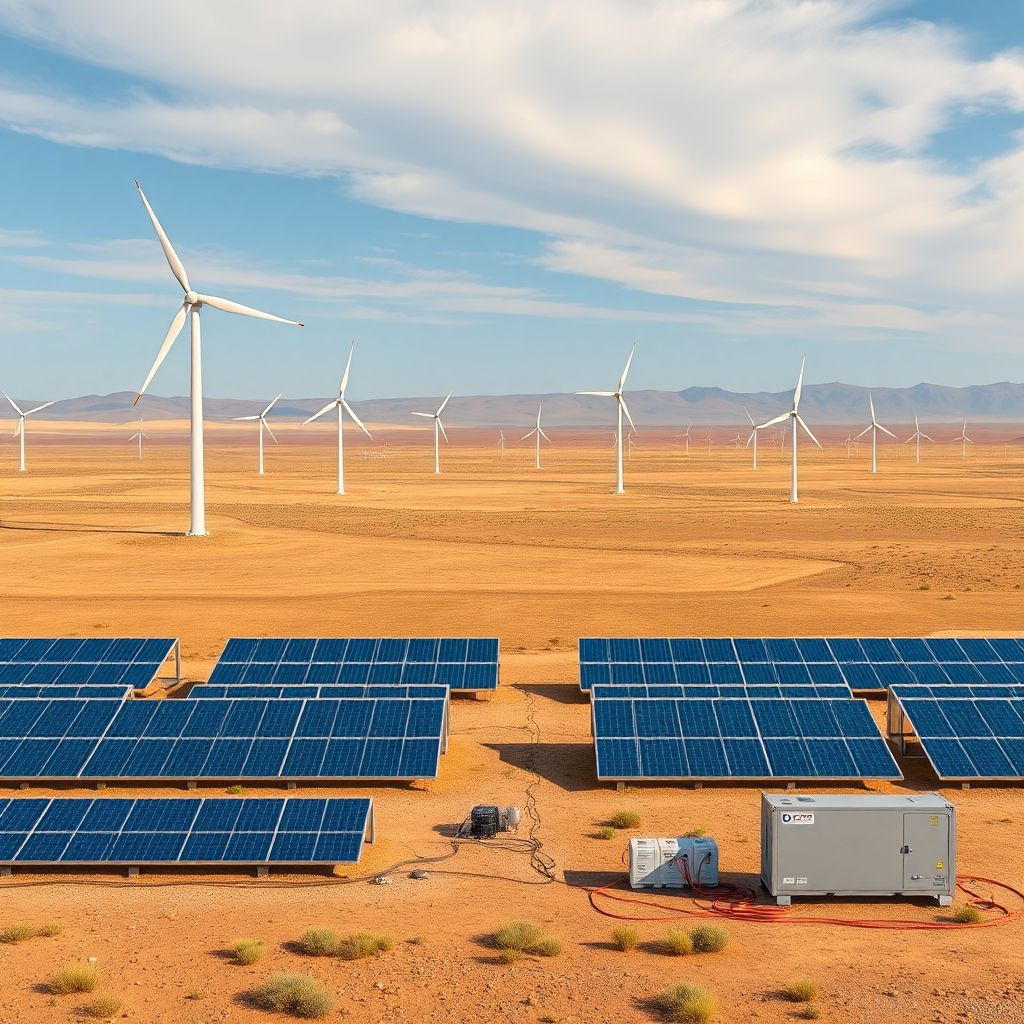
A new analysis by climate think tank Ember indicates that hybrid power plants combining wind, solar, and battery storage could meet up to 90% of Kazakhstan’s electricity demand.
Ember contrasts this figure with the cost of new coal-fired capacity, which the report places between $70 and $170 per megawatt-hour. According to the analysis, hybrid plants would cost approximately $56 per megawatt-hour, positioning them as a lower-cost option for expanding the country’s grid.
Simulating hybrid potential
Ember’s model evaluates the technical feasibility of these integrated systems by analyzing 15 sites across three power zones in Kazakhstan. To determine optimal configurations, the team ran 1,875 simulations testing 125 distinct combinations of wind, solar, and battery capacity. This extensive testing allowed the researchers to identify specific plant setups that could reliably meet local demand while minimizing curtailment. The average delivered electricity cost across these 15 modeled sites is $56 per megawatt-hour.
According to the Ministry of Energy, cumulative renewables capacity in Kazakhstan reached 3.7 GW in April. Within that total, solar capacity specifically reached 1.37 GW during the same period.
Coal infrastructure challenges
Ember’s data highlights the strain on Kazakhstan’s existing power system, where electricity demand rose 16% over the last five years. Coal remains the dominant fuel source, supplying 62% of the country’s electricity generation in 2025. This heavy reliance on aging infrastructure creates significant operational risks, as the nation’s coal units average over 50 years old.
Ember reports 891 equipment failure incidents occurred between January and July this year.
Analyst insights on value
- Kostantsa Rangelova, Senior Battery Analyst at Ember, observes that solar power is "really cheap and very fast to build here."
- She elaborates that "shifting some of it to the evening with a battery unlocks its full value."
- Rangelova points out that "Kazakhstan’s advantage is its vast untapped wind, which is strongest in exactly those winter months."
- She cautions that "batteries co-located with renewables under a mandate that only shift their own plant’s output remain underused."
Procurement design and site selection
Ember’s models projected a standard hourly load curve adjusted to a 100 MW maximum, evaluating each setup on an hourly basis across a 30-year operational span. Locations were picked based on their closeness to a primary load hub and current transmission lines. Rangelova proposes that auctions specifying a particular delivery pattern would enable participants to identify the most economical blend of wind, solar, and storage to satisfy that requirement. She emphasizes that storage systems must tap into balancing, reserve, and capacity markets to realize their potential, cautioning that limiting them to merely shifting their own facility's production results in inefficiency. The study indicates that intentionally expanding generation capacity enables a modest battery to achieve a utilization rate similar to that of a base-load plant.
What to watch
The Ministry of Energy intends to bring online 245 MW of fresh renewable energy capacity within the current year, a target that encompasses five solar installations aggregating 92.6 MW.
In its longer-term outlook, Ember forecasts that wind and solar power will provide 23% of Kazakhstan’s electricity by 2035, an increase from the 6% recorded in 2025. The group anticipates that overall renewable generation will constitute 35% of the energy mix by that time.
Source: pv magazine. This article is an original Luminity report based on the linked source.