
BloombergNEF: India renewable investment hits $32 billion in 2025
BloombergNEF reports that India attracted $32 billion in renewable energy investment in 2025, making it the largest market among emerging economies. The country added 16.9 GW of small-scale solar capacity, driven by utility auctions, rooftop programs, and subsidies.
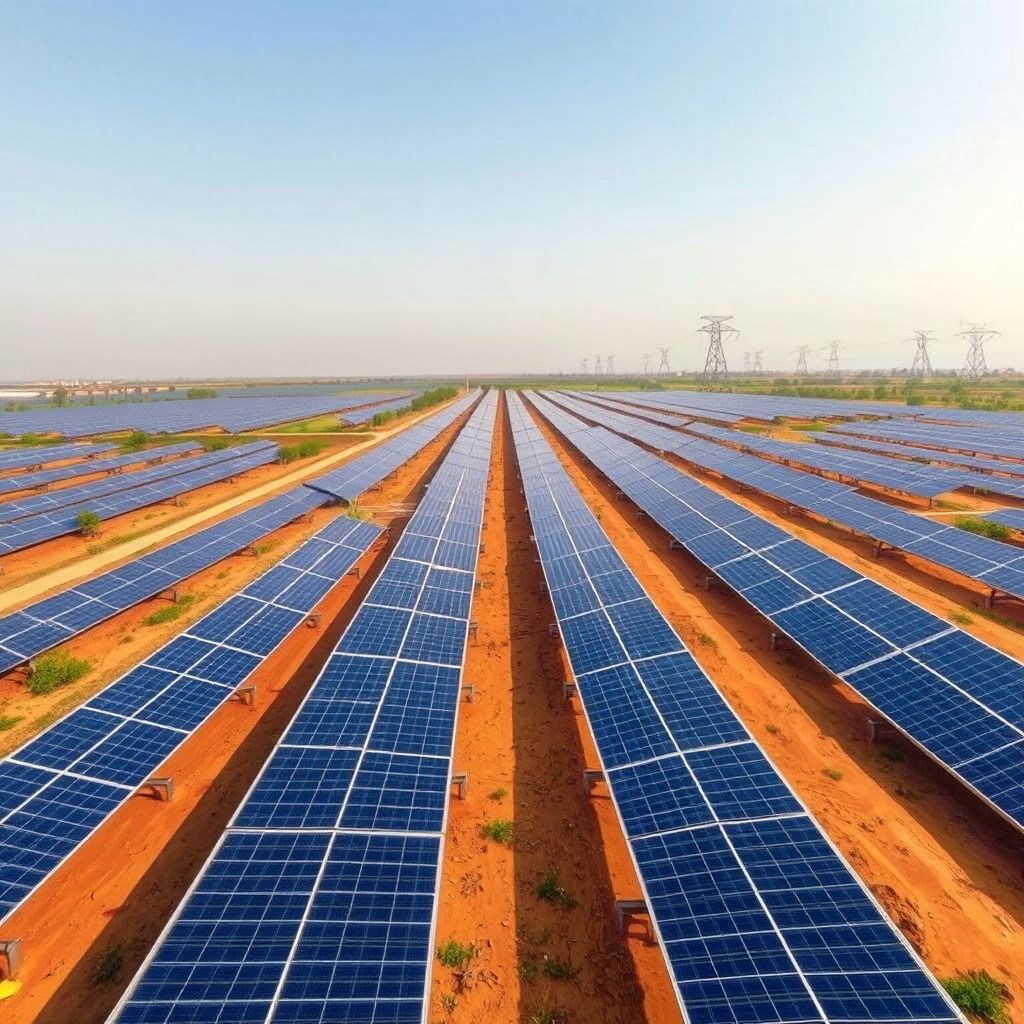
BloombergNEF reports that renewable energy investment in India reached $32 billion in 2025. The research firm identifies India as the largest renewable energy investment market among emerging economies for that year.
The data also highlights a specific segment of the market, noting that India added 16.9 GW of small-scale solar capacity in 2025.
Drivers of Growth
BloombergNEF attributes the capital inflow to utility-scale auction volumes, rooftop solar programmes, subsidies, and financing mechanisms.
Supporting this expansion, India is pursuing a grid strategy focused on expanding storage and transmission infrastructure to manage renewable output.
India added 240 GW of power capacity between 2016 and 2025. In comparison, Brazil added 123 GW over the same period.
Regional Comparisons
| Country | 2025 Investment | Small-Scale Solar Additions (GW) |
|---|---|---|
| Pakistan | Nearly $19 billion | Almost entirely |
| Brazil | $17 billion | 12.7 |
| Turkey | Almost $16 billion | N/A |
Pakistan’s investment surge from under $4 billion to nearly $19 billion in 2025 was driven almost entirely by small-scale solar. Brazil recorded $17 billion in investment, accompanied by 12.7 GW of small-scale solar additions. Turkey reached almost $16 billion in investment for the same period. These figures place India’s $32 billion total above each of these emerging markets.
Global Context
BloombergNEF data places India’s 2025 investment within the broader trajectory of global power capacity expansion. Worldwide installed power capacity rose from 6.4 TW in 2016 to 10.7 TW in 2025. During this nine-year period, emerging markets added 1.1 TW of new capacity, bringing their total to 3.1 TW in 2025.
In 2016, developed markets accounted for 43% of global installed capacity. By 2025, that share had fallen to 33%, even as their absolute installed capacity stood at 3.5 TW.
Mainland China represents the largest single component of this global expansion. Its installed capacity increased from 1.6 TW in 2016 to 4 TW in 2025. Consequently, China’s share of global capacity grew from 25% in 2016 to 38% in 2025. While China dominates in terms of installed volume, its investment flows show different dynamics. BloombergNEF reports that renewable energy investment in mainland China declined by 32% year-on-year in 2025.
Market Distribution
- Asia Pacific emerging markets, excluding China, attracted over $81 billion in renewable energy investment in 2025.
- Europe emerging markets saw investment rise to $29 billion in 2025, up from $25 billion in the previous year.
- The top 10 emerging markets accounted for over two-thirds of total global emerging market investment in 2025.
- Investment in other emerging markets reached $54 billion in 2025, a figure that doubled over a three-year period.
- In Kenya, 97% of renewable energy investment was directed toward small-scale solar.
- Vietnam’s wind investment increased fourfold, driven by the revival of offshore wind tenders.
Grid Integration and Regional Dynamics
As renewable penetration rises, the focus in emerging markets is shifting from generation to grid integration. Chile is deploying battery storage to absorb solar generation that would otherwise be curtailed, while South Africa is prioritising storage as grid constraints and curtailment become more prominent.
BloombergNEF notes that the factors supporting small-scale solar deployment differ across leading economies. While India’s 16.9 GW was supported by rooftop programmes, subsidies, and financing, Brazil’s 12.7 GW was driven by its established distributed generation framework and mature financing ecosystem. The report identifies India, Pakistan, and Brazil as accounting for the vast majority of small-scale solar additions among leading emerging markets in 2025.
Capacity Expansion Leaders
BloombergNEF’s Emerging Markets Transition Factbook identifies India and Brazil as the primary drivers of power capacity growth among emerging markets over the last decade. The report notes that mainland China overtook developed markets in 2024 to become the largest market group for installed power capacity, contributing more than half of global capacity additions over the decade.
Source: Saur Energy. This article is an original Luminity report based on the linked source.