
South Korea Tenders 2.2 GW Offshore Wind For Second Half 2026
The Ministry of Climate, Energy and Environment has launched a 2.2 GW offshore wind tender covering the second half of 2026, bringing the total annual bidding volume to 4 GW. Price ceilings for both fixed and floating types have been reduced slightly from the first half of the year.
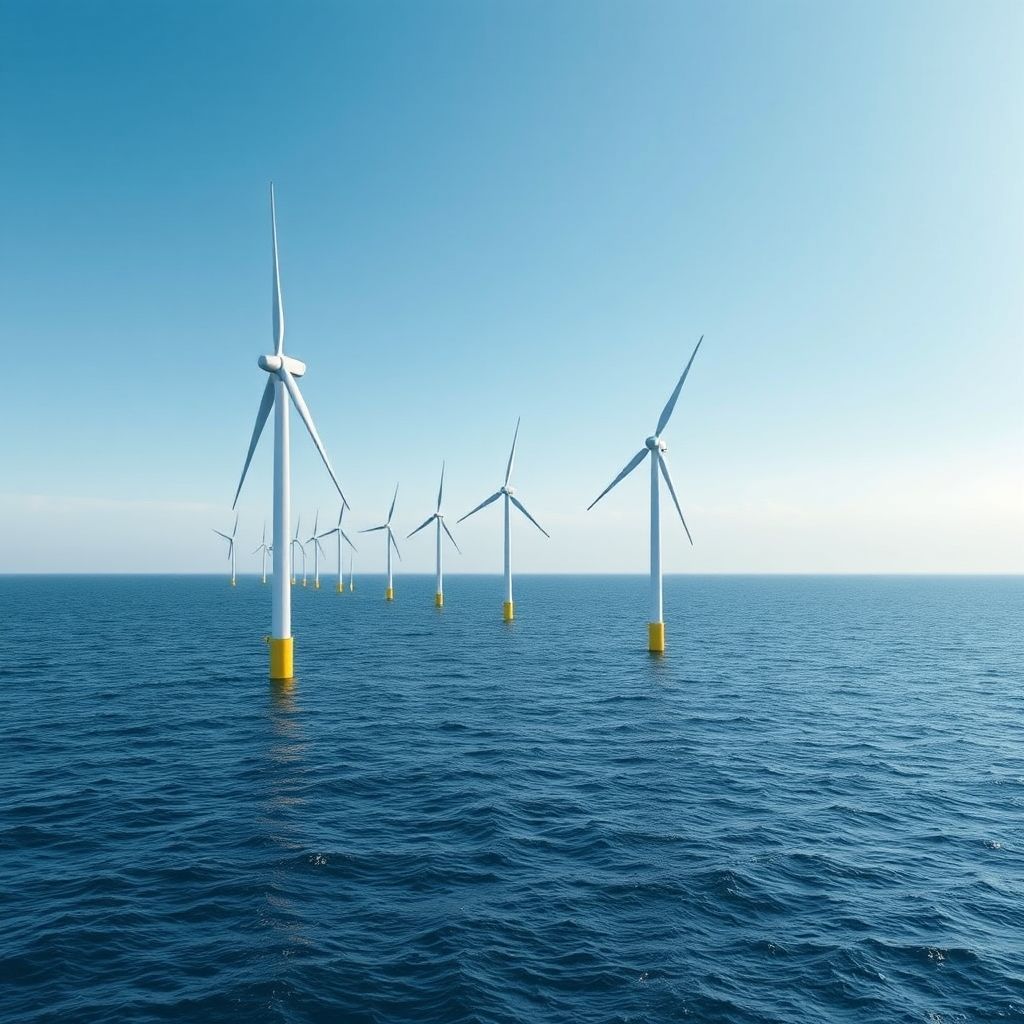
South Korea’s Ministry of Climate, Energy and Environment launches an offshore wind tender on Friday, 30 October. The procurement process targets projects scheduled for the second half of 2026. According to the ministry, the total bidding volume for this period is approximately 2.2 GW.
Tender Structure and Volume
The 2.2 GW allocation splits into two technological categories, with fixed-bottom turbines comprising the majority of the capacity. The table below details the breakdown by technology and procurement method.
| Category | Volume (MW) |
|---|---|
| Fixed-type total | ~1,700 |
| Floating-type total | ~500 |
| Fixed-type general | ~1,400 |
| Fixed-type public-led | ~300 |
The fixed-bottom segment is further divided into general and public-led streams. Public-led tenders require public institutions to hold a minimum stake in the project.
Pricing and Market Context
The tender sets distinct price ceilings for the two technology categories. Fixed-bottom projects face a cap of 168,937 won/MWh (EUR 113.2/MWh), while floating-type projects are capped at 174,003 won/MWh (EUR 116.6/MWh). These limits have been adjusted downward from the first half of this year, with the fixed-type ceiling decreasing by 1.34 per cent and the floating-type ceiling by 0.63 per cent. The ministry states that these adjustments reflect fluctuations in levelized cost of energy, exchange rates, and competition rates.
Planning Basis
Last August, the Korea Wind Industry Association and the Korea Energy Agency performed a preliminary demand survey, which established the 2.2 GW volume. This amount is included in a wider annual strategy aggregating 4 GW, consistent with a roadmap released last June. According to the Ministry of Climate, Energy and Environment, about 1.8 GW of capacity had already been granted during the first half of the year.
Background
- Luminity announced on 23 October 2026 that South Korea’s renewable energy infrastructure hit 41,040 MW by 21 October 2026, outpacing the coal fleet’s 40,757 MW.
- That same publication highlighted that the national energy strategy sets a goal for 100 GW of renewable capacity by 2030.
- On 21 October 2026, South Korea’s LNG capacity was recorded at 46,788 MW, which was 5,748 MW higher than the renewable total.
- Luminity stated on 19 October 2026 that South Korea intends to be the first nation to mass-produce green steel using hydrogen instead of coal.
- By August 2026, the country had deployed 493 hydrogen refuelling units, while the national objective calls for a minimum of 660 stations by 2030.
- Hydrogen vehicle registrations in South Korea totaled 49,220 as of August 2026, falling short of the government’s goal of 300,000 vehicles.
Rationale for Public-Led and Floating Segments
The Ministry of Climate, Energy and Environment states that public-led tenders mandate minimum public stakes to enhance project implementation stability and public acceptance. The ministry adds that this structure encourages the use of domestic supply chains for key equipment, thereby strengthening the competitiveness of the domestic offshore wind power industry. Regarding the 500 MW floating allocation, the ministry notes that the segment remains in its early stages of global deployment. Consequently, the bidding market continues to operate in the second half of the year to leverage Korea’s manufacturing competitiveness, secure future supply chains, and stably maintain the foundation for domestic offshore wind power deployment.
Source: offshoreWIND.biz. This article is an original Luminity report based on the linked source.