
Solaria signs $5.7 billion Uruguay deal for 500 MW data centers and 350 MW solar
Solaria has agreed with the Uruguayan government to build a 500 MW data center park supported by 350 MW of solar power. The project, the largest foreign investment in the country's history, will be developed in two phases across three departments.
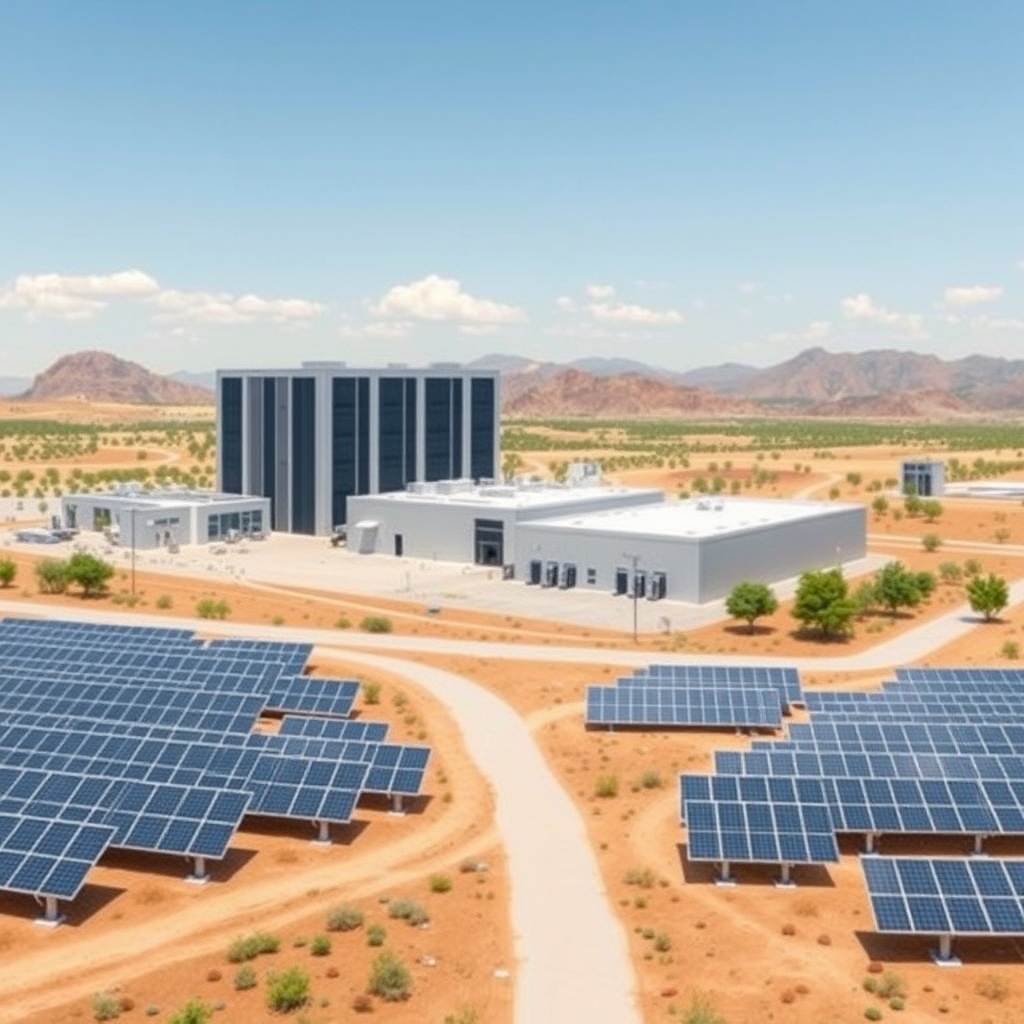
Solaria has signed an agreement with the Uruguayan government to develop a data center technology park, marking a significant expansion of its operations in the region. According to pv magazine, the project represents a planned investment of $5.7 billion. This figure makes it the largest foreign investment ever announced in Uruguay.
Infrastructure and Power Mix
The $5.7 billion package splits into two distinct infrastructure streams, each serving a different function in the overall energy balance. The bulk of the capital, $5.5 billion, funds the construction of data centers with a combined capacity of 500 MW. This infrastructure will house the computing hardware that drives the park’s operations. In parallel, $200 million is earmarked specifically for the development of 350 MW of solar photovoltaic capacity. This renewable generation component is designed to feed electricity directly into the facility’s grid, reducing reliance on conventional power sources and aligning the project with broader sustainability goals.
However, the scale of the solar deployment does not match the total consumption of the data centers. The 350 MW of solar capacity will not be sufficient to meet the data centers’ full electricity demand. This energy gap means the facility will continue to draw additional power from the national grid or other generation sources to operate at full capacity. For large-scale data centers, which require a constant and reliable power supply, this partial offset is a common operational reality. It highlights the challenge of balancing high-intensity digital infrastructure with renewable energy generation, where solar output fluctuates with weather and daylight hours. The remaining power needs will likely be met through a mix of grid-supplied electricity, ensuring the data centers maintain the uptime required for their services. This hybrid approach allows the project to capture the environmental benefits of solar energy while securing the consistent power flow essential for data processing.
Geographic and Regulatory Scope
The project’s physical and legal footprint is defined by a specific combination of location and fiscal policy. Key elements of this setup include:
- Development proceeds in two distinct phases, allowing for staged construction and operational ramp-up.
- The park operates under Uruguay’s free trade zone regime, a legal framework that alters standard import and tax obligations.
- Facilities are distributed across three specific departments: Canelones, San José, and Florida.
Structuring the build-out in two phases is a standard approach for large-scale industrial projects, managing capital expenditure and grid connection logistics more effectively than a single, massive launch. This method allows developers to align infrastructure readiness with market demand, reducing the financial risk associated with building capacity that may not be immediately utilized.
The choice of location spans three separate departments, which suggests a strategy to distribute the environmental and infrastructural load rather than concentrating it in one area. Canelones, San José, and Florida offer varied terrain and existing utility connections, enabling the park to leverage local grid strengths. Operating under the free trade zone regime is particularly significant for a data center hub. Such zones typically offer tax incentives on imported equipment, such as servers and cooling systems, which are largely sourced internationally. For investors, this framework can lower the initial cost of hardware procurement, a major component of total project costs, while also streamlining customs procedures that often delay high-tech installations.
Economic Impact and Employment
The construction phase of the Solaria data center park is projected to generate substantial short-term economic activity across the three host departments. During the build-out period, the project is expected to create an estimated 3,100 jobs. This surge in employment typically spans a wide range of trades, from heavy civil engineering and electrical installation to specialized IT infrastructure setup. For local labor markets, such a concentrated influx of skilled and semi-skilled workers can ripple through the service sector, increasing demand for housing, dining, and logistics support in Canelones, San José, and Florida. The phased nature of the construction, as established in the regulatory framework, likely spreads this workforce demand over a longer timeline, helping to stabilize local income levels rather than causing a sudden, unsustainable spike.
| Phase | Estimated Jobs |
|---|---|
| Construction | 3,100 |
| Operational | 1,500 |
Once the facility reaches full operation, the employment model shifts from labor-intensive construction to knowledge-intensive maintenance and management. The complex is expected to employ approximately 1,500 people on an ongoing basis. These roles generally require specialized technical expertise, including data center operations, facility management, cybersecurity, and network engineering. Unlike the transient nature of construction work, these positions offer long-term career stability and often come with higher wages, potentially raising the local skill base and average income in the region. For investors and policymakers, this transition represents a sustainable economic engine that continues to contribute to the national GDP long after the initial capital expenditure has been deployed. The retention of this workforce is critical, as data centers require 24/7 human oversight to ensure uptime and security, making these jobs resilient to economic cycles that might affect other industrial sectors.
What to watch
The primary near-term milestone is the completion of construction, which is expected to continue through 2029. Tracking the pace of this build-out will reveal how effectively the two-phase strategy manages capital deployment and grid connection logistics. As concrete infrastructure rises in Canelones, San José, and Florida, local stakeholders should observe whether the projected employment figures materialize as planned, particularly the transition from temporary construction roles to permanent technical positions.
Beyond the immediate site activity, the agreement marks a distinct expansion of Solaria’s activities in Uruguay into data center infrastructure supported by solar generation. The company has operated in the country for nearly a decade, maintaining existing solar plants in Young, in the Río Negro department, and Mercedes, in the Soriano department. This new venture represents a significant pivot from pure renewable generation to integrated digital infrastructure. Readers should monitor how this hybrid model performs operationally, specifically how the on-site solar capacity interacts with the national grid to ensure the constant power supply required for high-intensity data processing. The success of this integration will depend on managing the energy gap between the solar output and total facility demand, a challenge that defines the viability of such large-scale hybrid projects.
Source: pv magazine. This article is an original Luminity report based on the linked source.