
Solar-plus-storage exceeds 90% of new U.S. grid capacity
Solar-plus-storage now accounts for over 90% of new U.S. grid capacity, driven by data center expansions and rising demand. Developers are adapting through AC-coupled architectures, terrain-following trackers, and stricter construction deadlines.
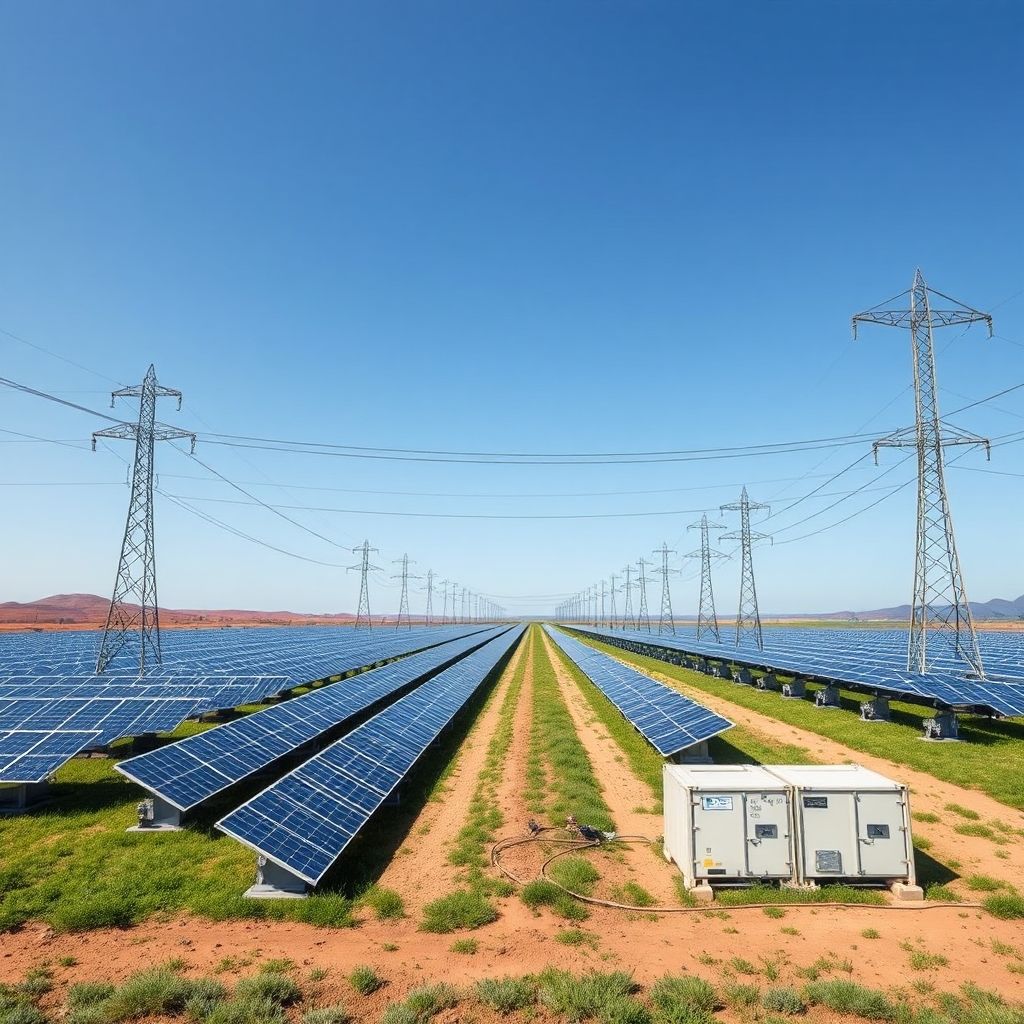
Solar-plus-storage projects now represent over 90% of new U.S. grid capacity, according to pv magazine USA. This shift is primarily driven by massive load growth from data center expansions.
ERCOT grid demand peaked at 91 GW this year, up from a previous record of 85 GW.
Grid Constraints and Deadlines
Construction must commence by July 4, 2026, or be completed by the end of 2027. To manage these strict schedules, Daniel Wilson, OCI Energy’s director of EPC and operations, noted, "For us, that meant safe harboring through main power transformers."
Technical Optimization and Design
- Array Technologies director of technical sales Evan Nichols: "We found that 90% of earthwork savings... came from that first degree."
- Terrain-following trackers reduce site disruption and steel requirements.
- Optimizing north-south row density shortens tracker layouts by roughly 5%.
- Tracker layout optimization results in a 1% specific yield increase.
Storage Architecture Shifts
The industry is transitioning from DC-coupled setups to AC-coupled battery storage frameworks. Luciano Silva Militello, product and engineering manager at Trina Storage, observed, "The industry has digested this by now and is preferring AC coupling..." Nevertheless, DC-coupled arrangements still hold value in certain configurations. They are particularly well-suited for solar installations where the DC-to-AC ratio surpasses 1.5.
Reliability and Insurance
Commissioning solar-plus-storage projects typically takes roughly four months, a duration that influences how developers schedule operational handovers. Reducing cell counts by 25% within 20-foot containers improves this balance, helping maintain consistent performance across the battery system.
Physical durability also plays a significant role in project resilience. FM Global data indicates that 12 major U.S. solar insurance losses were hail-related. In response, OCI Energy prefers 3.2 mm front glass over 2.0 mm alternatives for hail resiliency.
Commissioning Protocols and Mechanical Stow
Luciano Silva Militello from Trina Storage stressed that conducting comprehensive physical integration tests on functional blocks at American testing facilities is essential to mitigate commissioning risks for intricate hyperscale initiatives. Nichols referenced FM Global statistics indicating that out of 12 significant U.S. solar insurance claims, all were attributable to hail, far surpassing the number of wind-related losses.
Foundation Engineering and Grid-Forming Requirements
The Atlas One design from Array and the EasyPile system from AWM remove the necessity for specialized installation gear, thereby reducing supply chain complexity. In grid-forming battery energy storage applications, DC-coupled setups mandate DC-DC converters on the photovoltaic side to prevent latency issues. Meanwhile, Array’s passive mechanical slip-clutch stow mechanism functions independently of active PLC power or communications, focusing on hail protection rather than wind mitigation.
What to watch
With no specific timeline provided for future project completions, immediate attention turns to how developers navigate the July 4, 2026 construction start deadline. The sector will monitor whether the shift to AC-coupled storage architectures holds as the standard, particularly for projects where DC-to-AC ratios remain below 1.5. The adoption of thicker 3.2 mm front glass to mitigate hail-related insurance losses will likely influence procurement decisions as insurers continue to weigh weather risks against module durability.
Additional reporting: pv magazine India.
Source: pv magazine USA. This article is an original Luminity report based on the linked source.