
Matrix Renewables deploys automated solar platform at 457 MW Texas project
Matrix Renewables is using Terabase Energy’s Terafab V2 system at the Tormes Solar project in Navarro County, Texas. The automated platform aims to double labor productivity compared to conventional installation methods.
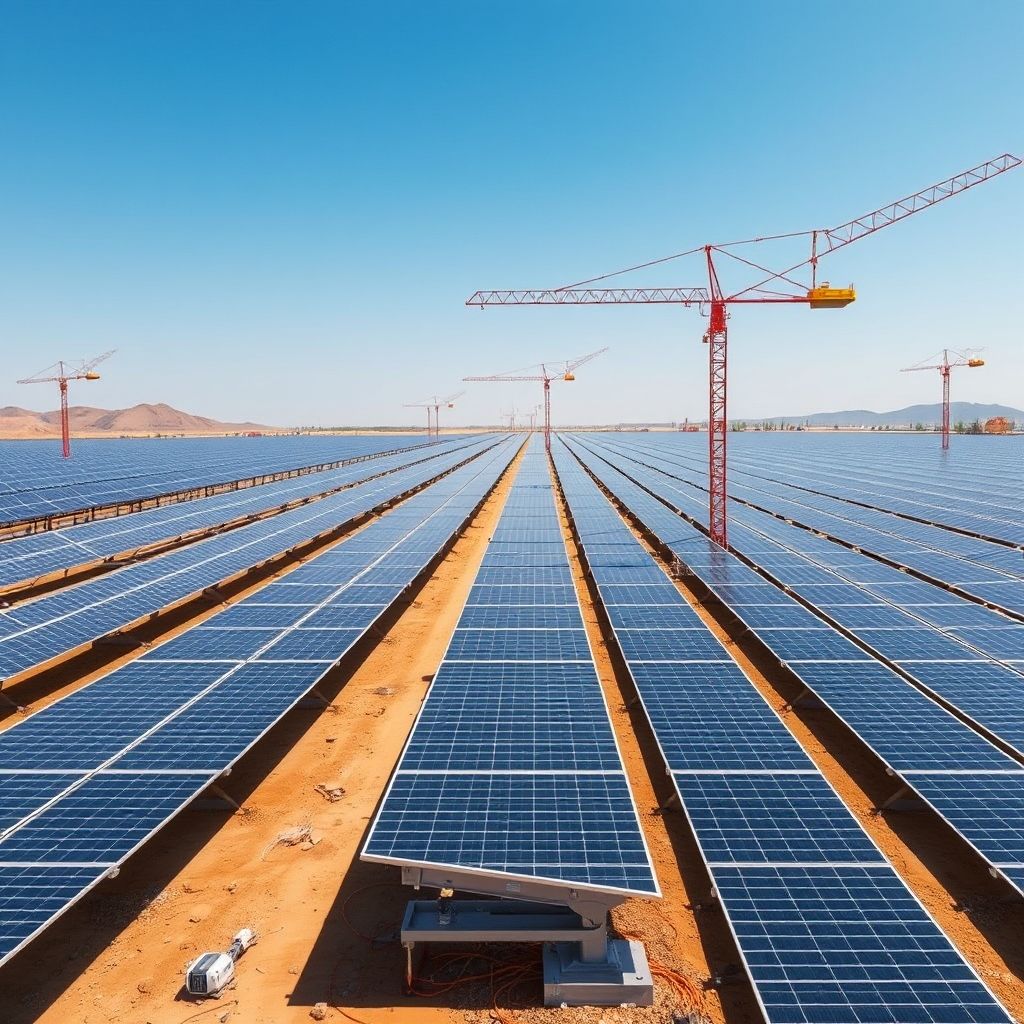
Matrix Renewables is deploying its Terafab V2 automated solar platform at the 457 MW Tormes Solar project in Navarro County, Texas. Solv Energy serves as the EPC contractor for the development.
Platform Mechanics
Terabase Energy developed the Terafab V2 system, which integrates robotic assembly, AI-assisted quality inspection, and autonomous vehicles. The platform’s design enables a rapid setup process, requiring approximately four hours to configure. Once operational, the system completes an assembly cycle in roughly two minutes.
Production Capacity
- Each production line on the Terafab V2 yields roughly 20 MW weekly.
- According to Terabase Energy, their automation strategy boosts workforce efficiency by a factor of two relative to standard utility-scale solar deployment techniques.
- The system presently supports First Solar Series 7 panels and Nextpower tracking systems.
Operational Limits
Despite the automation, the final installation of PV tables onto tracker supports still requires manual labor. Terabase Energy is currently developing future robotics to automate this remaining step.
Company History
Terabase Energy, the developer of the Terafab system, reached a milestone in April 2026 when the V2 platform became ready for commercial deployment. The company’s path to this point began in May 2023, when it launched the original Terafab system and opened its facility in Woodland, California. That same year, the firm built 17 MW of a 225 MW project in Arizona.
In August 2022, Terabase Energy raised $44 million in Series B financing. Earlier that year, the company installed 10 MW at a 400 MW Texas project. Across these initial projects, Terabase Energy installed approximately 40 MW of capacity using the first-generation Terafab platform.
Technical Integration and Project Context
A manufacturing execution system (MES) underpins the Terafab V2 platform, orchestrating assembly tasks, material movement, quality checks, and transport. By linking construction schedules, stock control, and logistics applications to a digital twin of the site, the system enables AI-driven tools to refine workflows and manage automated machinery. Its modular structure permits several assembly lines to run concurrently at one location, scaling output to match building demands, with Terabase Energy noting the design supports non-stop operations.
Compared to the initial generation, the V2 update offers a smaller factory footprint, higher automation levels, and quicker assembly speeds. In May 2023, Terabase Energy characterized its Woodland, California plant as a “factory to make factories.” The company’s inaugural commercial Terafab deployment, finished later that year, constructed 17 MW of a 225 MW Arizona solar project developed by Leeward Renewable Energy, with RES acting as the builder. In April 2026, Terabase Energy informed pv magazine that the enhanced system had finished field trials.
Deployment Logistics and Field Testing
The Terafab V2 “factory” is engineered for quick repositioning across a construction site, enabling the assembly line to shift as work advances. After inspection, robotic systems place finished assemblies onto autonomous vehicles, referred to as rovers, which carry them to specific spots in the solar field. Personnel subsequently remove the assemblies and secure them onto previously placed tracker supports.
Source: pv magazine. This article is an original Luminity report based on the linked source.