
India's renewable curtailment hits 6,825 GWh in H1 2026, 1.8 times all of 2025
India's grid curtailed 6,825 GWh of renewable energy in the first half of 2026, 1.8 times all of 2025. Aurora Energy Research's substation-level analysis shows transmission delays and uncompensated T-GNA curtailment can make the same project bankable at one Rajasthan node and not at another.
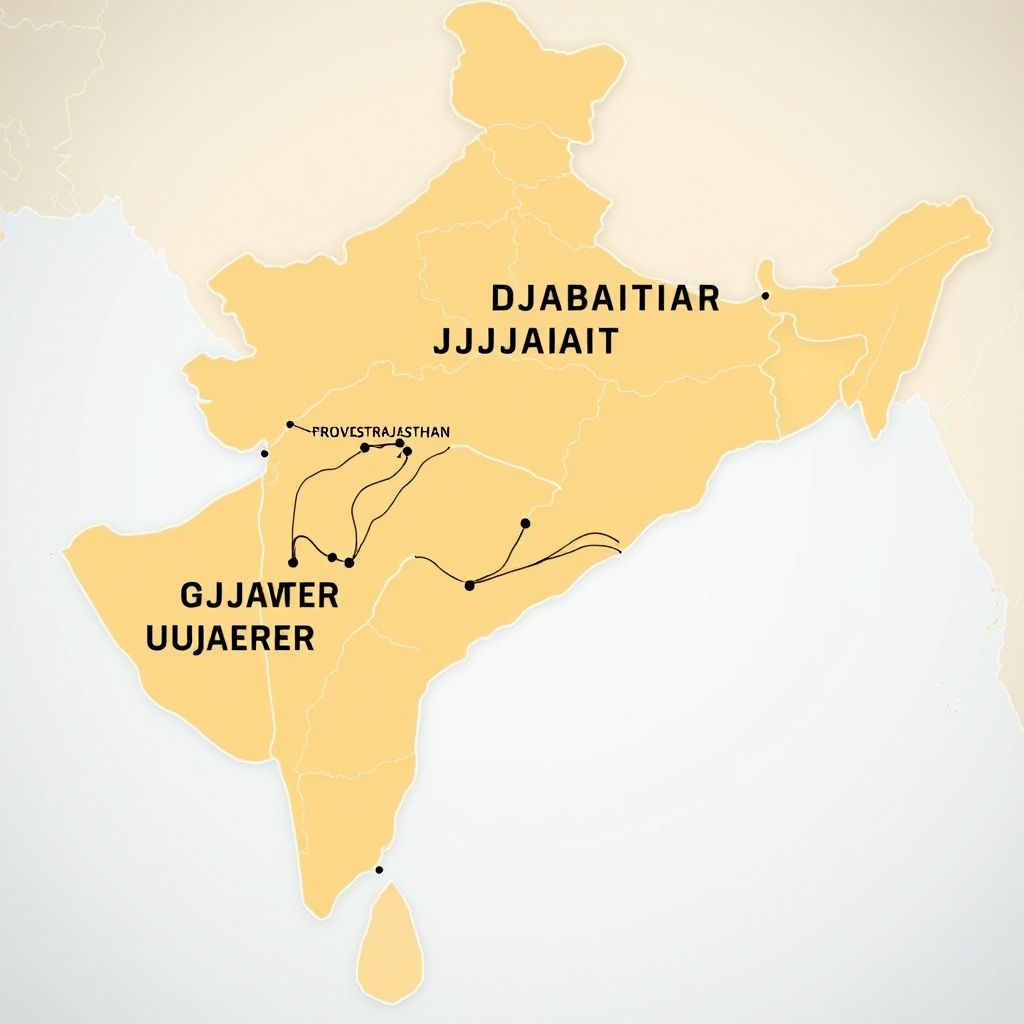
India’s power grid curtailed 6,825 GWh of renewable energy in the first half of 2026, according to an analysis by Aurora Energy Research published in pv magazine. This volume represents 4.9% of total renewable generation during the same period. The figure stands at 1.8 times the total curtailment recorded for all of 2025.
Geographic concentration and policy drivers
Solar accounted for 4,729 GWh of the curtailed energy. Oversupply curtailment, the energy cut when generation exceeds demand and the system lacks the flexibility to absorb it, made up 2,526 GWh.
Geographically, this curtailment is heavily concentrated in Rajasthan and Gujarat, with specific losses recorded in the Bhadla, Bikaner, and Fatehgarh clusters.
The regulatory framework governing this loss relies on the Temporary General Network Access (T-GNA) mechanism, introduced in 2022. Under T-GNA, curtailment is treated as non-compensated, meaning developers do not receive payment for the electricity they are forced to withhold. The system operates by revising weekly injection rights based on available network headroom.
Transmission infrastructure bottlenecks
Around 107 GW of renewable projects are scheduled to connect between 2026 and 2031, and the open question is whether the transmission they need arrives on time. Firm GNA only takes effect once the last binding element of a transmission scheme is commissioned, so any slippage matters.
| Metric | Value |
|---|---|
| Projects on schedule (until March 2026) | 12% |
| Median project delay | >10 months |
| Delay range | 2 months to 3 years |
According to ICRA, only 12% of competitively bid transmission projects commissioned until March 2026 were on schedule. The median delay for these projects exceeds ten months, with individual cases ranging from two months to three years.
Future risks and storage potential
The Temporary General Network Access (T-GNA) framework currently covers approximately one-third of the 54.8 GW of renewable capacity commissioned as of May 2026. Under this mechanism, solar projects face curtailment of 50% to 60% of their available solar hours.
- T-GNA covers ~one-third of 54.8 GW commissioned renewable capacity (May 2026)
- Current solar-hour curtailment under T-GNA: 50% to 60%
- Projected T-GNA affected capacity: >35 GW by fiscal 2027
- Aurora Energy Research study scope: 295 connectivity applications across 28 Rajasthan substations and 44 lines
- Charging a co-located battery from curtailed solar instead of the grid: +1.5 to 1.7 percentage points of IRR (Aurora models)
Khetri–Narela delays and substation-specific bankability
The Khetri–Narela 765 kV line, critical for evacuating 4.5 GW of Rajasthan renewables to northern demand centers, was delayed more than two years by right-of-way and forest clearance disputes. Its official date was pushed to March 2024 in December 2023, when under 10% of stringing was complete, and to March 2025 in December 2024, when only 30% was done and 106 right-of-way disputes were unresolved. Physical progress showed the line running behind schedule long before the official dates moved. It was finally commissioned in December 2025.
Aurora Energy Research’s analysis of 295 connectivity applications across 28 Rajasthan pooling substations and 44 transmission lines reveals that curtailment risk is highly localized. Modeling an illustrative 100 MW plant at three different substations showed that debt coverage can start well below loan sizing levels at one site, slip back below covenants by 2030 at another due to new capacity filling the corridor, and sit right on the floor by 2032 at a third. For a 100 MW plant at Bikaner-2 energized in December 2025 but not cleared for firm access until November 2027, equity returns fall sharply primarily because energy is never delivered, rather than from the discount to contracted tariffs during the 23-month exchange selling period. This forces equity injections when debt coverage falls below covenants in the first two years.
What it means for project design
Aurora draws two conclusions. The connection point now belongs in site selection alongside irradiation and land, because it sets curtailment exposure years before a plant is energized. And curtailment strengthens the case for hybrids and storage: Rajasthan's restrictions bind hardest at midday, so a wind-solar hybrid loses less than a solar-only plant at the same node, and a co-located battery can charge on energy that would otherwise be spilled.
Source: pv magazine. This article is an original Luminity report based on the linked source.