
IESA report says 500 GW India target hinges on long-duration storage scale-up
An IESA report states that India’s 500 GW renewable energy target depends on scaling long-duration energy storage (LDES) to manage grid constraints. The report highlights a significant gap between India’s current battery capacity and its FY2027 requirement, identifying viability gap funding as a key enabler.
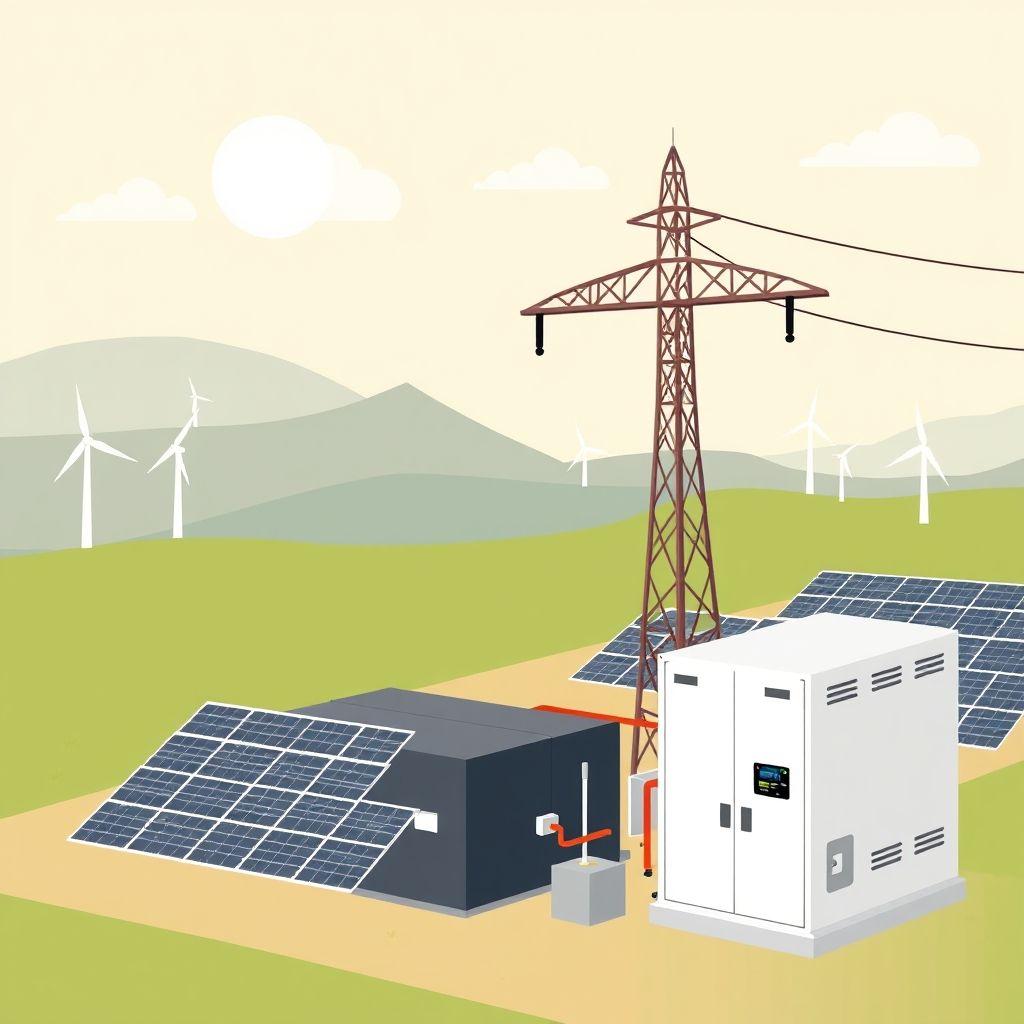
India aims to reach 500 GW of renewable energy capacity by 2030, a goal that the India Energy Storage Alliance says depends heavily on the scale-up of long-duration energy storage (LDES). Debmalya Sen, President of IESA, described LDES as the "linchpin" for maximising renewable utilisation and enhancing grid stability, according to the report.
The IESA report notes that India curtailed 2.3 TWh of solar energy over eight months in 2025 due to grid and storage constraints.
Global storage gap
The LDES Council estimates that the world requires 8 TW of long-duration energy storage capacity and 140 TWh of storage by 2040. In 2025, operational global LDES capacity stood at 117 GW, meaning deployment rates must increase nearly 50-fold to meet the 2040 target. The Council also estimates that closing this gap will require USD four trillion in capital investment, which it projects could yield annual system-wide savings of USD 540 billion.
| Metric | Value |
|---|---|
| 2040 Capacity Target | 8 TW |
| 2040 Storage Target | 140 TWh |
| 2025 Operational Capacity | 117 GW |
| Required Deployment Increase | Nearly 50-fold |
| Estimated Capital Investment | USD 4 trillion |
| Annual System-wide Savings Potential | USD 540 billion |
The current project pipeline represents only 0.22 TW, or 3 per cent of the 2040 capacity target.
India capacity deficit
The Central Electricity Authority (CEA) identifies a specific storage requirement to support India’s push toward 500 GW of non-fossil fuel energy capacity by 2030. The CEA estimates that the country needs 34.5 GWh of battery energy storage system (BESS) capacity by fiscal year 2027. Current progress remains far below this threshold, with only 9.3 GWh of BESS capacity commissioned to date.
The CEA reports that 195 GWh of BESS capacity is currently awarded or under tender. To bridge the gap between these awarded projects and actual deployment, the FY28 viability gap funding (VGF) framework has been identified as a key enabler for long-duration energy storage deployment.
Technology and policy gaps
- Flow battery systems enable daily storage cycles lasting between eight and 12 hours.
- Iron-air batteries provide multi-day flexibility, pushing duration past the constraints of standard batteries.
- India does not have a formal statutory definition for long-duration storage.
- There is no dedicated funding mechanism for projects offering eight or more hours of storage.
Report origins and technology specifications
Issued on Friday by the India Energy Storage Alliance alongside Customized Energy Solutions, the document is named 'Long-Duration Energy Storage: Global Outlook and India's Deployment Pathway'. Although existing projects primarily feature short-duration options, the publication highlights thermal energy storage, compressed air, and pumped hydro as solutions suited for industrial and large-scale requirements. Debmalya Sen, the IESA President, remarked that India could establish a worldwide standard for system reliability and sustainable energy integration if it secures appropriate policy backing, novel business structures, and technology-neutral funding. The text further observes that the ideal combination of technologies hinges on the particular grid use case, project financial viability, and local deployment conditions.
Source: ETEnergyWorld Renewables. This article is an original Luminity report based on the linked source.