
Fortescue erects first self-lifting wind towers at Nullagine project
Fortescue has begun installing self-lifting wind towers at its Nullagine site, a technology that removes the need for giant cranes. The company is simultaneously deploying electric heavy machinery across its mining operations, with the first site scheduled for full decarbonisation this December.
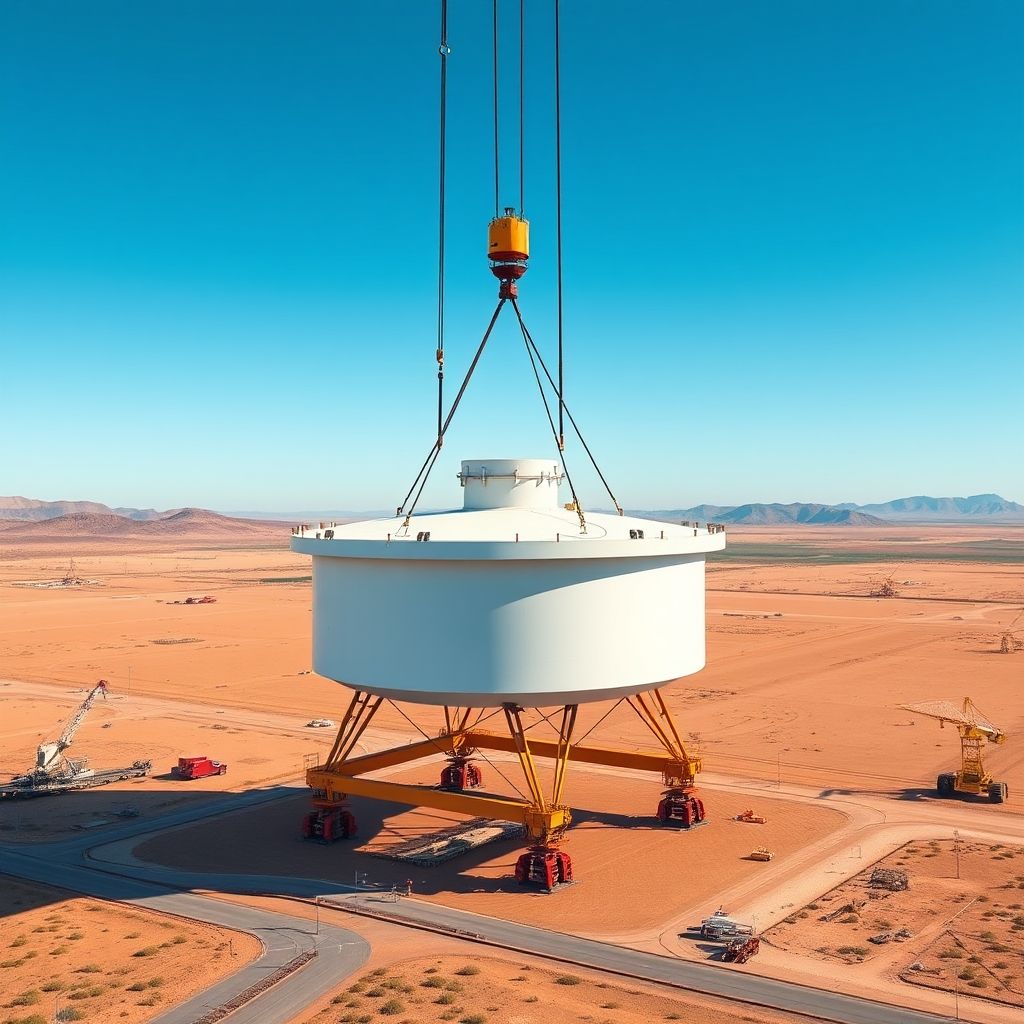
Fortescue has begun erecting the first self-lifting wind towers at its 133 MW Nullagine project, marking the start of construction for the facility. The company is also deploying electric haul trucks this year as part of its broader operational updates.
CEO Dino Otranto said he visited the site last weekend to observe the installation of the first three 8 MW Nabra wind towers. “I was on site last weekend, where we’re well into installing the first three 8 MW Nabra wind towers, and they are an unbelievable sight to see,” Otranto stated.
These installations represent the initial physical phase of the Nullagine development, with the self-lifting technology allowing for the assembly of the large turbine structures. The project is part of Fortescue’s current infrastructure rollout, which includes the introduction of electric haul trucks alongside the new wind generation capacity.
Tower Technology
The structural innovation driving this build comes from Nabrawind, a Spanish firm owned by Fortescue. The company designed the self-lifting tower system that defines the Nullagine project’s physical footprint. This mechanism fundamentally alters standard wind farm construction logistics. Traditional installations rely on massive mobile cranes to lift heavy turbine sections, requiring extensive site preparation and often limiting operational windows. In contrast, the Nabrawind technology eliminates the need for these giant cranes. The towers lift themselves into position, a process that significantly reduces the complexity of on-site heavy lifting.
This engineering approach also lowers the infrastructure demands at ground level. By removing the need for the massive counterweights and wide footprints associated with giant cranes, the system reduces concrete foundation requirements. Less concrete means a smaller environmental footprint and potentially faster groundwork completion. The specific hardware deployed at Nullagine consists of 17 Envision turbines mounted on these Nabrawind towers. These machines are substantial, featuring a hub height of 210 metres. The total height reaches 280 metres when including the tip of the rotating blades. Such heights allow the turbines to access stronger, more consistent wind streams above the turbulent boundary layer near the ground, which is critical for maximizing energy capture in this deployment.
Electric Machinery Deployment
- 21 electric excavators are currently operating across Fortescue’s sites.
- Six electric excavators at the Christmas Creek mine are outperforming their diesel counterparts.
- The first 240 tonne electric haul truck is undergoing testing in Perth.
- Electric water carriers, graders, and dozers are being deployed at the Flying Fish and Eliwana mines.
The expansion of the fleet extends beyond the wind project infrastructure to the core mining operations. With 21 electric excavators now active, Fortescue is integrating zero-emission heavy earthmoving equipment into daily workflows. The performance data from Christmas Creek indicates a tangible operational advantage, where six electric units are delivering better results than their diesel equivalents. This suggests that the technological shift is not merely a compliance measure but a functional upgrade in productivity and efficiency for the machinery itself.
Testing in Perth represents the next scale of electrification, focusing on the first 240 tonne electric haul truck. This vehicle class is critical for moving large volumes of material, and its successful validation is a prerequisite for wider deployment. Meanwhile, the introduction of electric water carriers, graders, and dozers at the Flying Fish and Eliwana mines demonstrates a broader application of the technology. These support vehicles manage site maintenance and dust control, areas where consistent, low-emission operation is essential for maintaining safe and sustainable working conditions across the diverse operating environments.
Broader Renewable Buildout
The Nullagine wind towers sit within a much larger infrastructure program. Fortescue is currently constructing more than 2 gigawatts of combined wind and solar generation capacity, paired with 4 gigawatt hours of battery storage. This storage capacity is essential for managing the intermittent nature of renewable output, allowing energy produced during peak generation periods to be stored and dispatched when demand is high or generation is low.
The solar component is already advancing at two distinct sites: Turner River and Solomon Airport. These facilities will feed into the broader grid alongside the wind assets.
| Project Component | Capacity / Status |
|---|---|
| Total Wind & Solar | Over 2 GW under construction |
| Battery Storage | 4 GWh |
| Solar Sites | Turner River, Solomon Airport |
| Bonney Downs Wind | Planned to exceed 800 MW total wind |
Beyond the immediate Nullagine build, the company has plans for a wind farm at Bonney Downs. This addition is designed to push total wind capacity beyond 800 MW. The integration of these specific sites—Turner River, Solomon Airport, and the upcoming Bonney Downs facility—forms the backbone of the generation side of the project. The scale of the battery storage, at 4 GWh, indicates a significant focus on grid stability and energy management, ensuring that the variable output from the wind and solar sources can be reliably converted into consistent power supply for the mining operations.
What to watch
The primary short-term objective centers on the December deadline at Flying Fish, slated to become Fortescue’s inaugural fully decarbonised mining operation. This shift signifies the practical deployment of the renewable energy infrastructure now being built, transitioning the project from major civil construction to active low-carbon extraction. Achieving this milestone will confirm the reliability of the supply chain and grid stability necessary for the wider portfolio.
Looking beyond internal operations, focus shifts to commercial growth. CEO Dino Otranto noted, "We’re in advanced discussions now with a number of third-party electron off-takers." These negotiations seek to create a 200 MW renewable baseload option for external parties. For the firm, this signals a move from solely internal energy use toward a utility-style service framework. The results of these talks will dictate whether the surplus generation capacity, backed by battery storage, can be turned into revenue via long-term agreements with outside industrial customers.
Source: RenewEconomy. This article is an original Luminity report based on the linked source.