
ENGIE commissions 450 MW of solar capacity across Rajasthan and Gujarat
ENGIE has brought two new solar plants totaling 450 MW into operation in India, located in Barmer and Khavda. The projects are expected to generate nearly 1 TWh of electricity annually while avoiding significant carbon emissions.
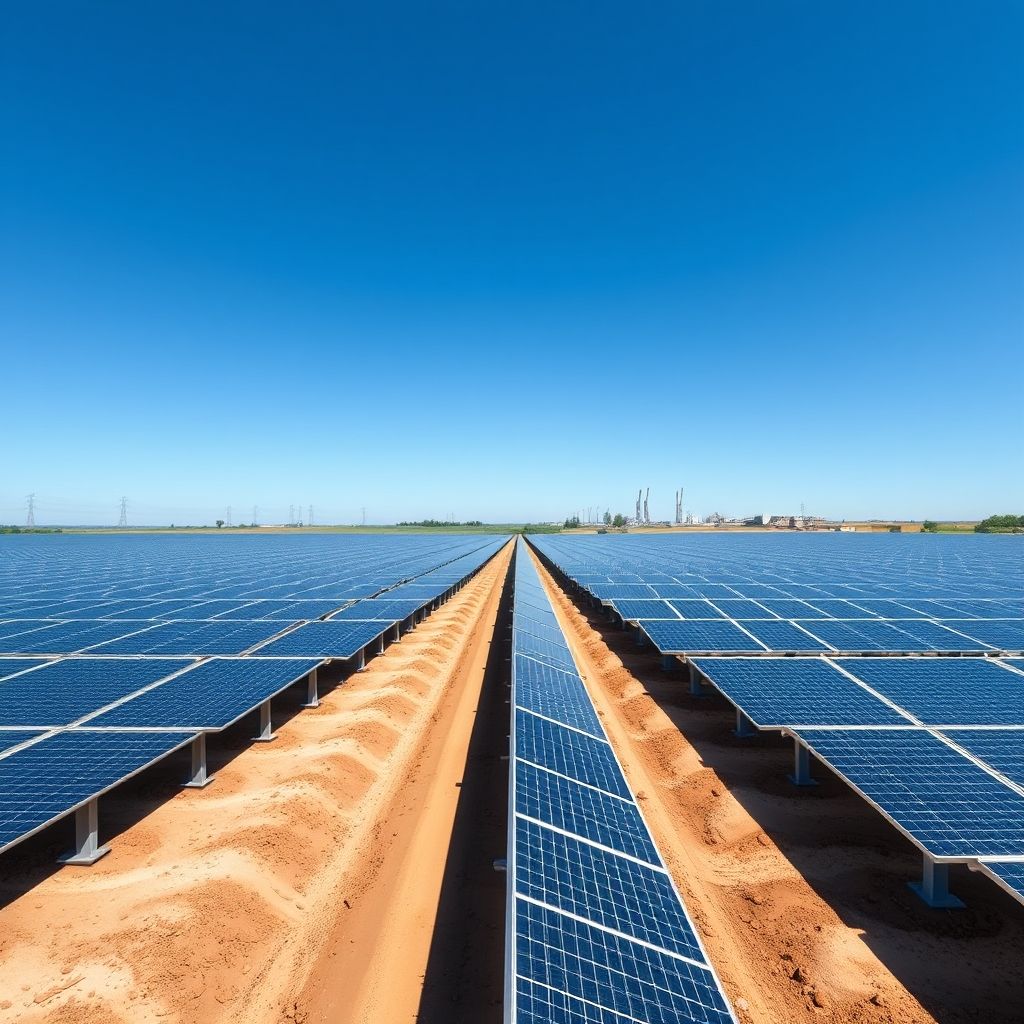
ENGIE has commissioned 450 MW of new solar capacity in India, according to a report reported by pv magazine India. The expansion consists of two distinct projects located in the western states of Rajasthan and Gujarat.
The first addition is the 250 MW Khaba solar project, situated in Barmer, Rajasthan. The second is the 200 MW Khavda solar project, which is part of the Khavda Renewable Energy Park in the Rann of Kutch, Gujarat. Together, these facilities add 450 MW to the country’s solar infrastructure.
Project details and output
- Situated in Barmer, Rajasthan, the Khaba project is anticipated to produce 650 GWh every year.
- This production level is forecast to prevent 180 kilotonnes of CO₂ emissions annually.
- Located in the Rann of Kutch, Gujarat, the Khavda project will yield 350 GWh per year.
- Khavda functions under a 25-year Power Purchase Agreement (PPA) with the state utility.
- In January 2026, ENGIE obtained a hybrid project that pairs 200 MW of solar capacity with a 100 MW / 600 MWh battery storage system, according to a report by Saur Energy dated 30 Oct 2026.
Local impact and corporate scale
The Khaba project is developed by Khaba Renewable Energy Private Limited, a wholly owned ENGIE subsidiary. The Khavda facility is developed under the entity Enren II Energy Pvt Ltd. During construction, approximately 80% of the workforce was hired from local communities, injecting direct employment into the regions hosting the plants.
These additions expand ENGIE’s total footprint in India to around 2 GW, combining capacity currently in operation with projects under construction.
Executive perspective
Amit Jain, serving as CEO & Country Manager India and Managing Director for Renewables & Batteries in SEA at ENGIE, framed the launch of the Khaba and Khavda solar facilities as a significant turning point for the firm’s Indian operations. He emphasized that integrating 450 MW of fresh renewable power into the active fleet demands rigorous execution, steadfast operational discipline, and deep engagement with surrounding communities.
Pedro Vasconcelos, ENGIE’s Executive Vice President overseeing Renewable & Flexible Power, identified India as a pivotal expansion hub for the organization. He explained that the firm is persistently expanding its scale and momentum while playing a part in one of the globe’s most substantial energy shifts.
In November 2025, the company finalized a deal for a 280 MW/560 MWh battery energy storage system. Following that, in January 2026, ENGIE locked in a hybrid initiative featuring 200 MW of solar generation paired with a 100 MW / 600 MWh battery storage unit.
Khavda PPA counterparty
The 25-year Power Purchase Agreement for the Khavda solar project is with Gujarat Urja Vikam Nigam Ltd. This contract secures the offtake for the 350 GWh of electricity the facility generates annually within the Khavda Renewable Energy Park.
What to watch
The company secured its first battery storage projects in the country in November 2025, commencing with a 280 MW / 560 MWh facility.
Additional reporting: Saur Energy.
Source: pv magazine India. This article is an original Luminity report based on the linked source.