
China's Green Hydrogen Costs Undercut Europe and America
New analysis indicates China can produce green hydrogen at $120/MWh, significantly cheaper than Germany or the US. This cost gap makes Chinese exports attractive to Japan despite high seaborne transport fees.
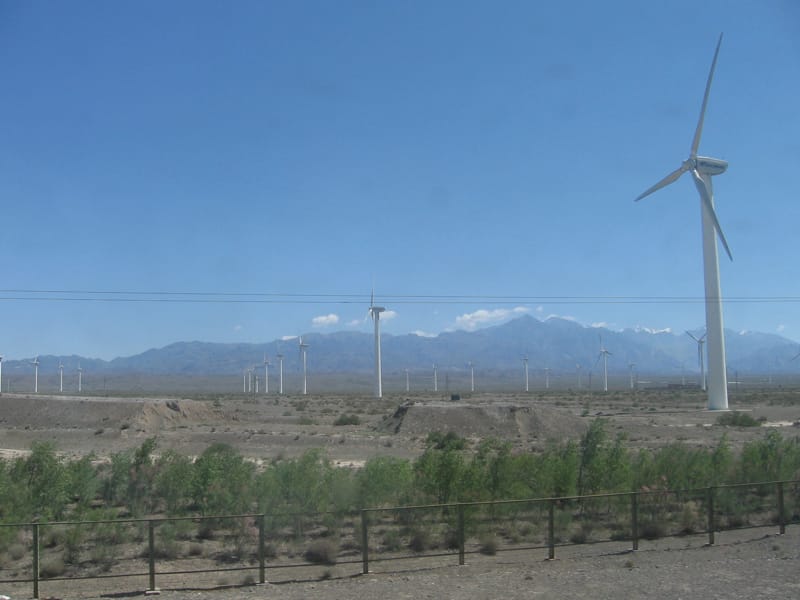
According to a report by pv magazine, green hydrogen production costs in China stand at $120 per megawatt-hour. This figure is notably lower than the $175 per megawatt-hour recorded in Germany and the $225 per megawatt-hour in the United States. The data highlights a distinct price gap between Chinese output and that of European and American producers.
These figures suggest that Chinese manufacturing and operational efficiencies are driving down the final price of green hydrogen. While the exact drivers behind these cost differences require further analysis, the current pricing structure indicates a competitive advantage for China in this sector.
Investors and policymakers are watching these trends closely as the global energy transition accelerates. The cost disparity could influence future trade dynamics and investment flows in the hydrogen economy. However, it is important to note that these are point-in-time estimates and may fluctuate based on changes in renewable energy prices and technology advancements.
Methodology and Cost Drivers
The cost figures cited in the pv magazine report stem from an analysis by EWI, which relies on the Global PtX Cost Tool to model production expenses. This specific software framework allows researchers to break down the complex economics of hydrogen generation into quantifiable components. By standardizing the inputs, the tool provides a consistent baseline for comparing different regions, ensuring that disparities reflect underlying economic and geographic realities rather than methodological inconsistencies.
Recent updates to the tool have refined its accuracy by incorporating a seasonality factor and cost-potential curves. These additions account for the variability in renewable energy output throughout the year and the diminishing returns on scaling production capacity. Such technical adjustments are vital for capturing the true operational costs, as they move beyond simple annual averages to reflect the intermittency challenges inherent in wind and solar power.
The persistent cost advantage for China arises from a convergence of favorable conditions. The country benefits from abundant wind and solar resources, which reduce the necessary capacity factor for electrolyzers. Lower investment, labor, and financing costs in China directly suppress the levelized cost of hydrogen. These structural factors create a baseline that European and American producers find difficult to match without significant policy support or technological breakthroughs.
Japan's Import Calculus
For an energy-poor archipelago, the economics of sourcing hydrogen are dictated by logistics and domestic scarcity. Japan’s internal production capacity remains limited and carries a premium price tag, making it an unattractive option for large-scale industrial demand. Consequently, the nation looks outward, but the global supply chain presents stark contrasts. While domestic synthesis is costly, importing from established Western or regional alternatives pushes the total delivered price beyond $300 per megawatt-hour. This high threshold reflects the combined burden of production and long-distance shipping.
In contrast, sourcing directly from China significantly lowers the entry point. The total cost for Japanese buyers includes the production price plus the specific expense of moving the molecule across the ocean. Seaborne hydrogen transport adds a fixed premium of $80 per megawatt-hour to any import deal. When this shipping fee is applied to the Chinese production baseline, the final landed cost for Japan settles at $190 per megawatt-hour. This figure is substantially lower than the non-China import alternative, creating a strong financial incentive for Tokyo to diversify its supply sources.
| Origin | Component Cost | Total Delivered Cost |
|---|---|---|
| China | $110/MWh (Production) + $80/MWh (Transport) | $190/MWh |
| Non-China | N/A | Over $300/MWh |
The table above isolates the transport variable to show its impact. For Japanese planners, the $110 difference between the Chinese offer and other import routes represents a critical margin. It suggests that without Chinese supply, Japanese industries would face significantly higher input costs, potentially eroding their competitiveness in hydrogen-intensive sectors like steel and ammonia production.
Strategic Vulnerabilities
- Germany faces potential supply security risks from import dependence
The reliance on external sources for critical energy inputs exposes national grids to volatility that domestic production might otherwise buffer. When a major industrial economy leans heavily on imported hydrogen, its energy mix becomes tethered to the logistical stability and political stability of distant suppliers. This dependency creates a structural fragility, where disruptions in shipping lanes or shifts in export policies abroad can ripple directly into local industrial costs and availability.
For grid operators, this vulnerability complicates long-term planning. Hydrogen infrastructure is capital-intensive and designed for consistency; sudden supply shocks force operators to scramble for alternative fuels or curtail demand, undermining the reliability that modern grids require. The risk is not merely financial but operational, as the inability to guarantee a steady flow of low-carbon molecules can stall decarbonization targets in heavy industry. Consequently, nations with significant import requirements must weigh the immediate cost savings against the long-term strategic flexibility of maintaining some degree of domestic production capacity to safeguard energy security.
What to watch
The immediate focus shifts to how Japan structures its procurement agreements to lock in those lower landed costs. Buyers will likely seek long-term contracts that mitigate exposure to fluctuating shipping rates and exchange rate volatility. These deals often include price adjustment mechanisms, protecting industrial users from sudden spikes in transport or production expenses. For Tokyo, the priority is securing reliable volume to support heavy industry without overcommitting to a single source, balancing economic efficiency against supply continuity.
European and American developers, meanwhile, face pressure to demonstrate competitive parity. They must accelerate project execution and refine electrolyzer efficiency to narrow the gap with Chinese producers. Policy makers in both regions are expected to adjust subsidies or carbon pricing to make domestic green hydrogen more attractive to local buyers. The effectiveness of these measures will determine whether Western producers can retain market share or cede ground to Asian exports.
Grid operators will also monitor integration challenges as imported hydrogen volumes grow. Ensuring that supply matches demand patterns remains a technical hurdle, requiring robust storage and distribution infrastructure. Investors should track regulatory developments that might impose stricter standards on imported molecules, potentially altering the cost advantage. The coming years will reveal if cost leadership translates into durable market dominance or if strategic concerns force a return to localized production.
Source: pv magazine. This article is an original Luminity report based on the linked source.