
Victoria opens offshore wind auction as industry warns investment can swing away
The Victorian government has launched an auction for 2 GW of offshore wind capacity in the Gippsland zone, targeting first power by 2034. Industry executives and government officials highlighted at a recent conference that Australia’s ability to attract global investment depends on resolving grid complexity and providing regulatory certainty.
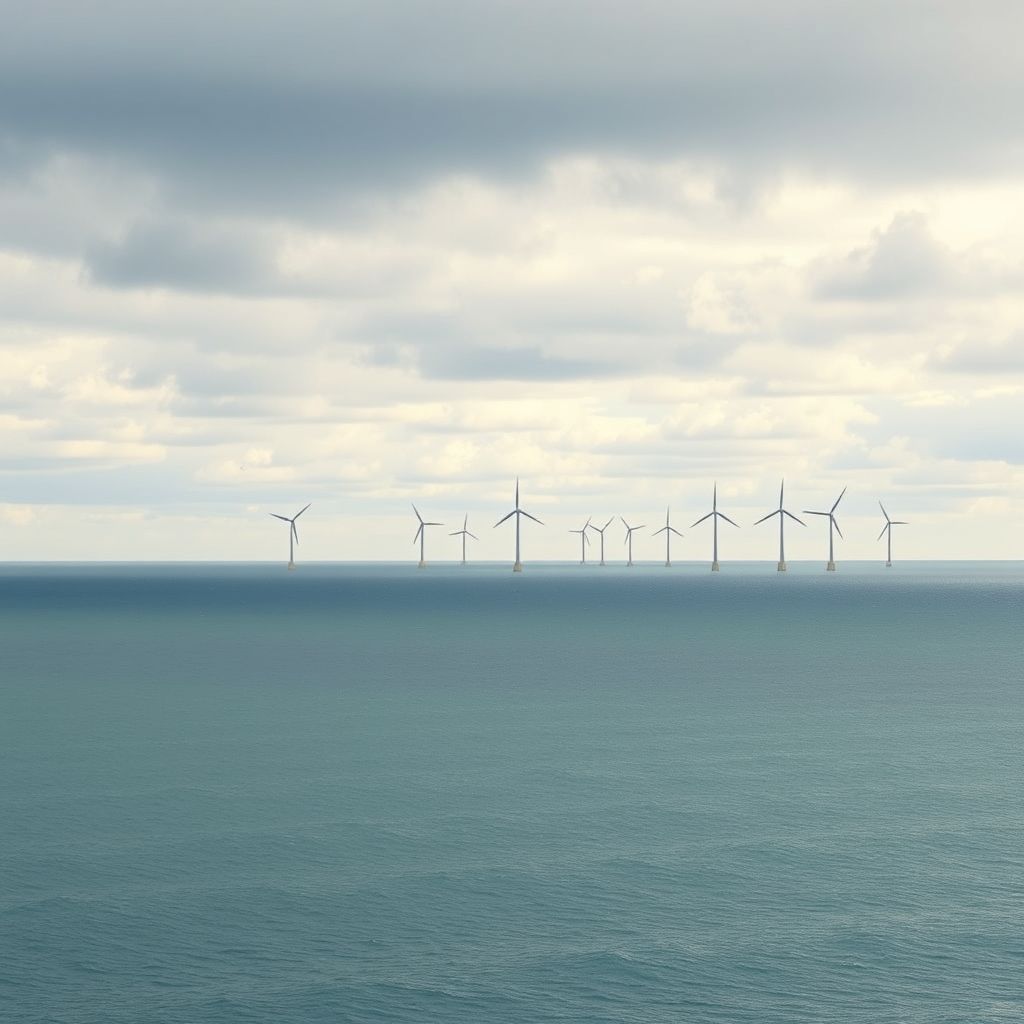
The Victorian Labor government has opened an auction for the first 2 GW of offshore wind capacity in the Gippsland zone. Under the proposed timeline, contracts are to be awarded in 2028, with construction commencing in 2032 and the first power delivered by 2034.
A recent offshore wind update from BCG describes Australia as a "swing market," noting that conditions are "still maturing."
Competitive Landscape
Jim Rijks, the engineering manager at Iberdrola Australia, highlighted that the offshore wind sector operates on a global scale, with various markets vying for the same pool of capital, supply chains, technology, and specialized talent. He pointed out that investor and supply chain attention can pivot toward Australia just as easily as it can shift away, a dynamic driven by the choices made by everyone involved in the industry.
Felicity Sands, the acting executive director for offshore wind energy within the Victorian Department of Energy, Environment and Climate Action, observed that the global offshore wind sector exists at varying levels of development, meaning there is no uniform operational footprint.
Grid and Cost Realities
Jim Rijks, the engineering manager at Iberdrola Australia, cautioned that if the sector cannot navigate the intricate decisions required for the grid and the wider systemic framework, offshore wind projects could become a significant burden.
The magnitude of this issue is detailed in the Australian Energy Market Operator’s 2026 Integrated System Plan, which forecasts 9 gigawatts of offshore wind capacity to be operational by 2040. Nevertheless, the financial dynamics of achieving this goal differ markedly from those of onshore initiatives. The same document notes that constructing and connecting offshore wind is two-thirds more costly than its onshore counterpart.
Government Strategy
- Felicity Sands, the acting executive director for offshore wind energy at the Victoria Department of Energy, Environment and Climate Action, emphasized that "Value for money and timely delivery of energy are key."
- Sands explained that the department aims to ensure the initial 2 GW establishes a route toward Victoria’s 9 GW offshore wind objective, while also fostering workforce skills, regional industry, supply chains, and sustained investor confidence.
- Winning bidders will be provided with a support package that includes a 20-year revenue-neutral contract for difference to help manage market revenue volatility, complemented by an availability payment.
- Sands characterized the strategy as "doing offshoring properly – planning it as a system, giving industry certainty through clear options and timelines."
Regulatory Mechanics and Political Context
Felicity Sands, serving as acting executive director for offshore wind energy within Victoria’s Department of Energy, Environment and Climate Action, clarified that the availability payment portion of the support package represents a fixed, periodic payment tied to infrastructure readiness, with disbursements occurring exclusively once commercial operations begin. In early September, energy ministers consented to publish a consultation package for the Electricity Services Entry Mechanism, which includes draft legislation, preliminary rules, and a design paper.
The auction formally launched in August. Although the state’s Liberal-Nationals opposition supports the initiative, One Nation has pledged to dismantle it. Sands highlighted that the government intends to integrate "valuable lessons" from international experiences to tailor local configurations, guaranteeing that advantages reach communities while safeguarding the environment and cultural heritage.
What to watch
The upcoming fate of the Electricity Services Entry Mechanism (ESEM) will be a primary indicator of policy stability for the sector. Proposed to replace the Capacity Investment Mechanism beyond 2030, ESEM requires approval from energy ministers, a decision expected by the end of 2024 with enactment targeted for March 2025. However, Queensland has objected to the plan, and it remains undecided whether the state will veto the mechanism.
Political continuity in Victoria and New South Wales presents another variable. Changes in energy ministers or state governments are possible by March 2027, a period that aligns with the early stages of the Gippsland zone’s construction timeline.
On the demand side, the retirement of the Loy Yang A coal-fired power station by July 2035 will create a significant capacity gap that new renewable assets must fill.
The project is projected to generate 4,000 direct and indirect jobs during development and construction phases, followed by 1,750 ongoing jobs in Gippsland.
Source: RenewEconomy. This article is an original Luminity report based on the linked source.