
Solar Carports Gain Traction in Massachusetts for Commercial and Municipal Use
Solar carports are emerging as a strategic alternative for schools and municipalities in Massachusetts, offering distinct advantages over traditional rooftop or ground-mounted systems. While structural costs are higher, integrating battery storage and planning for future EV charging are key to maximizing the project's long-term value.
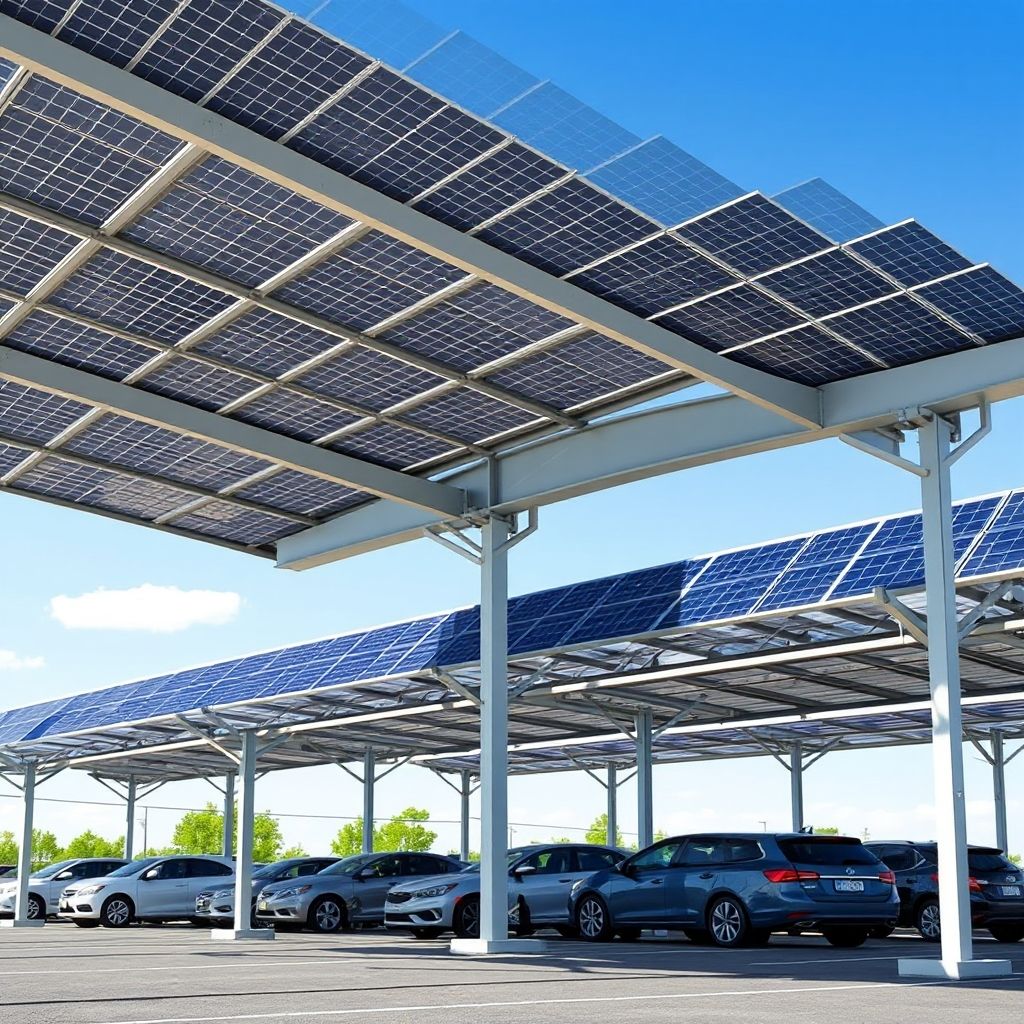
Solar carports are gaining significant interest from schools, municipalities, and manufacturers as a viable option for commercial solar deployment. This trend is particularly evident in Massachusetts, where a shift toward carport installations is underway. These structures offer a practical alternative to conventional rooftop or ground-mounted solar systems, providing unique benefits for specific site conditions.
According to pv magazine USA, the growing adoption of carports reflects a broader strategic opportunity in the commercial sector. By moving generation to the canopy level, developers can utilize space that might otherwise be limited for traditional installations. This approach allows for flexible energy generation that aligns with the specific needs of institutional and municipal clients.
Structural and Construction Considerations
Building solar canopies over active parking lots introduces distinct engineering challenges that differ from conventional ground-mounted arrays. Contractors must navigate complex geotechnical conditions, manage buried obstructions, and design foundations that support the canopy without disrupting existing pavement. These variables directly influence the structural integrity of the project, requiring careful site assessment before steel fabrication begins.
The financial implications of these structural requirements are notable. Carports generally carry higher structural costs than rooftop solar installations because they require independent support structures rather than leveraging existing building weight capacity. Steel costs and the complexity of the structural design drive this expense, making precise engineering essential to control budgets.
Construction logistics present another layer of difficulty. Projects must be executed while managing active parking lots, meaning crews cannot simply halt operations. This constraint demands phased construction schedules and strict safety protocols to ensure vehicle and pedestrian safety during installation. For municipal and commercial clients, these logistical hurdles mean that construction timelines often extend beyond those of standard rooftop projects, requiring careful coordination between general contractors and site managers to minimize disruption to daily operations. Understanding these variables helps stakeholders anticipate the operational and financial realities of deploying solar at the canopy level.
Design for Maintenance and Future Needs
Long-term operational efficiency for solar carports hinges on planning decisions made before construction begins, specifically regarding physical access and electrical capacity.
- Maintenance access must be incorporated into the initial design phase to ensure ongoing serviceability.
- Future electrical requirements, such as EV charging infrastructure, should be addressed during the initial infrastructure design process.
Integrating maintenance pathways during the early design stages prevents costly retrofits later in the project lifecycle. Carport structures often span large areas with multiple rows of modules, making routine inspections and cleaning logistically complex if clear access routes are not explicitly defined. Without designated walkways or service corridors, technicians may struggle to reach lower rows of panels safely, potentially compromising the system's long-term performance and warranty compliance. Designing for accessibility from the outset ensures that cleaning crews and maintenance staff can perform their duties without obstructing vehicle flow or requiring specialized equipment to navigate tight spaces.
Simultaneously, anticipating future electrical loads is essential for infrastructure resilience. As electric vehicle adoption accelerates, parking structures are increasingly becoming hubs for charging stations rather than just passive solar generators. Proactively sizing conduits, transformers, and switchgear to accommodate EV charging loads during the initial build avoids the significant expense and disruption of upgrading electrical infrastructure after the carport is operational. This forward-looking approach allows developers to prepare for rising energy demand without halting operations or incurring premium costs for emergency upgrades. By treating the carport as a flexible energy platform rather than a static installation, owners can better align their capital investments with evolving technological and consumer needs.
Energy Storage Integration
Battery energy storage is increasingly integrated with solar carports, transforming these structures from simple generation assets into active energy management hubs. This combination allows facilities to store excess solar power produced during midday hours when generation often exceeds immediate consumption. By capturing this surplus, operators can deploy the energy during periods of high demand, effectively smoothing out the load profile seen by the local grid.
A primary technical benefit of this integration is the ability to perform peak shaving and peak shifting. These strategies directly address utility demand charges, which are fees based on the highest rate of power consumption recorded over a specific interval, typically a 15- or 30-minute window. For commercial and municipal clients, these charges can constitute a significant portion of monthly utility bills, often independent of total kilowatt-hours consumed. By using stored battery power to offset the highest spikes in demand, facilities can lower their peak usage below thresholds that trigger higher rate tiers or penalties.
This approach provides a tangible financial mechanism for cost control. Instead of paying premiums for brief periods of high intensity, the facility draws from its own stored energy. This capability is particularly relevant for sites with variable load patterns, such as schools or municipal buildings where usage fluctuates throughout the day. Integrating storage at the point of generation also reduces the need to upgrade electrical service capacity, as the battery handles transient peaks internally. For developers, this functionality enhances the economic viability of carport projects by demonstrating a clear path to reducing operational expenses beyond simple energy offset.
What to watch
Attention should turn to how local permitting bodies interpret evolving codes for standalone structures. Municipalities are increasingly scrutinizing whether carports meet specific setback and height requirements, which can delay project approvals if initial designs do not align with updated zoning rules. Developers need to monitor these administrative shifts closely, as regulatory clarity often dictates whether a site remains viable for solar integration.
The trajectory of battery technology relative to carport economics will also shape future deployments. As storage costs decline, the financial case for pairing generation with on-site batteries strengthens, particularly for facilities facing high demand charges. Investors should track whether municipal procurement guidelines begin to explicitly favor integrated storage systems over standalone generation, a policy shift that would accelerate adoption by reducing upfront capital barriers.
Finally, the practical execution of EV charging integration remains a critical variable. While design plans increasingly account for future electrical loads, the actual rollout depends on grid capacity and utility coordination. Readers should look for case studies demonstrating how well initial infrastructure sizing accommodates real-world charging demands, providing concrete evidence on the long-term resilience of these flexible energy platforms.
Source: pv magazine USA. This article is an original Luminity report based on the linked source.