
Shree Cement commissions 3 MTPA UAE grinding unit, boosts global capacity
Shree Cement has commissioned a 3 MTPA grinding unit in Ras Al Khaimah, UAE, through its subsidiary Union Cement Company. The project, valued at approximately ₹300 crore, expands the company’s total global capacity to 76.3 MTPA.
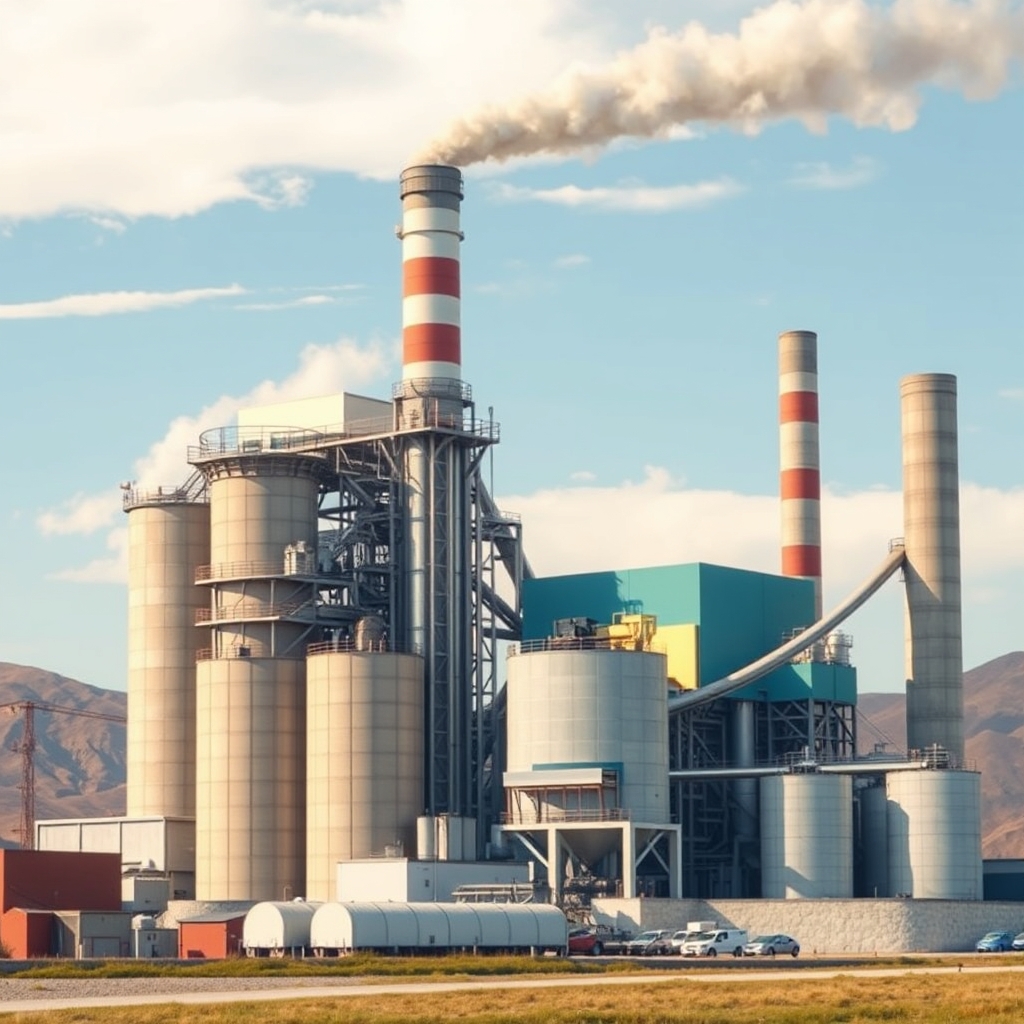
Shree Cement has commissioned a new 3 MTPA grinding unit in Ras Al Khaimah, UAE, according to ETEnergyWorld Renewables. The facility is operated by its subsidiary, Union Cement Company, marking a step in the company’s regional presence.
The investment in the project is approximately ₹300 crore. This expansion adds to the existing infrastructure in the United Arab Emirates, enhancing the group’s operational footprint in the Middle East.
The commissioning aligns with broader strategic goals for the cement manufacturer, focusing on localized production capabilities to serve the growing demand in the region.
Capacity Expansion
The new grinding unit in Ras Al Khaimah represents a tangible shift in the regional production balance. By adding this facility, the United Arab Emirates has seen its total cement manufacturing capacity rise from 4 MTPA to 7 MTPA. This three-million-tonne increase signals a substantial boost in local supply potential, allowing the market to meet construction demands without relying as heavily on imported clinker or finished cement. For regional developers and infrastructure projects, such localized capacity often translates into tighter supply chains and reduced logistical volatility, as material can be sourced closer to the point of use.
On a global scale, this addition pushes the parent company’s total installed capacity to 76.3 MTPA. Reaching this threshold places the manufacturer among the larger players in the global cement sector, where scale often dictates pricing power and operational efficiency. Grinding units, distinct from clinker production lines, are generally less capital-intensive and faster to commission than full integrated plants. This allows companies to respond quickly to market signals in specific geographies. While the initial outlay for this specific project was approximately ₹300 crore, grinding expansions typically offer a quicker return on investment compared to building new kilns, as they leverage existing supply networks for raw materials.
Investors and industry analysts often view such capacity expansions as indicators of confidence in long-term regional growth. In the Middle East, where large-scale urbanization and infrastructure projects continue, securing local production capacity helps mitigate risks associated with international shipping and trade policies. The move underscores a broader trend in the cement industry toward geographic diversification, where companies seek to balance their portfolios across different markets to stabilize revenue streams. This strategic footprint expansion ensures that the company can maintain competitive margins even if global commodity prices fluctuate or if trade barriers tighten in other regions.
Technical Specifications
The core of this new grinding unit relies on a specific piece of heavy industrial machinery designed for efficiency and precision. The facility utilizes a Gebr. Pfeiffer MVR 6000 vertical roller mill as its primary grinding technology. This selection is notable because vertical roller mills are increasingly favored in modern cement plants for their energy efficiency compared to traditional ball mills. They typically consume less power per tonne of cement ground, which is a critical operational metric given the high electricity costs often associated with industrial manufacturing in the Gulf region.
- Technology: Gebr. Pfeiffer MVR 6000 vertical roller mill
- Features: material-handling infrastructure and dust-collection systems
Beyond the central mill, the technical design incorporates essential auxiliary systems that define the plant's operational viability. The installation includes dedicated material-handling infrastructure, which ensures the smooth, continuous flow of clinker and other additives into the grinding process. Efficient material handling is vital for maintaining the throughput rates required to reach the unit’s full capacity. The facility integrates comprehensive dust-collection systems. These environmental controls are not merely regulatory checkboxes; they are integral to the plant’s ability to operate within local environmental standards. In arid climates like the UAE, controlling particulate matter is essential for both community relations and worker safety.
For engineers and operators, the combination of a high-capacity vertical roller mill with robust dust collection represents a standard yet sophisticated approach to modern grinding. Such configurations allow for precise control over the fineness of the cement, which directly impacts the quality and setting properties of the final product. The presence of advanced dust-collection systems also signals a commitment to minimizing operational disruptions caused by environmental compliance issues, allowing the plant to run continuously without the risk of forced shutdowns due to air quality violations. This technical setup supports the broader goal of reliable, high-volume production in a challenging environmental context.
Energy Integration
The new Ras Al Khaimah facility is not just a grinding hub; it is a significant node in the parent company’s broader decarbonization strategy. Central to this integration is a 31.5 MW waste heat recovery system (WHRS) installed at the unit. WHRS technology captures thermal energy that would otherwise be lost during the cement manufacturing process, converting it into electricity. This self-generation capability reduces the plant’s reliance on the local grid, lowering operational costs and carbon emissions simultaneously. For industrial operators in the Gulf, where electricity tariffs can be substantial, such systems are increasingly viewed as essential infrastructure rather than optional add-ons.
This local generation contributes to the company’s wider renewable and green power portfolio. The total green power capacity across the organization now stands at 634.5 MW. This aggregate figure reflects a multi-faceted approach to energy sourcing, combining on-site recovery systems with other renewable installations. The impact of these investments is visible in recent performance metrics. In the first quarter of FY27, renewable energy accounted for 66 percent of the company’s total power mix. This high share demonstrates the tangible shift away from fossil-fuel-based electricity, a critical milestone for manufacturers facing tightening environmental regulations and growing investor pressure for sustainability.
| Metric | Value |
|---|---|
| UCC WHRS Capacity | 31.5 MW |
| Total Green Power Capacity | 634.5 MW |
| Renewable Share (Q1 FY27) | 66 percent |
These figures illustrate the scale of the energy transition underway. The 31.5 MW WHRS adds meaningful local generation, while the 634.5 MW total green capacity highlights the group’s extensive investment in sustainable energy infrastructure. Achieving a 66 percent renewable share in a single quarter is a strong indicator of operational maturity. It suggests that the company has successfully integrated diverse energy sources into its daily operations, moving beyond pilot projects to mainstream adoption. For stakeholders, this level of renewable penetration reduces exposure to volatile fossil fuel prices and aligns the company with global best practices in industrial sustainability. The data underscores that energy efficiency and renewable adoption are now core components of competitive strategy in the cement sector.
What to watch
With the grinding unit now operational, the immediate focus shifts to sustained performance and market response. H M Bangur described the commissioning as an important milestone in Shree Cement's global growth journey, a sentiment that sets the tone for what analysts and investors should monitor in the coming quarters. The primary question is how quickly the plant can reach its full design throughput. In the cement industry, ramping up a new grinding facility often involves periods of fine-tuning to optimize mill efficiency and quality consistency. Readers should look for early production reports that indicate whether the unit is meeting its intended output targets without significant downtime.
Beyond raw production, the commercial impact in the UAE and broader Gulf region will be a key indicator. Cement markets in this area can be sensitive to local construction cycles and import dynamics. Observers should track how this new capacity influences local pricing and whether it helps stabilize supply for regional infrastructure projects. The integration of the waste heat recovery system will be closely watched. While the technology is established, its real-world contribution to the plant’s energy balance over time will determine its long-term cost advantages. For developers and stakeholders, the next few months will reveal whether this expansion translates into tangible financial benefits or remains a strategic holding pattern. Ultimately, the success of this project hinges on consistent operational execution and favorable market conditions, making it a critical data point for the company’s international ambitions.
Source: ETEnergyWorld Renewables. This article is an original Luminity report based on the linked source.