
PJM explores battery additions via surplus interconnection rules
PJM Interconnection has launched a stakeholder process to reform Surplus Interconnection Service rules, which would allow existing power plants to add batteries using current grid connections. The move aims to accelerate storage deployment to address grid congestion and high electricity prices driven by data center demand.
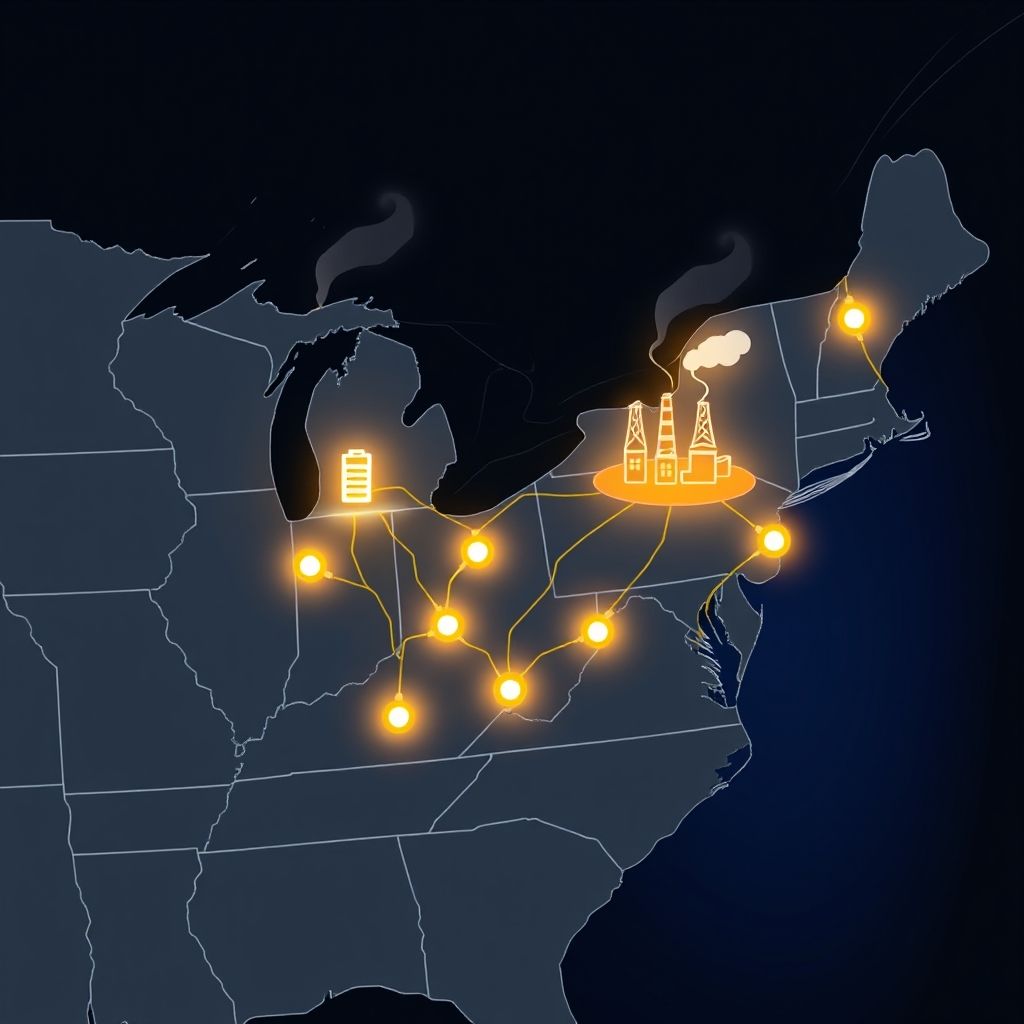
PJM Interconnection, the largest U.S. grid operator serving 13 states across the mid-Atlantic, Midwest, and South, is moving to update its rules for connecting new generation. The company has initiated a stakeholder process aimed at reforming Surplus Interconnection Service (SIS) regulations.
The SIS mechanism
Surplus Interconnection Service (SIS) permits existing power plants to attach batteries to their current grid connections rather than building new transmission lines. This framework significantly accelerates project timelines, enabling developers to add capacity within one to two years. In contrast, standard interconnection projects often face waits spanning several years.
Regional adoption and potential
- Gavin Ahern, co-founder of Surplus Interconnection, remarked, "It’s clearly catching on."
- By mid-2026, Surplus Interconnection had logged 44 gigawatts of past SIS project inquiries.
- According to Surplus Interconnection, 80% of these historical SIS inquiries pertain to integrating batteries into current projects.
- The Midcontinent Independent System Operator lists 138 active SIS requests totaling 14.8 GW in proposed capacity.
- Southwest Power Pool reports 89 active SIS requests with a combined proposed capacity of 14.3 GW.
- U.S. West accounts for 51 active SIS requests, representing 6 GW of proposed capacity.
- Southeast has 29 active SIS requests, amounting to 1 GW in proposed capacity.
- As of November 2025, PJM has filed 14 SIS requests, of which 2 have received approval.
- Umed Paliwal, a principal scientific engineering associate at Lawrence Berkeley National Laboratory, noted that PJM could integrate 24 GW of energy storage through SIS.
- Paliwal stated that SIS could enable the addition of 102 GW of solar and 28 GW of wind capacity in PJM.
- According to Paliwal, SIS has the potential to reduce interconnection and upgrade expenses for developers by more than $31 billion.
Stakeholder sentiment
Advanced Energy United senior director Jon Gordon noted that member companies are eager to move forward, describing their drive as "really rip-roaring to go on this." However, he cautioned that the initiative's outcome hinges on navigating complex regulatory specifics, stating, "The devil’s really in some of the wonky details."
Notable SIS projects and technical barriers
Various SIS efforts have already been put forward or sanctioned across different regions, such as NextEra Energy and Great River Energy adding batteries to wind farms in North Dakota, and similar upgrades to gas plants in California. In Illinois, developers have suggested integrating solar capacity with existing gas facilities. Gavin Ahern, co-founder of Surplus Interconnection, observed that renewable energy developers are among the first to recognize the value of these strategies, explaining, "They’re looking to get more out of sites they’ve already paid to connect."
Umed Paliwal’s projections for PJM’s renewable capacity assume constructing solar and wind farms that utilize the grid connections of gas peaker plants. Since these plants typically run only during peak demand, they free up significant capacity for renewable energy flow for most of the year. A chart from the decarbonization think tank RMI demonstrates how SIS can bring new resources online more rapidly than PJM’s conventional interconnection process.
In 2024, clean energy groups started tackling technical hurdles by petitioning FERC to compel PJM to alter how it analyzes grid impacts when new resources are added to existing generation or battery projects. They pointed to particular technical limitations that PJM had placed on these studies.
What to watch
PJM’s path forward hinges on its ability to update grid impact study protocols and market operation regulations to support SIS, a necessity driven by rising electricity costs and grid congestion stemming from data center energy requirements. Jon Gordon, senior director at Advanced Energy United, highlighted that the Market Implementation Committee will address subsequent actions during its Nov. 4 session. Subsequent to that discussion, PJM may pursue FERC authorization for the intended rule modifications by April 2027.
Source: Canary Media. This article is an original Luminity report based on the linked source.